Toward a Framework & Evidence for Innovation in Co-Governance

A growing interest in collaborative governance has led to exciting new projects at both the state and local levels, aiming to expand and improve civic engagement by bringing communities more fully into public-sector decision-making. These innovations in co-governance will be critical to bolstering democratic institutions and practices, with the potential to reduce harmful polarization and rebuild trust in democracy. But we will need intentional design, careful implementation, and systematic research to ensure that new models of engagement do not reproduce existing inequalities in participation or produce largely symbolic interactions between government and communities that do not lead to real or meaningful reform.
In recent years, there has been growing interest in the potential of civic (or citizens’) assemblies, deliberative engagement platforms, participatory budgeting models, and other democratic reforms that directly engage government entities with the communities they serve.1 At best, these efforts seek to advance a form of collaborative governance (or co-governance), defined as “a governing arrangement where one or more public agencies directly engage non-state stakeholders in a collective decision-making process that is formal, consensus-oriented, and deliberative and that aims to make or implement public policy or manage public programs or assets.”2 This movement describes a much-needed set of projects and processes that hold significant potential to revitalize civic participation, build civic capacity, and improve public-sector problem-solving. Indeed, new models of participation arguably lie at the heart of reinvigorating our democracy and improving our policymaking processes.
However, advocates’ enthusiasm for co-governance projects can sometimes outpace the empirical evidence supporting them. Put another way: we don’t just need more and different ways for residents to engage in democracy; we need better ways. And to accomplish this goal, we need to take design, implementation, and evaluation seriously. Democratic reformers must be skeptics even of their own good ideas, to ensure that new models of engagement don’t simply reproduce the patterns of inequality and ineffectiveness that characterize our current modes of participation.
It has become almost trite to point out that American democratic institutions are failing. Public trust in government is at historic lows,3 political polarization is at an all-time high,4 and disillusionment with the basic tenets of democracy itself has become relatively more common, especially among young people.5 More broadly, Americans on both sides of the aisle have become less convinced that government is actually capable of real problem-solving or effectively providing for residents’ basic needs.6
Civic practices have failed to adapt to this growing sense of frustration, reinforcing the perception that government is unresponsive to the needs and priorities of everyday people. Anyone who has attended a local town hall meeting is familiar with the largely performative processes that call for public comment: residents are granted one or two minutes to speak, often being cut off mid-sentence when their allotted time is up, while government representatives sit in silence, legally or procedurally barred from responding. There is rarely any formal follow-up or accountability. The only outcome is the final vote of local representatives, which may or may not align with residents’ input. In many cases, residents might reasonably wonder whether these outcomes were largely predetermined.
In light of these concerns, advocates and policymakers are advancing new models of co-governance to address a wide range of political failings. The premise of this work is clear: communities have unique insights and expertise stemming from their lived experiences, which public agencies can aggregate to better understand social problems, identify promising solutions, and implement successful policies and programs that address residents’ most urgent needs. In her essay, Carolyn Lukensmeyer describes recent examples of this type of civic-sector innovation across three distinct contexts: in the State of California, in Bowling Green, Kentucky, and in Fort Collins, Colorado. Each provides an intriguing example of how such efforts are being deployed.7
But building a robust movement for co-governance will require a framework for replicable and scalable design, as well as rigorous evidence of “what works,” in what ways, and for what types of communities and what sorts of public problems. Without establishing clear parameters for the purpose and goals of engagement, and without rigorous and specific evidence of how new forms of engagement lead to (or fail to produce) expected outcomes, the promise of deeper and more meaningful co-governance may be compromised from the outset. If residents come to perceive these initiatives as duplicating the ineffectiveness of our existing engagement approaches, we are likely to undermine the important goals we hope to achieve.
Akey question for those interested in improving and institutionalizing participatory co-governance is: What does success look like, and how do we know if we are achieving it? Are we trying to solve for individual-level transformations (such as increasing intergroup empathy and institutional trust among participants), induce collective attitudinal and behavioral shifts (such as decreasing partisan polarization and increasing voter turnout), or produce utilitarian policy outcomes (such as sourcing and implementing practical reforms to improve public programs)? Different models of engagement are likely to be best suited to achieving these distinct outcomes.
Is the primary goal of the engagement to get strangers who live in a single community to talk to one another in order to generate new solutions to a problem? Great! Metrics for success may include how many participants contributed to brainstorming sessions and how many new ideas were surfaced. Is the goal of the engagement to help a specific government entity narrow down the options for how to implement a local tax bond approved by voters? Measuring success in this case may require focusing on different outcomes such as whether there was consensus on how to prioritize ideas, as well as how funds were ultimately spent.
In addition to clarifying the specific goals of co-governance, building an evidence base means we need to avoid the blurring of distinct forms of participation. Civic engagement is a broad term that can encompass many strategies and methods. Digital engagement tools that aggregate public opinion at scale, for instance, likely fulfill a different purpose than in-person civic assemblies, which are geared toward deliberation, the “slow thinking” and weighing of trade-offs.
When considering the diverse set of activities that make up the broad field of co-governance, three important distinctions are worth noting.
1. Community engagement is not synonymous with co-governance. Some recent innovations in civic engagement are led by state or local government,8 while others have been conducted as research experiments or community-led initiatives.9 While these latter efforts are important, the lack of formal leadership from government agencies runs the risk of creating a feedback loop to nowhere, whereby citizens talk to one another but don’t engage in a sustained two-way conversation with public-sector representatives. If the state does not have initial ownership or “buy in” on the project, it leaves open the question of whether and how resident input will be incorporated into the policymaking process.
If we are to build meaningful co-governance, it is essential that government officials are involved from the outset, not to dictate the outcome or ensure residents are constrained by prevailing politics, but to explain budget constraints, legal hurdles, and implementation challenges and (more importantly) to ensure positive feedback loops in which input gathered from residents is used to directly inform public programs and policies. While government cannot be expected to adopt every recommendation (as wrestling with conflicting and/or mutually exclusive input from community participants is often a significant challenge for government agencies doing this kind of work), they must at minimum be committed to a reporting-back process that explains why certain suggestions were adopted and why others were not. Without this accountability, these efforts risk undermining trust rather than building it. When residents are asked to contribute their expertise to co-governance efforts but then see no changes stemming from their input, they may leave the process feeling more cynical and alienated than when they arrived.
2. The intentional design of co-governance activities requires ensuring that the method matches the purpose and context. To ensure that engagement activities are meaningful and productive, government entities must first articulate why they seek public input and how that input will be used to advance their policy goals. This information is crucial to determining what type of community engagement will be most useful and which community representatives should be invited into the process.
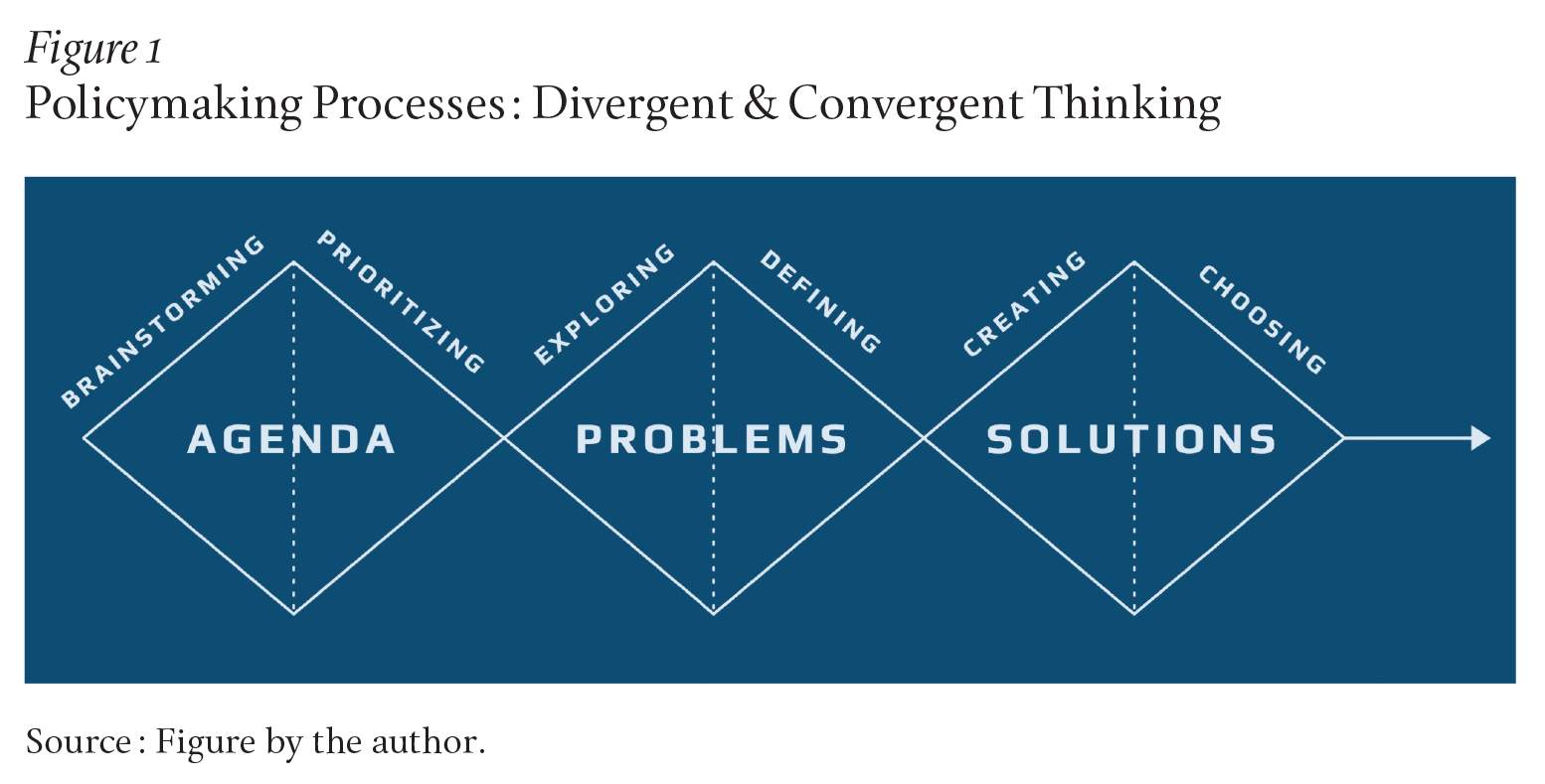
For example, each stage of the policymaking process can have either divergent or convergent goals (see Figure 1). Divergent stages, like understanding problems or sourcing solutions, allow the problem or solution space to expand via exploring and creating (that is, broadening out). For instance, a public agency that has been tasked to address disparities in internet connectivity might start by gathering more information about why those disparities exist in the first place. Such an investigation places them in the exploring the problem phase, and engagement with communities at this point in the process can be oriented around this broad goal. In contrast, convergent stages of the policymaking process include prioritizing issues or choosing solutions (that is, narrowing down). The same public agency considering internet connectivity might discover that research has already been done to understand the problem and identify a set of possible solutions. In this case, the department might focus its energies on choosing an approach, using engagement with the affected communities to help prioritize among possible solutions and select a path forward.
3. At the same time, participatory efforts can range in how deeply they engage residents. Before embarking on community engagement, government partners must decide how much influence the engagement will have on policy decisions—and they must set expectations accordingly with the communities who are invited to engage. For example, civil servant Sherry Arnstein’s “ladder of citizen participation,” developed in 1969, is a conceptual framework that evaluates the degree of citizen involvement in decision-making processes.10
The ladder distinguishes between tokenistic approaches that draw from impacted communities without necessarily incorporating their contributions (at the bottom of the ladder) and power-sharing approaches that provide meaningful levers for community members to directly influence the design and implementation of policies and programs (at the top of the ladder). The International Association for Public Participation (IAP2) has since adapted this into a practical framework for practitioners that outlines five types of citizen engagement (see Figure 2).
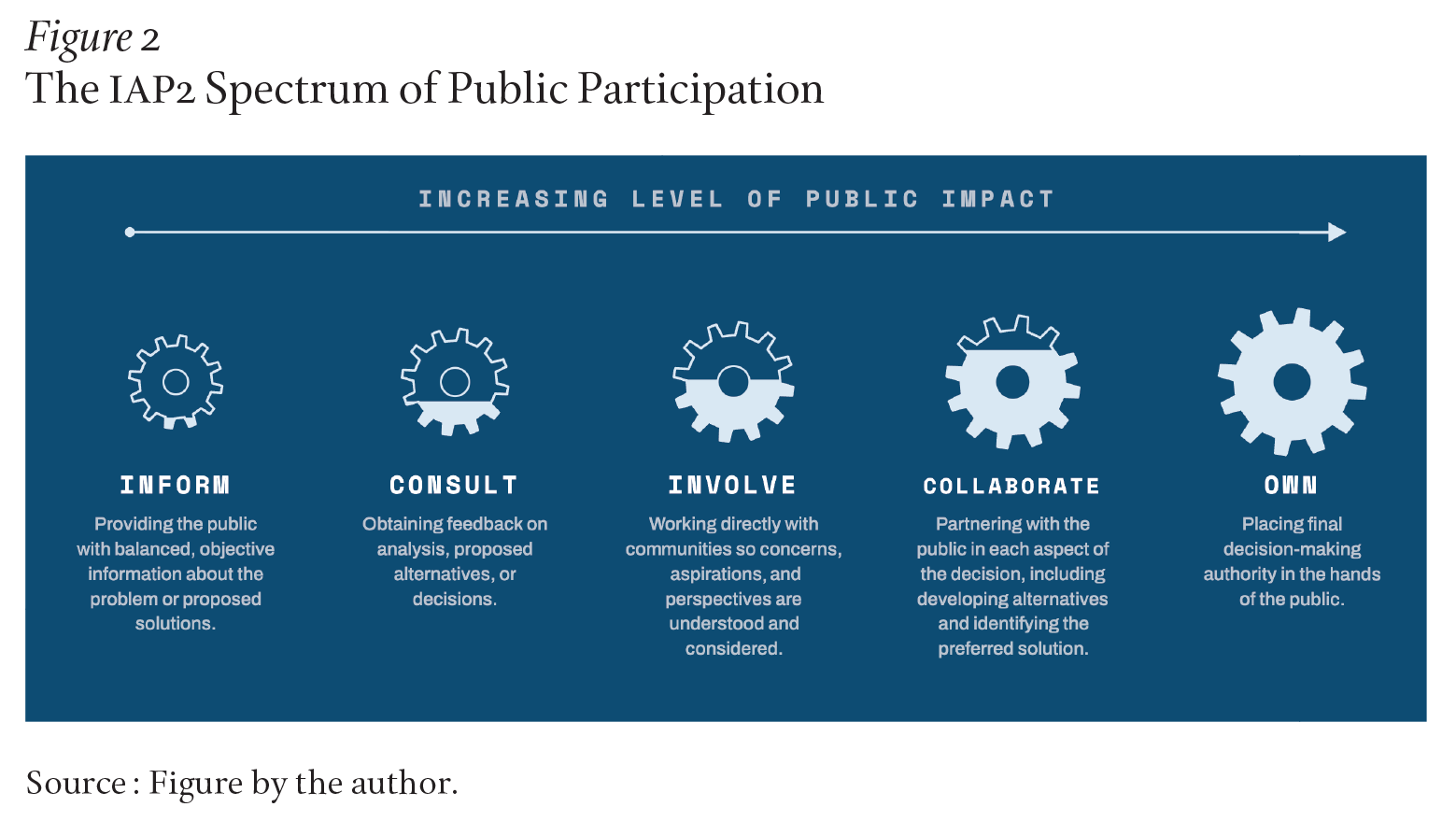
In modern framing, there is no “better” or “correct” level of control; rather, the goal is to be specific about how to optimize mutual benefits from civic engagement and to clearly communicate a role for communities that best respects their contributions and leverages their expertise. Crucial to this process is being honest and clear with communities from the outset about how their input will be used.
In designing and evaluating the next generation of civic innovations, there are a variety of additional challenges to consider. While there are far more considerations than can be outlined here, two especially important issues are outlined below.
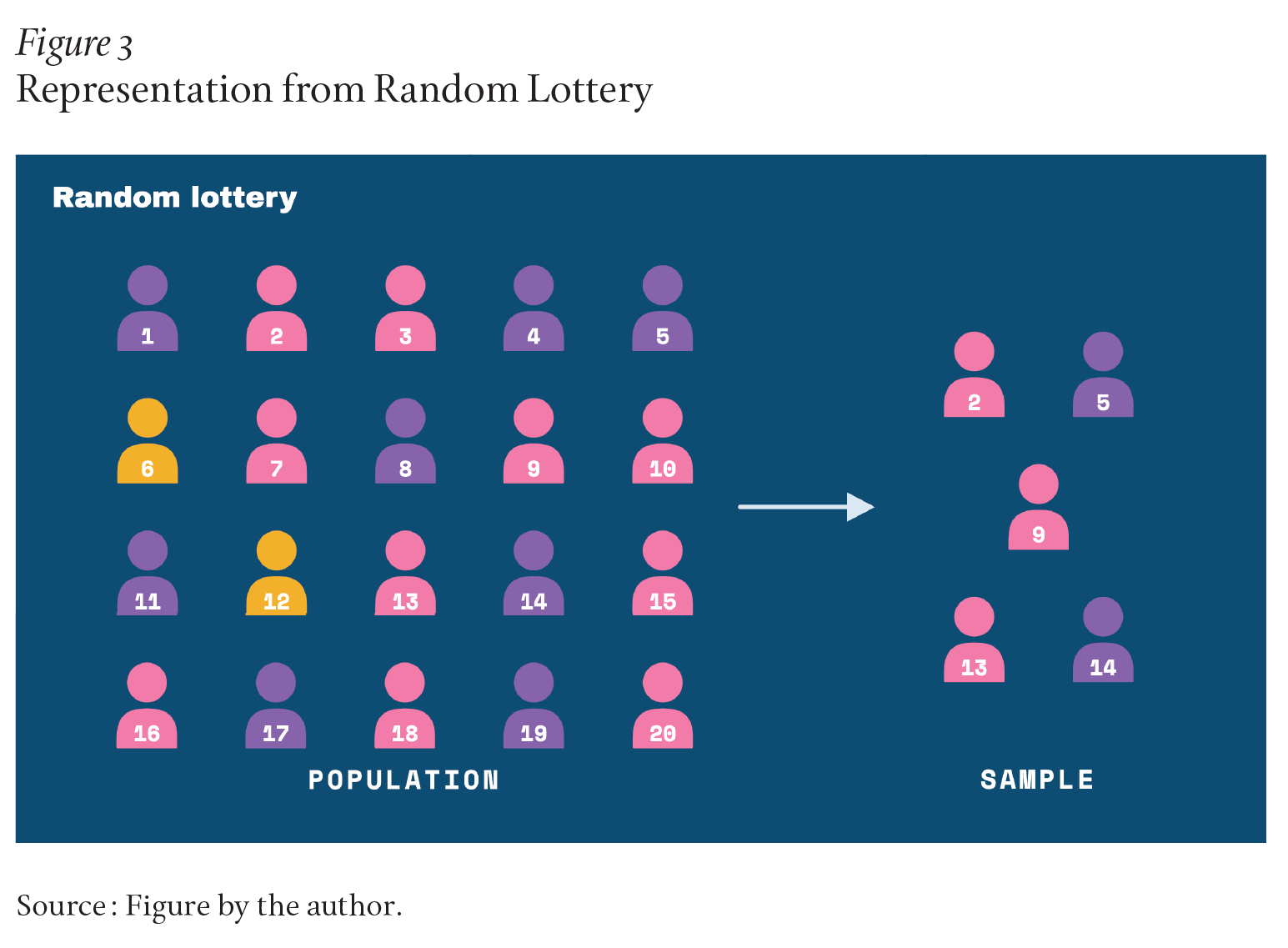
The problem of representation. New forms of civic innovation, such as civic assemblies, often tout the importance of bringing together a “representative” group of residents who are chosen through sortition, or lottery. However, a relatively small group of people is not substantively representative of a large and diverse population, even if they were selected by random draw. That’s because the group is likely to have only one or two people (or in some cases, no one at all) who “represent” demographic groups that are numerical minorities in the broader population (see Figure 3). Additionally, who is selected and invited to participate is not always the same as who chooses or is able to attend. Some people who are invited may not want to participate, while others may face barriers that preclude participation. To ensure equitable participation, organizers can consider providing stipends, childcare, food, and reimbursement for travel costs that make it as easy (and enticing) as possible for everyone who has been selected to engage.
Conversely, simply increasing the volume of participants through an open invitation does not guarantee a representative cross-section of the public. That’s because the people who most commonly self-select into civic participation are likely to be systematically different from those who do not choose to participate.11 Indeed, self-selection into newer engagement activities is likely to replicate the same sorts of biases we see in voter turnout, donating to campaigns, and other more traditional forms of engagement.12 For example, attendees of public hearings on zoning laws have been shown to be disproportionately older, whiter, and wealthier than the surrounding community.13 When these groups participate at systematically higher rates than others, government officials receive “distorted information on preferences and opinions.”14
The importance of facilitation. Any co-governance project that involves deliberation and debate remains susceptible to pressure from the loudest voices in the room, groupthink, and majority rule. In particular, underlying power asymmetries can make authentic dialogue difficult. In such cases, well-facilitated, structured dialogue can allow less powerful or underrepresented groups to challenge dominant narratives about an issue and thus shape the framing of discussion. Facilitation can also help surface existing power imbalances by directly identifying and discussing who the usual decision-makers are, who has the most resources, and who is most harmed when policies fail to address persistent social problems.
Additionally, certain approaches are better suited to cases in which people from very different walks of life come together to collaborate. For example, when deliberators come from diverse perspectives, making decisions by supermajority or consensus might be preferable to relying on majority rule. This is because a consensus approach typically requires participants to come to some sort of agreement on a course of action, reducing the likelihood of a more established, powerful bloc of participants ignoring the concerns of another, less powerful group.
Likewise, deliberating in more similar subgroups can be helpful. This is sometimes called “enclave deliberation” and involves discussion in smaller groups whose members are more similar in terms of class, ethnic background, neighborhood, and other demographic traits.15 This approach can help level the playing field by allowing people to speak more freely, enabling disadvantaged communities to make sense of their shared situation and organize what might otherwise be a more fragmented set of interests. Following enclave deliberation, groups might then come together to share their collective experiences with others who come from more dissimilar backgrounds.
Society faces increasingly complex challenges. Revolutionary new technologies, growing economic inequality, and decreasing trust in a range of institutions are changing relationships between governments and the people they serve. In this context, government innovators are seeking ways to better incorporate community voices into the policymaking process. These new models of co-governance aim to tap into the immeasurable creativity and wisdom that community members hold about the problems they face and how best to solve them. Through innovative models of engagement, residents’ ideas and perspectives can inform everything from the definition of policy problems to the prioritization of solutions.
To ensure the success of these initiatives, the field will need a rigorous evidence base focused on high-quality design, implementation, and evaluation. One such model comes from UC Berkeley’s Possibility Lab, where we have worked with dozens of state and local partners to build an iterative framework and practical set of tools for co-governance. This IMPACT Model helps government entities address public problems through meaningful collaboration with community partners (see Figure 4).
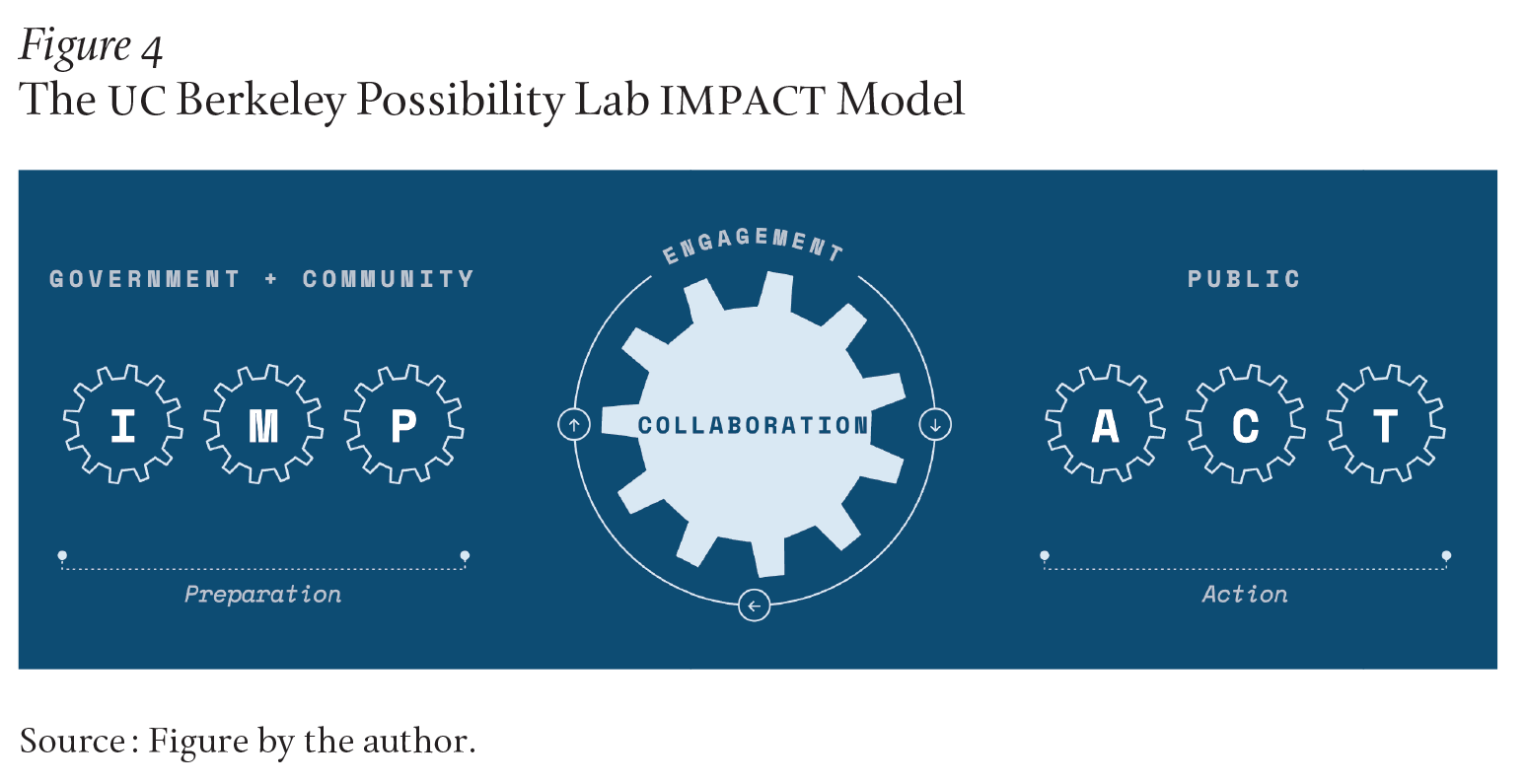
The first three steps of the IMPACT process (Initiate, Mobilize, and Plan) are about establishing the conditions for effective collaboration. These stages help define and refine a shared understanding of which problems need to be solved and how solutions should be developed. Through these steps, government practitioners are also able to build collaborative power-sharing partnerships with local and community organizations. Together, these partners can drive projects forward in a way that focuses on the needs of the impacted community, as those needs are understood and articulated by community members themselves.
| Initiate | Determine the purpose and goals for engaging with impacted communities and define the questions to answer. |
| Mobilize | Assemble a team of targeted partnerships to help make decisions around the engagement process and establish rules for collaboration. |
| Plan | Together, select an appropriate method or methods of engagement. |
The second half of the process (Act, Catalyze, and Test) is when the plan is put into action, learnings are synthesized, and the model and process are rigorously tested. Ultimately, this learning process is designed to enable the government and community to move forward with implementing and testing policies, programs, or other next steps. During all of these activities, government practitioners work directly with people affected by the problem at hand, who help guide processes, interpret community input, and determine criteria for success.
| Act | Take action by designing and deploying engagements that are best suited to meet predetermined goals. |
| Catalyze | Compile the information from the engagement and synthesize to highlight findings and/or actionable recommendations. |
| Test | Implement, evaluate, and iterate on civic engagement activities and recommended actions. Together, plan for next steps. |
The IMPACT process is designed to be iterative, inclusive, and intentional. Rather than ending the project following the “Test” phase, collaborators from both government and community should evaluate what they have learned, where they are in the policy process, and how their work together can continue to evolve. This engagement process can sometimes reveal new ideas to be piloted and evaluated, or uncover more questions about how to improve conditions. While the same collaborators should only continue to work hand-in-hand if it is mutually beneficial, doing so can help build mutual trust and momentum, making good on the many opportunities for action that the process will likely reveal.
Models of co-governance hold enormous potential to revitalize our democratic processes at a critical moment in American history. At the same time, we have little rigorous evidence that co-governance projects, broadly defined, consistently decrease polarization, increase trust, or lead to “better” policy outcomes. If the field of co-governance is to expand, new forms of civic innovation must be held to the same standards of transparency and accountability as any other public program.
Without establishing a rigorous evidence base, the field will likely suffer from a cheerleader bias; after all, advocates, facilitators, and funders all have a vested interest in declaring every experiment a success. And they might all be successful! But more civic engagement is not necessarily net positive—and it is almost never net neutral. When government engages with the community, its efforts can build trust, but they can also further erode it. The latter outcome is especially likely when attempts to gather community perspectives are rushed, lack a clear purpose, or are initiated without a clear implementation plan. If residents participate in co-governance efforts but don’t feel that their input is heard and valued, it can serve to reinforce the idea that engagement with government is not worth residents’ time or energy.
To ensure the movement toward co-governance achieves its enormous potential, the field would benefit from a shared framework for design, implementation, and evaluation; the Possibility Lab’s IMPACT Model provides one example of how this might be conceptualized. A reliable evidence base will require systematically documenting how projects are conceived and implemented: how topics were selected, how participants were recruited, what the attrition rates were, and what specific policy changes—if any—resulted from the work. Only through intentional design and a commitment to transparency can we ensure that civic innovation leads to its intended outcomes, rather than exacerbating the detachment and disillusionment that has come to characterize many of our status quo practices of democracy.