In a forum essay, the HULA team (Danielle Allen, Maggie Schein, Christopher Pupik Dean, and David Kidd) describes its work, which start in the education sector but are now being extended to public humanities projects.
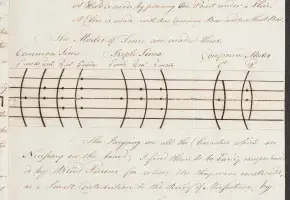
Benjamin Dearborn, an educator and inventor who was elected to the Academy in 1794, wrote to Academy president John Adams in August 1794, describing his design for a “Music Board” for the benefit of persons who are visually impaired...
Institutions are critical to our personal and societal well-being. They facilitate relationships; they regulate behavior. They develop and disseminate knowledge, enforce the law, keep us healthy, and uphold social and religious norms.
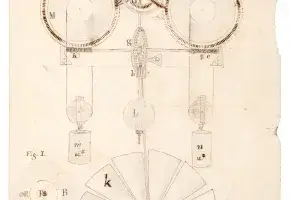
Connecticut goldsmith Benjamin Hanks owned a foundry that manufactured cannons, church bells, tower clocks, and various tools. At the request of Academy Fellow Ezra Stiles, Hanks sent the Academy his design for a clock that would never need to be wound manually.
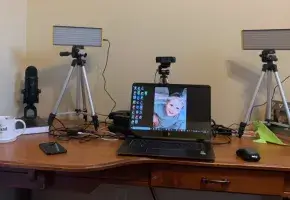
Suddenly trying to teach humanities courses online? Mind your presence, ask good questions and manage expectations, experts say, citing data from the American Academy’s Humanities Indicators project.
The pace of scientific and technological change means all adults must be prepared to learn and evaluate new science information after they leave schooling. The Academy’s latest publication, “Science and the Educated American: A Core Component of Liberal Education,” explores whether American colleges and universities are providing students with the foundation necessary for lifelong scientific learning.
The decennial census is the longest continuous scientific project in American history. It is also the largest applied social science project undertaken in this country.
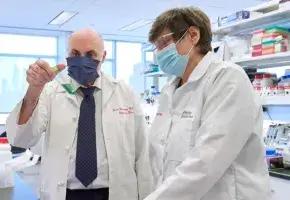
Katalin Karikó and Drew Weissman, elected to the Academy in 2022, have been awarded the Nobel Prize in Medicine in 2023. They shared insights into their pioneering work on mRNA vaccines in an Academy conversation earlier this year.