When AI Meets Art at the Scales of Science

In recent years, I have developed a research-driven artistic practice that approaches data as both an instrument and an aesthetic medium. Within this framework, data operate as a dynamic field through which relations between perception, form, and life can be explored. My work engages large-scale scientific datasets in order to render processes that exceed the limits of human perception, asking how such processes might become experientially accessible. Across projects that have drawn on neuroscience, molecular biology, and planetary science, I have approached art as a site of inquiry into the systems that organize life across multiple scales.
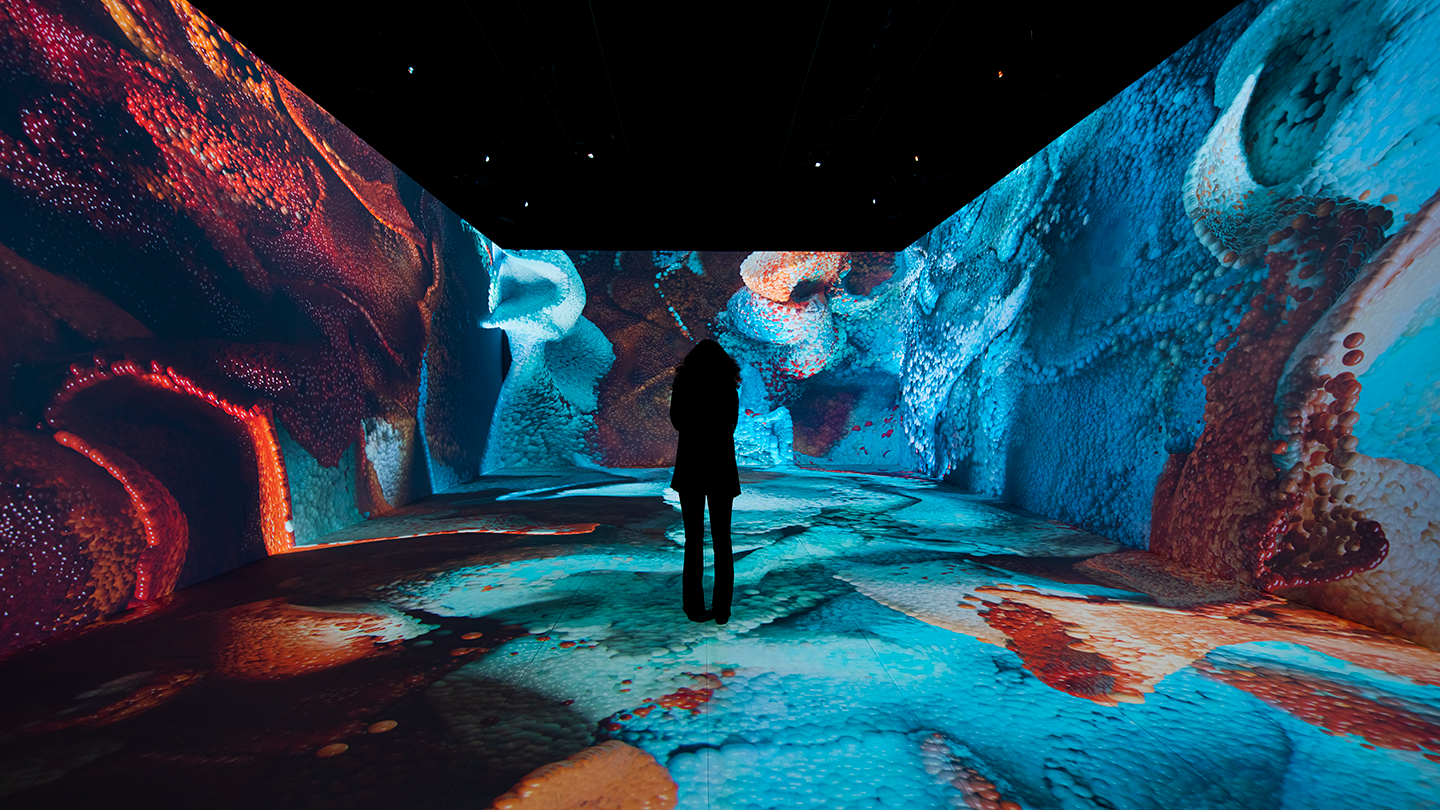
Two projects from 2021, Sense of Space: Connectome Architecture and Molecular Architecture, established a critical foundation for this trajectory. Presented at the 17th International Architecture Exhibition of the Venice Biennale—curated by Hashim Sarkis under the theme “How will we live together?”—these works reconfigured architectural thinking by shifting attention away from built form toward biological systems. Neural and cellular structures were approached as models of spatial organization defined by adaptation, interdependence, and continuous transformation. Within this context, architecture emerged as a field of processes rather than objects, and space appeared as an effect of relational systems.
I often describe this approach through the concepts I borrow from both life sciences and architecture. Such systems are characterized by distributed organization, recursive patterning, and ongoing modulation. Their coherence does not derive from stability but from the capacity to sustain transformation over time. In my practice, machine learning functions as a methodological framework capable of engaging this form of complexity. Computational models identify latent structures within large-scale datasets and translate them into immersive environments. In this sense, machine learning extends perception, allowing patterns to become perceptible that would otherwise remain inaccessible.
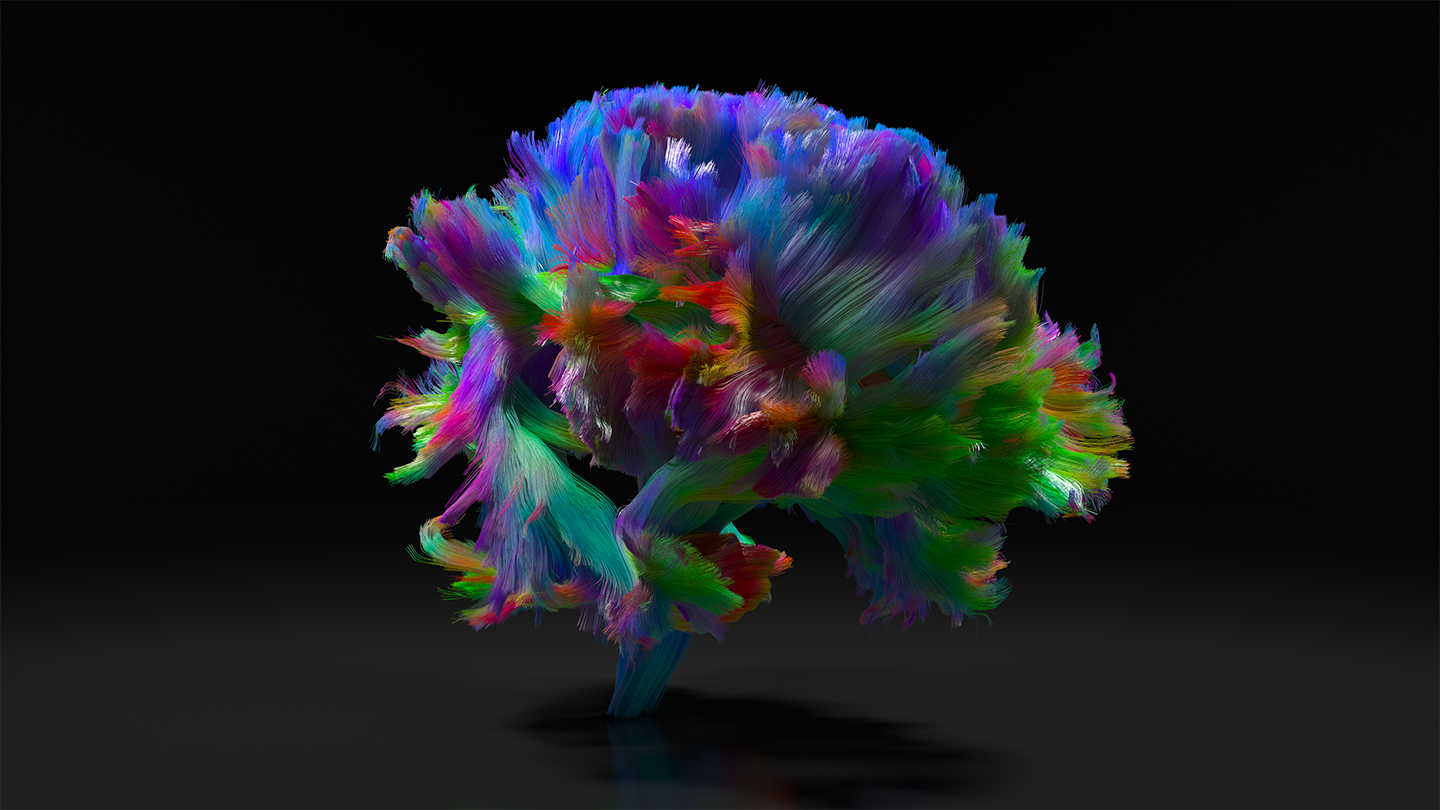
Connectome Architecture engaged the brain as a dynamic network of relations. Developed in collaboration with neuropsychologist Taylor Kuhn and the Human Connectome Project, the work drew on approximately seventy terabytes of multimodal MRI data. Structural, diffusion, and functional imaging data were processed to reveal patterns of neural connectivity across the human lifespan. These patterns were translated into a continuously evolving spatial environment in which connections formed, reorganized, and dissolved. The installation allowed viewers to encounter cognition as a shifting topology rather than a fixed structure.
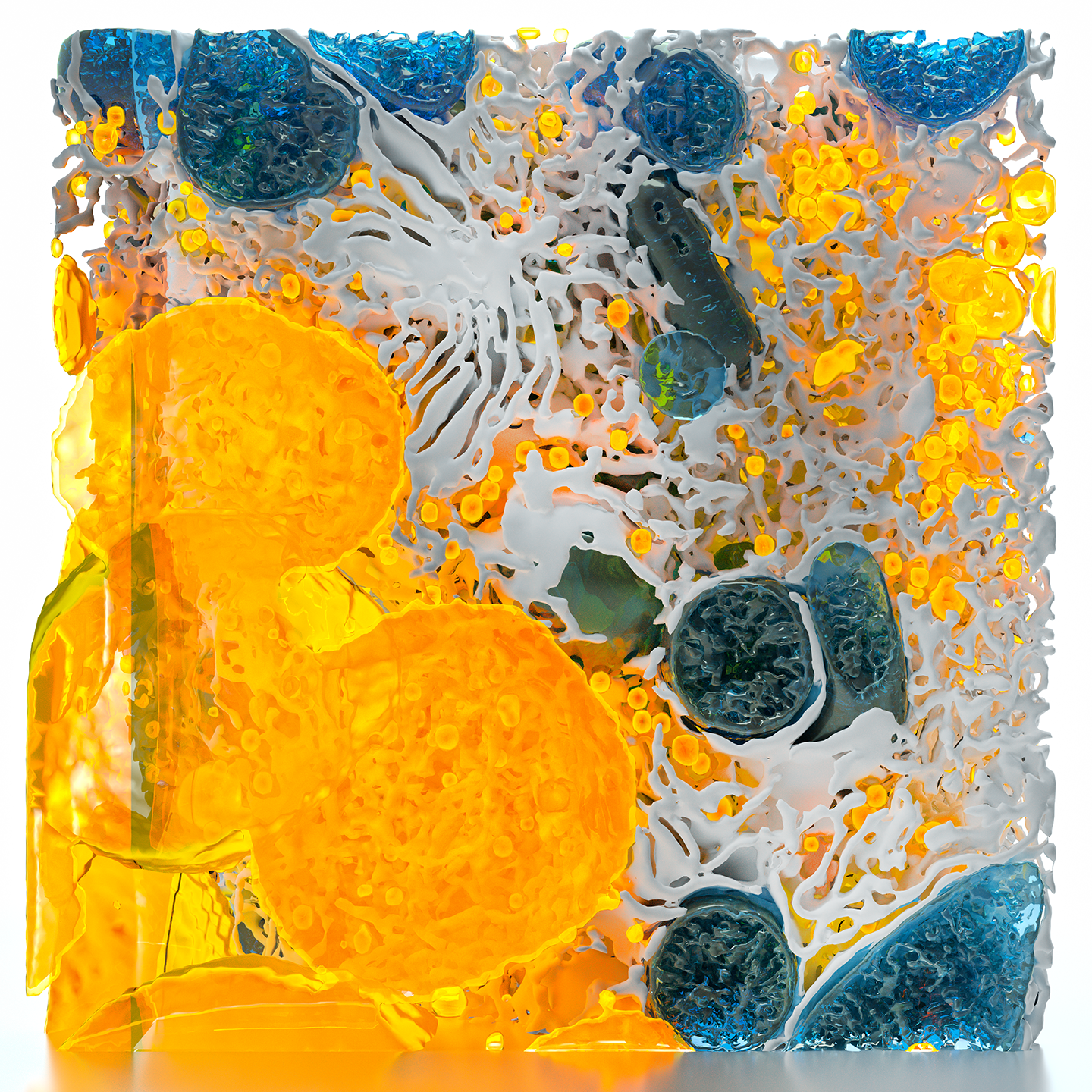
Molecular Architecture extended this inquiry to the scale of cellular organization. Developed with physician scientist Gökhan S. Hotamışlıgil and his research team, the project incorporated high-resolution FIB-SEM (focused ion beam–scanning electron microscopy) imaging data capturing the ultrastructure of liver cells. More than twenty thousand segmented slices were processed and translated into volumetric forms that operated between scientific representation and aesthetic abstraction. These forms rendered metabolic processes as spatial structures, revealing a system in which vitality and vulnerability coexisted. Cellular life appeared as a dense network of interactions sustained through continuous transformation.
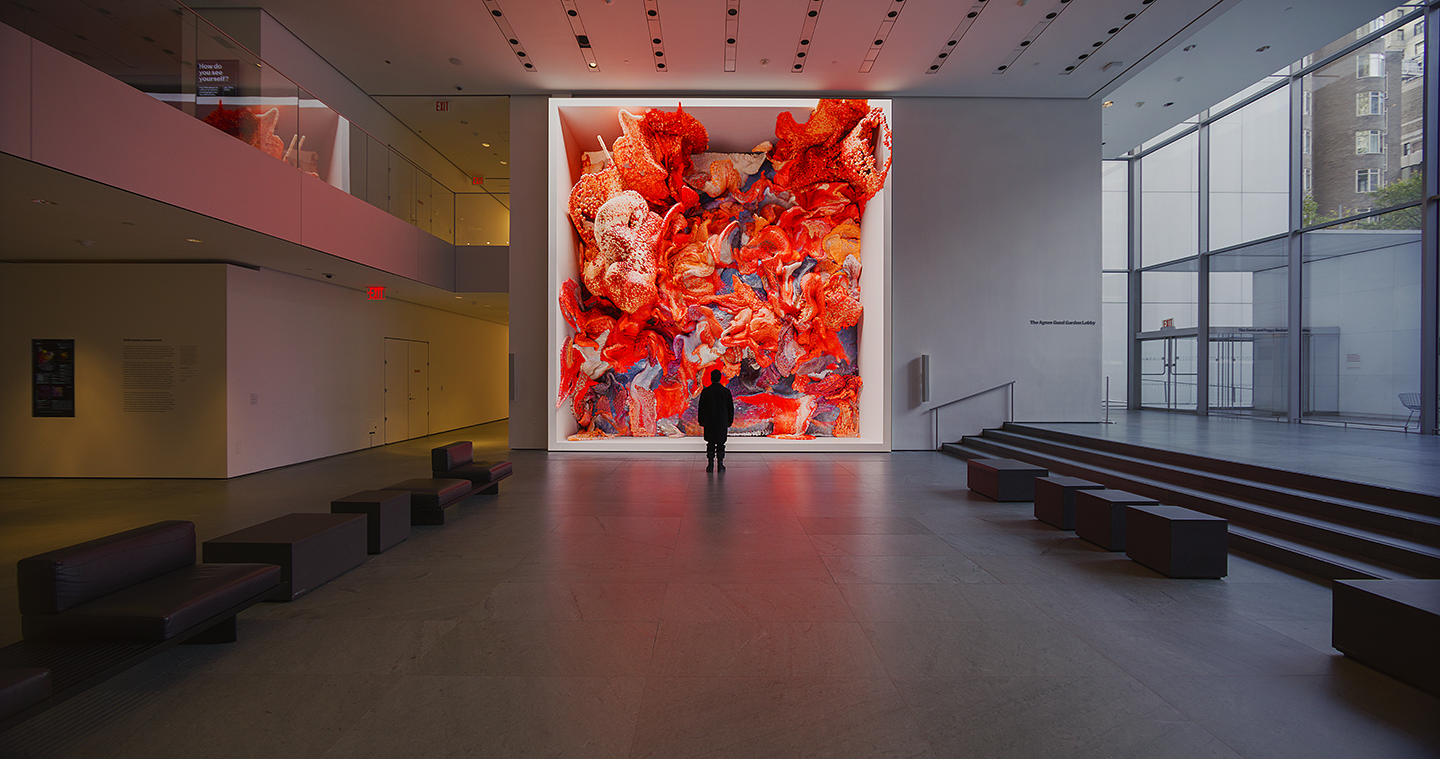
Across these projects, computational processes enabled an encounter with complexity as such. They articulated data as temporal, spatial, and relational, allowing processes that unfolded across different scales of life to be perceived within a shared experiential framework. This line of inquiry extended into Unsupervised, presented at the Museum of Modern Art (MoMA) in New York. Drawing on the museum’s collection, the installation employed generative AI to produce a continuously evolving visual field. The project was accompanied by an interdisciplinary study, conducted with neuroscientists and engineers, that used electroencephalography to measure neural responses during the viewing experience. Physiological data were analyzed alongside subjective reports in order to examine how aesthetic engagement manifested at the level of neural activity.1
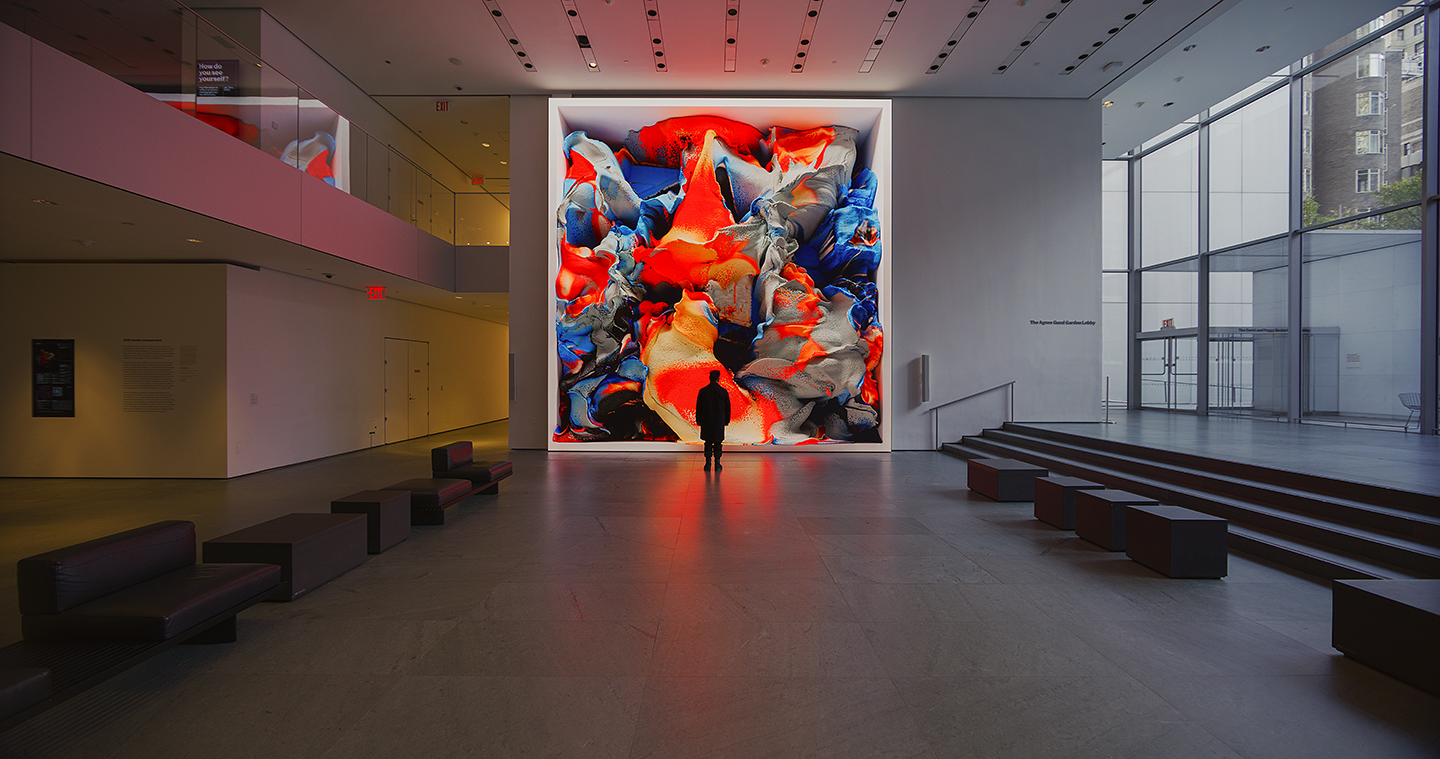
My collaborations with NASA and Caltech’s Jet Propulsion Laboratory expanded this investigation to planetary and cosmic domains. Machine Memoirs: Space drew on extensive archives of astronomical imagery collected by NASA missions. I approached this dataset as a form of collective memory, one that recorded humanity’s efforts to observe and interpret the universe across time. Through machine learning, these images were processed to identify patterns, correlations, and latent visual structures that exceeded conventional modes of analysis.
In Machine Memoirs: Space, I explored how machine intelligence could rearticulate this archive as a continuous visual experience. The system generated evolving forms that moved between recognition and abstraction, where traces of galaxies, stars, and planetary terrains emerged and dissolved within fluid compositions. The work engaged the dataset as a site of transformation, producing a speculative visual language that reflected both the limits and possibilities of perception.
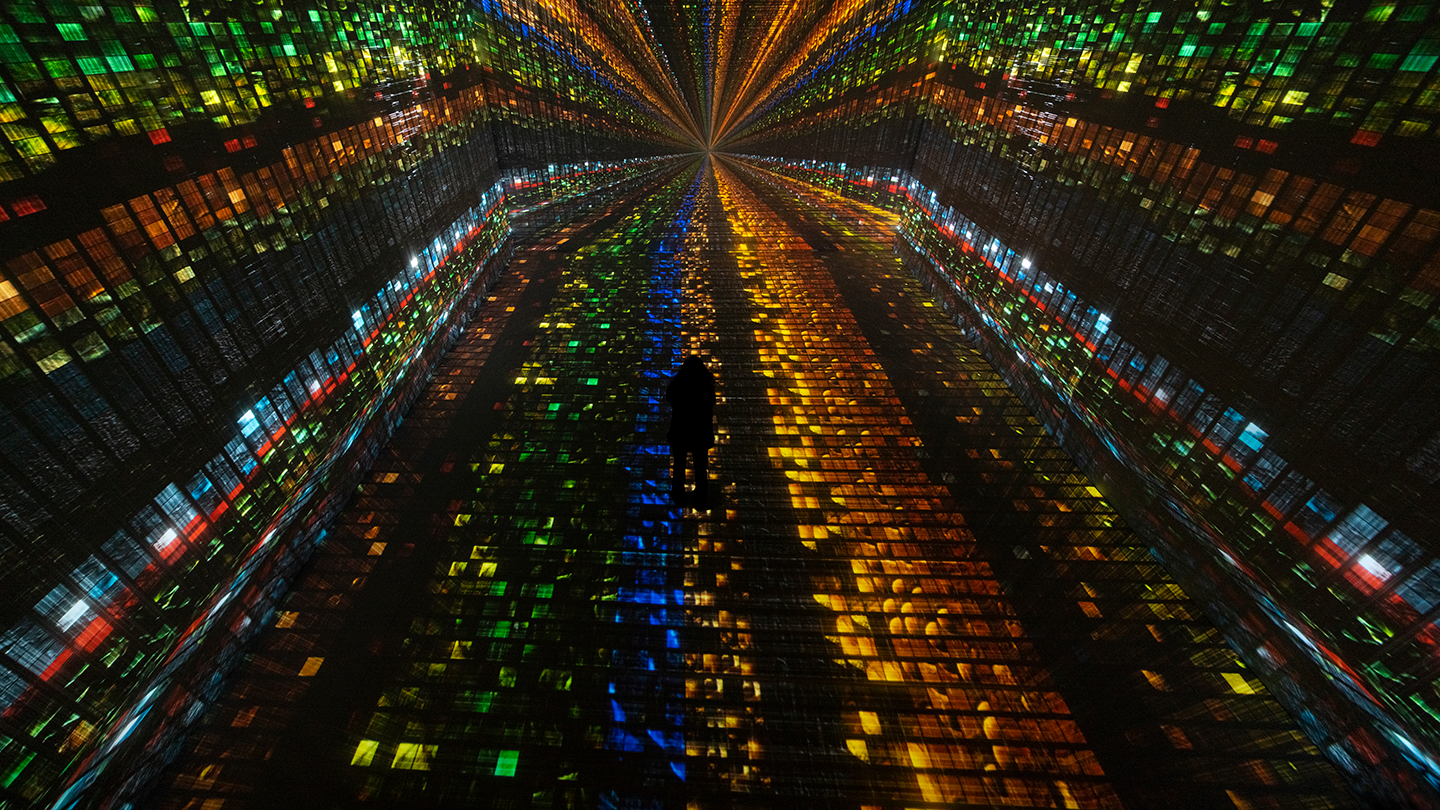
Taken together, these projects articulated a continuity across scales, from neural networks to cellular formations to cosmic systems. Each engaged processes that organized and transmitted information, and each positioned data as a connective medium linking different domains of existence. The artwork becomes a mode of inquiry that engages multiple systems in tandem, creating environments in which knowledge can be encountered through immersion. Within this framework, the future of discovery lies in our ability to engage intelligence as a collaborative process that extends beyond human cognition. As machine learning systems continue to reveal patterns across scales that were previously inaccessible, discovery unfolds through sustained interaction with complex, living systems. Art can play a critical role in this shift by rendering these processes perceptible and creating new conditions for understanding. In this sense, discovery emerges as an evolving dialogue between human perception, machine intelligence, and the systems that shape life itself.