Integrate Civic Education and Engagement
The Commission recommends that, in K-12 and college settings, educators expand civic education and engagement that are related to coursework and sustained over time to provide learners with a foundational understanding of constitutional governance, the U.S. election system, and the rights and obligations of American citizens.
Learners can build familiarity with civic habits through structured opportunities to experience and demonstrate civil and respectful discourse and practice communicating across differences in class and around campus. Key elements of civic education, such as American government structures and procedures, electoral and legal systems, and participatory democracy activities, can be appropriately taught to learners at all levels and in a variety of classes and contexts. Additionally, service learning, campus-community partnerships, and structured community service projects allow learners to apply disciplinary knowledge in real-world contexts. Military service and service-year programs provide ample opportunities to practice civic skills.
High school student in Colorado
“I’ve known that I’ve wanted to serve in some capacity for a long time, and I think it’s been military for the majority of my life ... I’ve also just respected in history, not necessarily people related to me, but just people sacrificing maybe their future for other people. That’s always been something I’ve admired.”
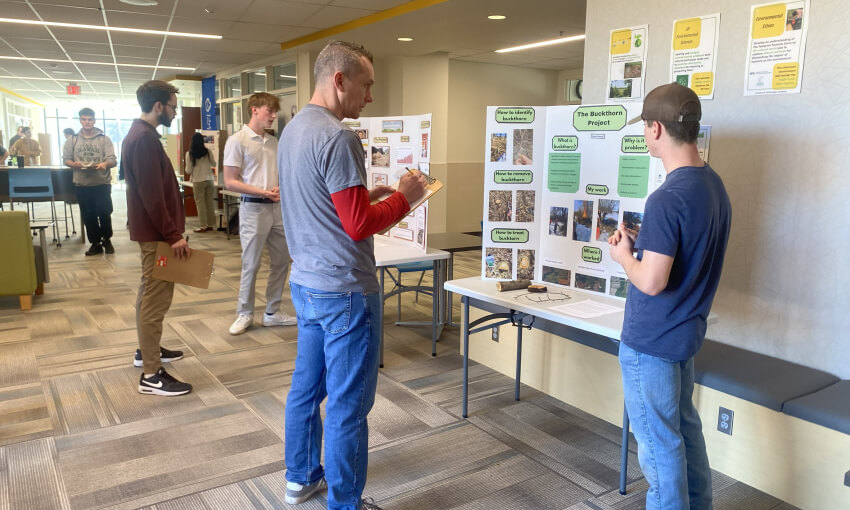
Institutions of higher education in the United States play a significant role in preparing learners for civic engagement by cultivating the knowledge, skills, values, and opportunities necessary for participation in democratic society and community life. In classrooms, courses in disciplines such as political science, sociology, and economics give learners the knowledge and tools to reflect on the political, social, and economic factors shaping community conditions. Outside the classroom, institutions of higher education also foster civic participation and leadership through various student organizations, debate societies, and volunteer groups. Opportunities to bridge the classroom and local community include learners and scholars partnering with local leaders and organizations to address societal challenges such as climate change and food insecurity.
Related Promising Practices
The Institute of American Civics at the University of Tennessee, Knoxville
The Institute of American Civics at the University of Tennessee, Knoxville connects undergraduate students with their local government.
- TN
- Education Benefits
- Durable Skills
- Higher Education Leaders
- Policymakers
A recent Academy publication, Preparing Students for Civic Life, provides guidance to higher education leaders on how to embed civic education and engagement across departments and multiple aspects of campus life.1 One case study presented in the publication spotlights the Institute of American Civics at the University of Tennessee, Knoxville, which has pioneered initiatives to connect undergraduates with their local government. The institute’s Public Square lecture series seeks to educate learners, the public, and local lawmakers about issues that are resonant for the local government. Undergraduate policy lab courses have picked up some topics from the Public Square series and, following small-group discussions with local elected officials, provided evidence-based recommendations for potential solutions.
Related Promising Practices
Creating Community by Maricopa County Community College District
Creating Community is a workforce-development tool designed by Maricopa County Community College to teach skills for success in business and society.
- AZ
- Durable Skills
- Employers
- Higher Education Leaders
- Philanthropists
Ohio State University’s General Education Program’s Citizenship Requirement
Ohio State University’s General Education program requires all students to take four to six credit hours of courses in citizenship.
- OH
- Durable Skills
- Higher Education Leaders
Civitae Core Curriculum at Longwood University
Civitae of Longwood University is a program for all undergraduate students to learn about citizenship, ethical reasoning, and civil discourse.
- VA
- Durable Skills
- Higher Education Leaders
Endnotes
- 1
American Academy of Arts and Sciences, Preparing Students for Civic Life: A Guide for Higher Education Leaders (American Academy of Arts and Sciences, 2025), https://www.amacad.org/ourcommonpurpose/publication/students-civic-life….