Preparing Students for Civic Life: A Guide for Higher Education Leaders
The Role of Higher Education in Constitutional Democracy
David E. Campbell and Ben Vinson III
A major trend that has defined American life over the last few decades is declining trust in institutions. Few institutions have been spared, from the military and the medical system to corporations and Congress. Partisanship explains some, but not all, of this trend. Overall, Americans from both parties—and those without political affiliations—have lost faith that major entities work well, work for them, or work at all.
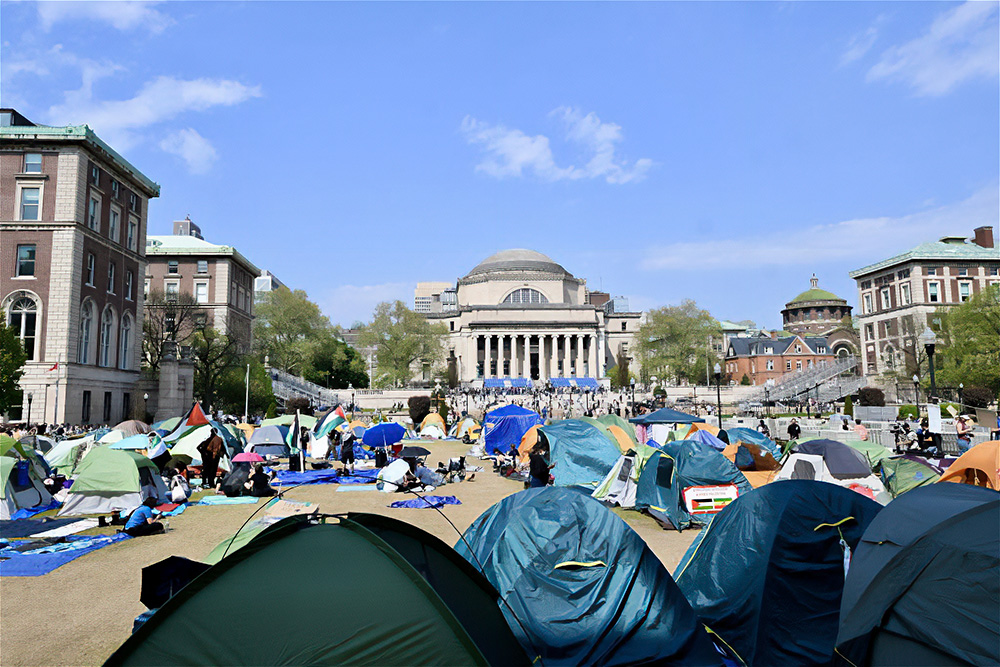
Few sectors have been as affected by the rising tide of distrust as higher education. In 2015, 57 percent of Americans expressed a “great deal” or “quite a lot” of confidence in higher education, according to a Gallup poll. By 2025, Gallup recorded a 15 percent decline—primarily due to a plunge in faith among Republicans.5 As recently as 2010, 58 percent of Republicans said colleges and universities were having a positive impact on American progress. In 2024, only 31 percent thought so.6 However, for higher education, too, partisanship is only part of the story, with a 16 percent decline in confidence among independents and a 9 percent decline among Democrats from 2015 to 2023. Over the last two years, the responses to the campus protests over the war in Gaza and debates over diversity, equity, and inclusion (DEI) programming and campus curricula have almost certainly deepened some Americans’ distrust of higher education.
The overall decline of trust in institutions is one of the major challenges facing American democracy. Constitutional democracies rely on trust, people’s faith in a common purpose, and a willingness to compromise. Today, that common purpose is increasingly hard to come by. One result is calcified institutions whose inaction or unresponsiveness spurs a loss of confidence among the public, which further weakens institutions, which weakens trust even more, and so on. Such trends are particularly worrying for young people. Growing up in a time of democratic crisis, they are not being provided with the evidence of democratic effectiveness needed to make them the nation’s future engaged leaders. Across the globe, young people exhibit less faith in democratic institutions than any other age group.7 In the United States, less than one-quarter of people aged eighteen to forty say they trust the federal government, only 29 percent trust their local government, and just 54 percent feel democracy has potential as an effective form of government.8 A 2024 poll found 83 percent of people aged eighteen to thirty-four were at least somewhat worried about the state of American democracy.9
The work of repairing American democracy and American trust will require a wide range of institutions. Higher education institutions have a particular responsibility to help reverse these trends. The first colleges and universities in North America predate the founding of the country, and, since those early years, education has played an essential role in cultivating participation in the body politic. From the start, these institutions trained emerging leaders, free thinkers, and politically mature social actors. Leaders of American academia recognized the importance of instilling a holistic perspective that prepares a whole person for a whole life. These are necessary building blocks for effective citizens and, by extension, an effective democracy.
Today, colleges and universities in America are particularly suited to be sites of democratic renewal. Higher education institutions have profound convening power. They can assemble powerful internal and external constituencies to devise solutions to critical issues. At the same time, they remain sites of inquiry that produce technological advancements and artistic masterpieces. And they have the unique ability to tie together the work of research, instruction, and dissemination in ways that reach broadly outward into communities, industry, and government. In essence, colleges and universities prepare many of the raw ingredients that are core to a healthy democracy.
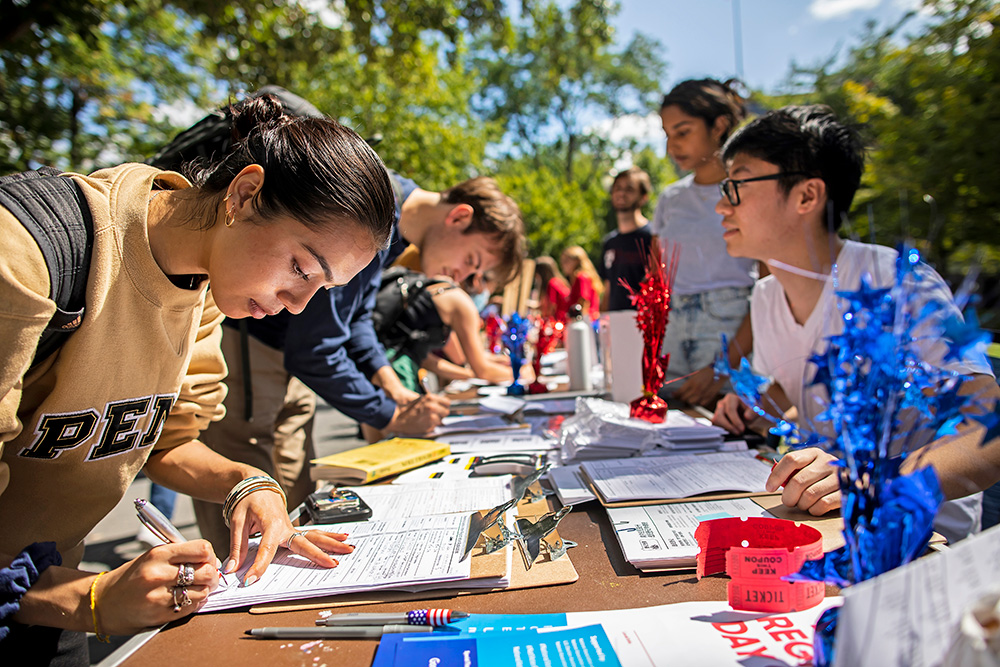
Much of the work of democratic renewal currently underway on campuses is siloed and segmented. Many campuses have faculty members or deans who are passionate about cultivating democratic values. Many even have campus centers or institutes devoted to democracy or citizenship. But at too many institutions, these efforts are cordoned off, just one of many initiatives that make campuses such interesting, diverse places. When democracy work is confined to certain parts of campus, it reaches only certain segments of the campus community, notably those already interested in democracy who seek out ways to become better citizens.10
For colleges and universities to fulfill their duty to American democracy, they must build the commitment and capacity to develop democratic citizens.11 Specifically, colleges and universities need to embed democratic values throughout institutional culture and curriculum. Every part of campus would benefit from embracing democratic norms, and every part of campus life, from the laboratory to the sports field, offers an opportunity to instill democratic values. The work of cultivating a sense of community can be baked into the institution such that students engage intentionally in the work of democracy while also encountering it organically across campus.
When embedding democratic citizenship throughout their institutions, colleges and universities should have two specific goals. The first is to graduate civically knowledgeable students. Students should leave higher education more knowledgeable about how their democracy works, their individual role in American democracy, and how they can engage with their democracy and help make it better. Higher education also needs to furnish students with civic skills: namely, the ability to have difficult conversations, to talk with people with whom they disagree, about politics or anything else. These skills do not come naturally, and the American public sorely needs them. Colleges can ensure new generations of voters, leaders, and activists matriculate into adulthood equipped with the ability to help repair institutions and to lower the temperature of political discord. After all, a citizenry that is both informed, engaged, and able to deal with difference is the prerequisite of a healthy constitutional democracy.
We do not mean to suggest that some institutions are not already taking their responsibility to democracy seriously and working to build the kinds of citizens America will need in the future. This report offers case studies highlighting just a few of these efforts. But more institutions can engage in this kind of work, and many of the institutions that already are engaged can do even more. Some may be hesitant to do so. Recent challenges to higher education only magnify the need for campus cultures in which citizen engagement and respectful dialogue are the norm. And by teaching students in a nonpartisan way about the fundamentals of democracy, and by making campuses more open to a wider range of freely expressed political opinions, institutions can begin to restore Americans’ faith in higher education’s positive contributions to the country.
The charge for a whole-campus commitment to democratic citizenship emerged from a working group of higher education leaders convened by the American Academy of Arts and Sciences (see the Appendix for a list of working group members). This effort emerged out of the Academy’s work on American democracy, building on its landmark cross-partisan report Our Common Purpose: Reinventing American Democracy for the 21st Century.12 The report offers thirty-one recommendations to strengthen democratic institutions, repair American civic culture, and bolster civil society. None of the recommendations, though, specifically explains how higher education institutions can and should engage in the work of reinventing democracy. The working group was convened to do just that.
Through its deliberations, the working group helped develop eight strategies for moving institutions toward a campus-wide commitment to democracy (the strategies are listed in the next section).
The strategies are purposefully ambitious. Higher education leaders are uniquely positioned to make major changes at their institutions. In no uncertain terms, university presidents and senior leaders set the tone for their campuses. What they value, how they interact with others, and what topics they choose to discuss in public establish a shared set of values for the university community. They can model a democratic-focused culture and deliberative dialogue. At the same time, they can use their administrative authority to ensure all parts of campus take part in this work. If institutions have a unique role and responsibility to democracy, institutional leaders have a unique role and responsibility to set the tone for their campuses’ embrace of democratic values.
To supplement the strategies, some members of our working group prepared case studies highlighting specific institutions already engaging in the work of infusing democratic citizenship into their bloodstream. We recognize, of course, that every campus is different. What works at the University of Miami will not necessarily work at Miami University. So while the case studies reflect the circumstances of the campus in question, they also represent the kinds of initiatives leaders could pursue for their own campuses, even if they do so in different ways.
These are unprecedented times, and higher education is facing unprecedented challenges. The case studies that follow offer at least some precedent for how campuses are rising to meet the moment.
By renewing their commitment to democratic values, institutions of higher education will benefit more than just their students. Within their local communities, colleges and universities are hubs of democratic activity. And nationwide, they can model strategies to overcome polarization, foster healthy discourse, and seek constructive ways to sustain America as a democratic republic. Americans can learn to trust again. Colleges and universities should help show them how.