The American Academy of Arts and Sciences was founded by visionaries who foresaw that the nascent republic would benefit from the expertise of learned citizens to guide its development, health, and integrity through any challenges that may arise.
Today, the clarity of that vision has never been more evident. We find ourselves in a time of deepening divides across lines of politics, race, religion, income, and opportunity. The institutions we have long turned to for leadership and information are under fire, as trust in national institutions such as the media, government, commercial enterprise, and academia declines. Strong and responsive institutions and a healthy civil society can carry us through crises and are vitally important in their aftermath.
From these challenges springs an ever-greater need for innovation and reinvestment in America’s founding values and its promise. As the Academy’s report Our Common Purpose: Reinventing American Democracy for the 21st Century notes, we are experiencing an age of surging civic participation, “of communities working to build new connections across long-standing divides, and of citizens suddenly awakening to the potential of their democratic responsibilities.” It is in times like these that members of the Academy, through projects in the American Institutions, Society, and the Public Good program, combine their extraordinary and diverse expertise to strengthen the relationships between our national institutions, civil society, and the citizens they serve and represent.
Project
Commission on the Practice of Democratic Citizenship
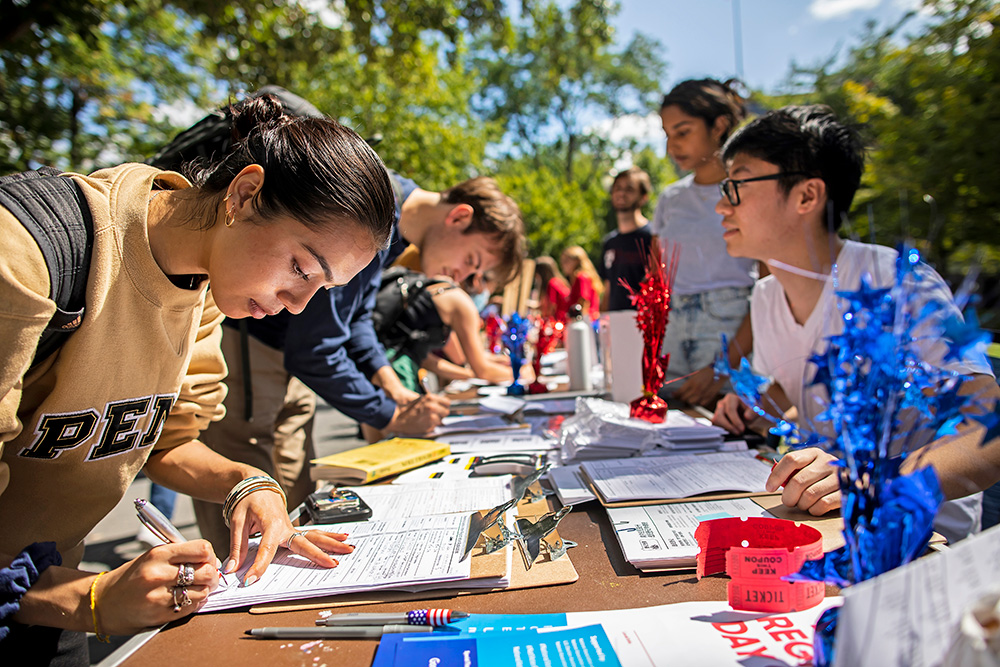
The Commission on the Practice of Democratic Citizenship is a multiyear project of the Academy. The Commission launched in 2018 to explore the factors that encourage and discourage people from becoming engaged in their communities. The Commission’s report, Our Common Purpose: Reinventing American Democracy for the 21st Century, seeks to improve democratic engagement in the United States with a set of thirty-one recommendations that reach across political institutions, civic culture, civic education, and civil society to revitalize American democracy by increasing representation, empowering voters, making institutions more responsive, and reinvigorating our civic culture.
The Academy committed to make significant progress on the recommendations by 2026, the nation’s 250th anniversary. In collaboration with champion organizations and leaders from across the nation, the Academy hosts public events and targeted briefings, provides expert testimony and thought leadership, convenes experts and practitioners for knowledge sharing and strategy development, creates op-eds and other earned media, and in other ways supports the ongoing implementation of Our Common Purpose.
COMMISSION CHAIRS
Danielle Allen
Harvard University
Stephen B. Heintz
Rockefeller Brothers Fund
Eric P. Liu
Citizen University
COMMISSION MEMBERS
Sayu Bhojwani
Women’s Democracy Lab
danah boyd
Data & Society
Caroline Brettell
Southern Methodist University
David Brooks
The New York Times
David Campbell
University of Notre Dame
Alan Dachs
Fremont Group
Dee Davis
Center for Rural Strategies
Jonathan Fanton
American Academy of Arts and Sciences
Lisa García Bedolla
University of California, Berkeley
Sam Gill
Doris Duke Charitable Foundation
R. Marie Griffith
Washington University in St. Louis
Hahrie Han
Johns Hopkins University
Antonia Hernández
formerly, California Community Foundation
Wallace Jefferson
Alexander Dubose & Jefferson, LLP
Joseph Kahne
University of California, Riverside
Kei Kawashima-Ginsberg
Tufts University
Yuval Levin
American Enterprise Institute
Carolyn Lukensmeyer
formerly, National Institute for Civil Discourse
Martha McCoy
formerly, Paul J. Aicher Foundation
Lynn Nottage
Playwright
Steven Olikara
Bridge Entertainment Labs
Norman J. Ornstein
American Enterprise Institute
Robert Peck
FPR Partners
Pete Peterson
Pepperdine University
Miles Rapoport
100% Democracy
Michael Schudson
Columbia University
Sterling Speirn
formerly, National Conference on Citizenship
Marcelo Suárez-Orozco
University of Massachusetts Boston
Ben Vinson III
Howard University
Diane P. Wood
American Law Institute
Judy Woodruff
PBS News Hour
Ethan Zuckerman
University of Massachusetts Amherst
PROJECT STAFF
Jonathan D. Cohen
Joan and Irwin Jacobs Senior Program Officer for American Institutions, Society, and the Public Good
Kelsey Ensign
Louis W. Cabot Humanities Policy Fellow
Zachey Kliger
Program Associate for American Institutions, Society, and the Public Good
Jessica Lieberman
Senior Program Officer for American Institutions, Society, and the Public Good
Victor Lopez
Program Associate for American Institutions, Society, and the Public Good
Peter Robinson
Chief Program Officer
Tony B. Shivers
Government Relations Officer
Betsy Super
Program Director for American Institutions and Global Security
FUNDERS
S. D. Bechtel, Jr. Foundation
Rockefeller Brothers Fund
The John S. and James L. Knight Foundation
The William and Flora Hewlett Foundation
Ford Foundation
The Conrad N. Hilton Foundation
The Clary Family Charitable Fund
Alan and Lauren Dachs
Sara Lee Schupf and the Lubin Family Foundation
Joan and Irwin Jacobs
Patti Saris
David M. Rubenstein
COMMISSION PUBLICATIONS
Preparing Students for Civic Life: A Guide for Higher Education Leaders (American Academy of Arts and Sciences, 2025)
Expanding Representation: Reinventing Congress for the 21st Century (American Academy of Arts and Sciences, 2025)
Habits of Heart and Mind: How to Fortify Civic Culture (American Academy of Arts and Sciences, 2024–2025)
The Case for Supreme Court Term Limits (American Academy of Arts and Sciences, 2023)
The Case for Enlarging the House of Representatives, Lee Drutman, Jonathan D. Cohen, Yuval Levin, and Norman J. Ornstein (American Academy of Arts and Sciences, 2021)
Our Common Purpose: Reinventing American Democracy for the 21st Century (American Academy of Arts and Sciences, 2020)
The Political and Civic Engagement of Immigrants, Caroline Brettell (American Academy of Arts and Sciences, 2020)
The Data Driving Democracy, Christina Couch (American Academy of Arts and Sciences, 2020)
MEETINGS
OCP Champions Meeting
June 12, 2025
Virtual
The Academy convened this meeting to connect with OCP Champions and other leaders working to strengthen American constitutional democracy. Participants discussed how the OCP Champion community can best respond to present challenges and what would be most impactful for the Academy to look at in the next phase of its democracy work.
FEATURED SPEAKERS
Danielle Allen
Harvard University
Stephen B. Heintz
Rockefeller Brothers Fund
Laurie L. Patton
American Academy of Arts and Sciences
Civic Collaboratory Meeting
July 24–25, 2025
House of the Academy, Cambridge, MA
The Civic Collaboratory is a national network of diverse, civic innovators from across many domains. Members are engaged at all levels, from community-based efforts to national initiatives, and are working independently or within institutions to seed new approaches to address civic challenges. The Academy and Citizen University cohosted the July 2025 meeting of the Collaboratory, and grounded discussion in Habits of Heart and Mind: How to Fortify Civic Culture.
Meeting of the Commission
August 12, 2025
Virtual
The Academy reconvened members of the Commission to discuss the progress made on the Commission’s original thirty-one recommendations and which recommendations have proven most durable over time. The Commission members also shared thoughts on the questions and topics they believe will be most impactful for the Academy to address in the next phase of its democracy work.
Preview of Expanding Representation: Reinventing Congress for the 21st Century
September 22, 2025
Virtual
The Academy invited individuals and organizations currently working on electoral reform and related topics to preview Expanding Representation: Reinventing Congress for the 21st Century, a forthcoming publication from the Academy’s Working Group on Electoral System Design. The event featured a panel discussion with Working Group members, who shared how the reform outlined in the report could reduce polarization, increase voter turnout, and improve representation for millions of Americans.
FEATURED SPEAKERS
John Carey
Dartmouth College
Andy Craig
Rainey Center
Jennifer McCoy
Georgia State University
Maria Perez
Democracy Rising
Local Democracy Practitioners Convening
November 13–14, 2025
House of the Academy, Cambridge, MA
Building on the work of the Local Democracy Working Group, this convening gave place-based practitioners working to build a healthier democracy an opportunity to meet and support each other’s work. At the convening, the Working Group shared its progress to date and gathered feedback while providing space for participants to reflect, connect, and share best practices.
Commission Working Group
Local Democracy Working Group
June 2025–January 2026
Local, place-based democracy work is consistently undervalued and encounters challenges that differ in important ways from those faced by national organizations. Beginning in June 2025, the Academy convened a working group of practitioners, scholars, and other experts to examine these challenges and address the broader systemic issues associated with place-based democracy work.
Working Group Members
Archon Fung, Cochair
Harvard University
Martha McCoy, Cochair
formerly, Paul J. Aicher Foundation
Richard Young, Cochair
Civic Lex
Courtney Bengtson
Wichita Foundation
Charlie Brown
Trust for Civic Life
Kayla DeMonte
Citizen University
Hollie Russon Gilman
New America
Shamichael Hallman
Urban Libraries Council
Darryl Holliday
News Futures, Commoner Company
Liz Joyner
The Village Square
Matt Leighninger
Center for Democracy Innovation, National Civic League
Carolyn Lukensmeyer
formerly, National Institute for Civic Discourse
Bridget Marquis
Reimagining the Civic Commons
David Martinez III
Vitalyst Health Foundation
Andrew Perrin
Johns Hopkins University
Steve Rathgeb Smith
Georgetown University
Project
Commission on Reimagining Our Economy
In the United States today, too many families are unable to achieve the life they want despite their best efforts, too many communities have not benefited from economic growth, and too many Americans believe the economy does not work for them. These conditions not only harm lives and livelihoods, but they also sow distrust in our political, economic, and community institutions. The widespread belief that the economy does not give everyone a fair chance exacerbates tensions among Americans, threatening the nation’s social fabric and its democracy.
The Academy launched the Commission on Reimagining Our Economy (CORE) in October 2021 with the goal of directing a focus from how the economy is doing toward how Americans are doing. The Commission builds on the work of Our Common Purpose, which acknowledges that economic conditions shape the practice of democracy but does not offer recommendations specifically targeted at economic issues.
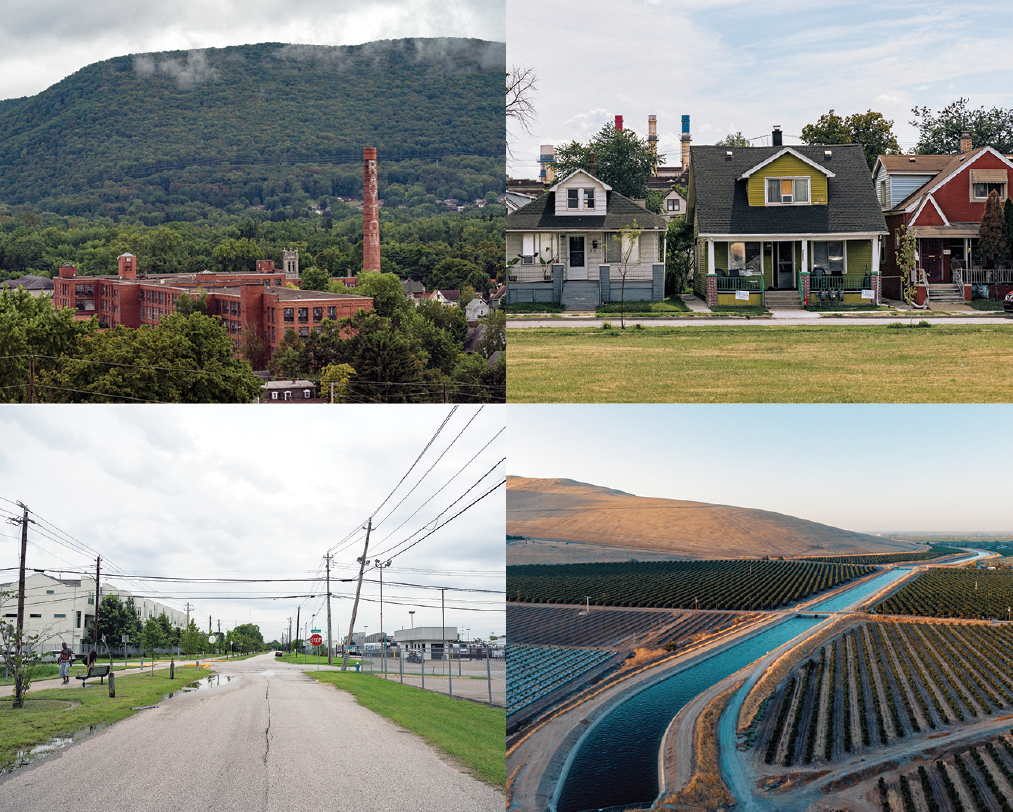
The interdisciplinary Commission comprises scholars, journalists, artists, and leaders from the faith, labor, business, education, and philanthropic communities. Drawing on thirty-one listening sessions held across the country, the Commission came to consensus on fifteen recommendations to advance a people-first economy. In addition to a final report, the Commission produced a book of photojournalism highlighting the lives of median-income Americans in four communities as well as a data dashboard, the CORE Score, offering a county-level assessment of American well-being.
COMMISSION CHAIRS
Katherine J. Cramer
University of Wisconsin–Madison
Ann M. Fudge
formerly, Young & Rubicam Brands
Nicholas B. Lemann
Columbia University Graduate School of Journalism
COMMISSION MEMBERS
Daron Acemoglu
Massachusetts Institute of Technology
Elizabeth Anderson
University of Michigan
Cornell William Brooks
Harvard Kennedy School
Whitney Kimball Coe
Center for Rural Strategies
Sarah Cross
Stand Together
Jane Delgado
National Alliance for Hispanic Health
James Fallows
Our Towns Civic Foundation
Helene Gayle
Spelman College
Jacob Hacker
Yale University
Tom Hanks
Actor and Filmmaker
Mary Kay Henry
Service Employees International Union
Kelly Lytle Hernández
University of California, Los Angeles
Megan Minoka Hill
Ash Center, Harvard Kennedy School
Reid Hoffman
Greylock Partners
Serene Jones
Union Theological Seminary
Julius Krein
American Affairs
Goodwin Liu
Supreme Court of California
Maya MacGuineas
Committee for a Responsible Federal Budget
James Manyika
Google-Alphabet
Katherine Newman
University of California
Viet Thanh Nguyen
University of Southern California
Ruth Simmons
Harvard University
Matthew Slaughter
Tuck School of Business, Dartmouth College
Anna Deavere Smith
New York University
Joseph Stiglitz
Columbia University
Michael Strain
American Enterprise Institute
Mark Trahant
Indian Country Today
Kenneth L. Wallach
Central National Gottesman, Inc.
PROJECT STAFF
Jonathan D. Cohen
Joan and Irwin Jacobs Senior Program Officer for American Institutions, Society, and the Public Good
Kelsey Ensign
Louis W. Cabot Humanities Policy Fellow
Victor Lopez
Program Associate for American Institutions, Society, and the Public Good
Peter Robinson
Chief Program Officer
Betsy Super
Program Director for American Institutions and Global Security
FUNDERS
The William and Flora Hewlett Foundation
The C&P Buttenwieser Foundation
The James Irvine Foundation
Omidyar Network
David M. Rubenstein
Patti Saris
Commission Publications
Community Partnership Visas: How Immigration Can Boost Local Economies (American Academy of Arts and Sciences, 2025)
Advancing a People-First Economy (American Academy of Arts and Sciences, 2023)
Faces of America: Getting By in Our Economy (American Academy of Arts and Sciences, 2023)
Commission Meetings
January 8, 2025
Virtual
The Commission on Reimagining Our Economy formally sunset at the end of 2024. To mark the conclusion of its work, the members of the Commission met virtually to discuss its accomplishments, assess lessons learned, and identify potential future areas of work for the Academy. Members were updated on the working groups that have carried forward Commission recommendations as well as highlights from meetings with members of Congress. When considering future areas of work, of particular concern for members was the well-being of young people: their faith in democracy, their health and mental health, and their economic prospects.
Faces of America Exhibit
February 5–March 1, 2025
Viewpoint Photographic Art Center, Sacramento, CA
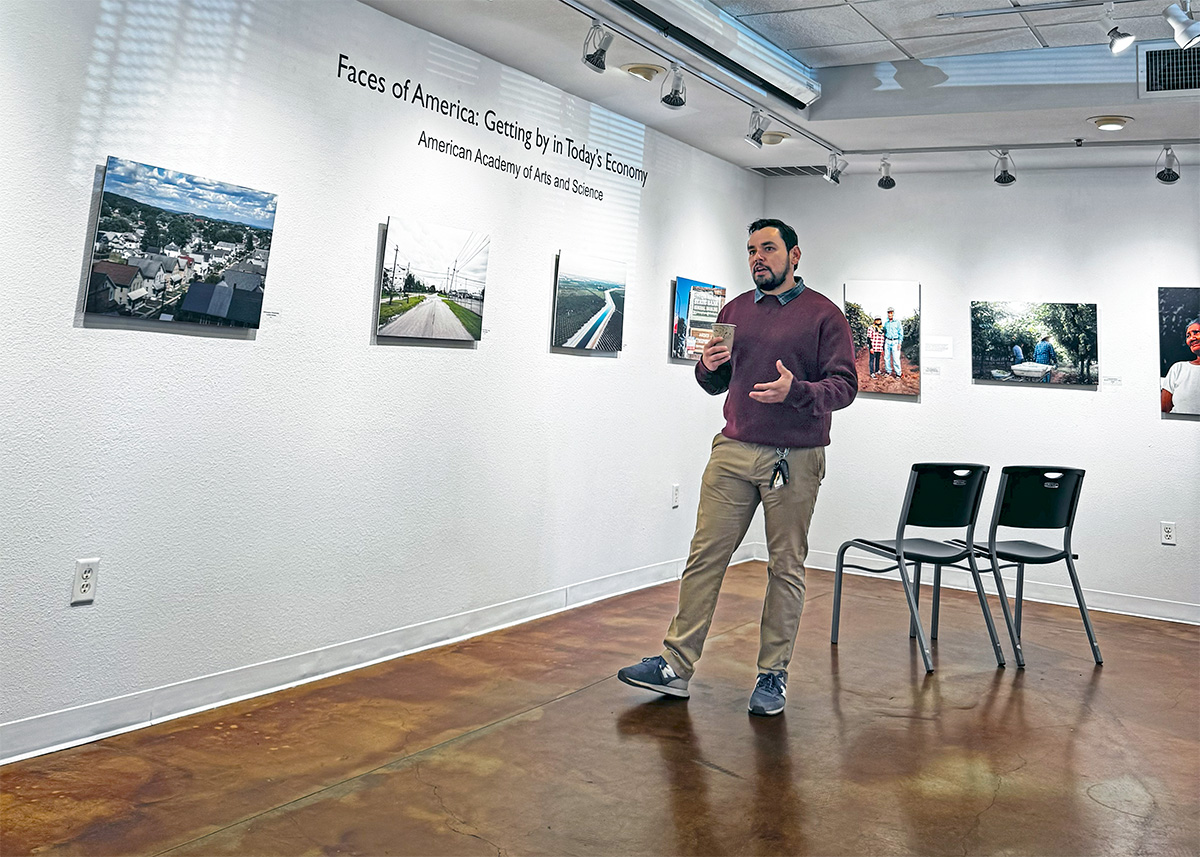
The Academy hosted a month-long gallery exhibit featuring images from the Faces of America photojournal. At the gallery’s Artist’s Reception, Adam Perez, who photographed Tulare County, CA, for the publication, spoke about the families captured in his photos and shared insights about the unique community that makes up Tulare County.
Place-Based Immigration Programs
May 29, 2025
American Enterprise Institute, Washington, D.C.
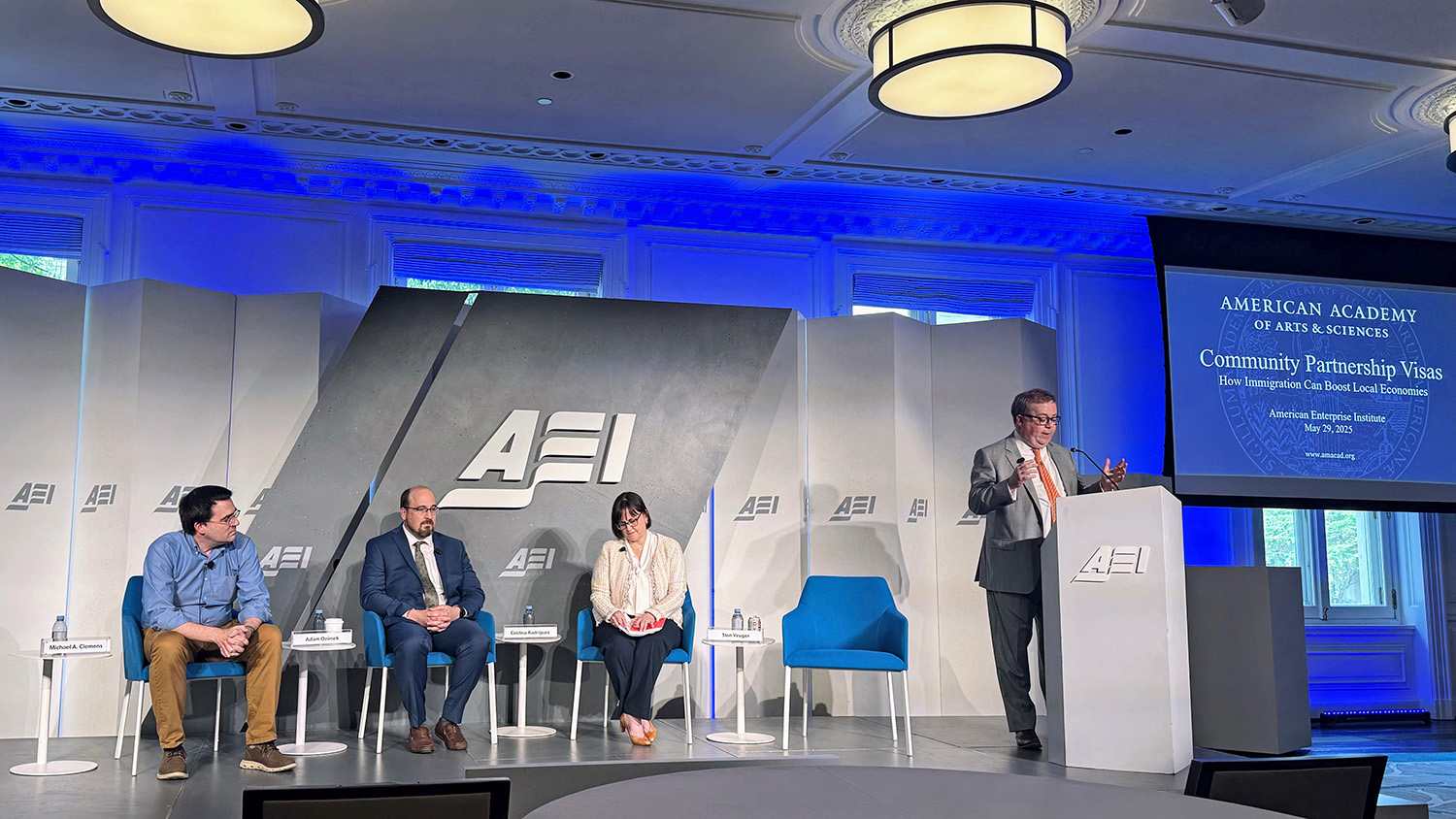
In partnership with the American Enterprise Institute, the Academy hosted an in-person launch of its report, Community Partnership Visas: How Immigration Can Boost Local Economies. The event focused on place-based visa programs and their potential to revitalize local economies.
SPEAKERS
Michael A. Clemens
George Mason University
Adam Ozimek
Economic Innovation Group
Cristina Rodríguez
Yale Law School
Stan Veuger, moderator
American Enterprise Institute
Are We Measuring What Matters? New Metrics for a New Economy
June 24, 2025
Virtual
In 2023, the Academy released the CORE Score, a data tool that measures how Americans are doing, an alternative to traditional metrics that focus on how the economy is doing. A product of the Academy’s Commission on Reimagining Our Economy, the Score has been used by scholars around the country, and its findings have been shared with the White House, the Federal Reserve, and many others. In 2025, after a period of development under the Academy, the Score formally transferred ownership, becoming a project of Yale University’s Institution for Social and Policy Studies, under the direction of Academy member Jacob Hacker.
This meeting marked the transition of the Score from the Academy to Yale with a conversation among Academy members about the Score’s composition and its potential future. Members received customized reports on their own county from which they could draw insights about their own community as well as the state of the American economy and American democracy.
Speaker
Jacob Hacker
Yale University
Commission Working Groups
Community Partnership Visas Working Group
May 2024–May 2025
One of the recommendations in the Commission’s final report calls for the creation of Community Partnership Visas (CPVs), a visa program that would allow local, state, and tribal governments to issue visas based on their specific economic needs. Such a program would aim to leverage the power of immigration to help communities stem demographic decline, fill critical labor market gaps, and revitalize their economies, all while marking the American commitment to welcoming immigrants. Though other organizations have issued proposals for place-based visa programs, none have answered specific regulatory questions surrounding their implementation. The Academy established a working group–a cohort of immigration experts and scholars–to create a cross-partisan policy framework for CPVs.
WORKING GROUP MEMBERS
Cristina M. Rodríguez, Chair
Yale Law School
Kristie De Peña
Niskanen Center
Gordon Hanson
Harvard Kennedy School
Douglas Massey
Princeton University
Cecilia Muñoz
New America
Gerald Neuman
Harvard Law School
Pia Orrenius
Federal Reserve Bank of Dallas
David W. Oxtoby
American Academy of Arts and Sciences
Matthew J. Slaughter
Tuck School of Business, Dartmouth College
Stan Veuger
American Enterprise Institute
Tara Watson
Brookings Institution
Working Class Candidates Working Group
May 2025–December 2025
A key recommendation in Advancing a People-First Economy calls for creating a “Training and Financing Program to Help Working-Class Americans Run for Political Office.” Political scientists Nicholas Carnes and Noam Lupu began working with the Academy in Spring 2025 to refine the Commission’s proposal and identify fruitful paths for making this recommendation a reality. The Academy convened a cross-disciplinary group of experts to address several key questions: Why does it matter that working-class people have access to elected office? What prevents working-class people from holding office? What remedies have the most promise and the clearest evidentiary basis? What is the relationship between worker representation and the representation of other key groups, like veterans, women, and people of color? What are the expected political outcomes of electing a more economically diverse cohort of lawmakers? The Academy will release the Working Group’s report in 2026.
Working Group Chairs
Nicholas Carnes
Duke University
Noam Lupu
Vanderbilt University
Working Group Members
Adam Bonica
Stanford University
Andrea Campbell
Massachusetts Institute of Technology
Katherine J. Cramer
University of Wisconsin-Madison
Jake Grumbach
University of California, Berkeley
Sasha Achen Killewald
University of Michigan
Jane Mansbridge
Harvard University
Tali Mendelberg
Princeton University
Lara Putnam
University of Pittsburgh
Kay Schlozman
Boston College
Project
Housing and Local Institutions
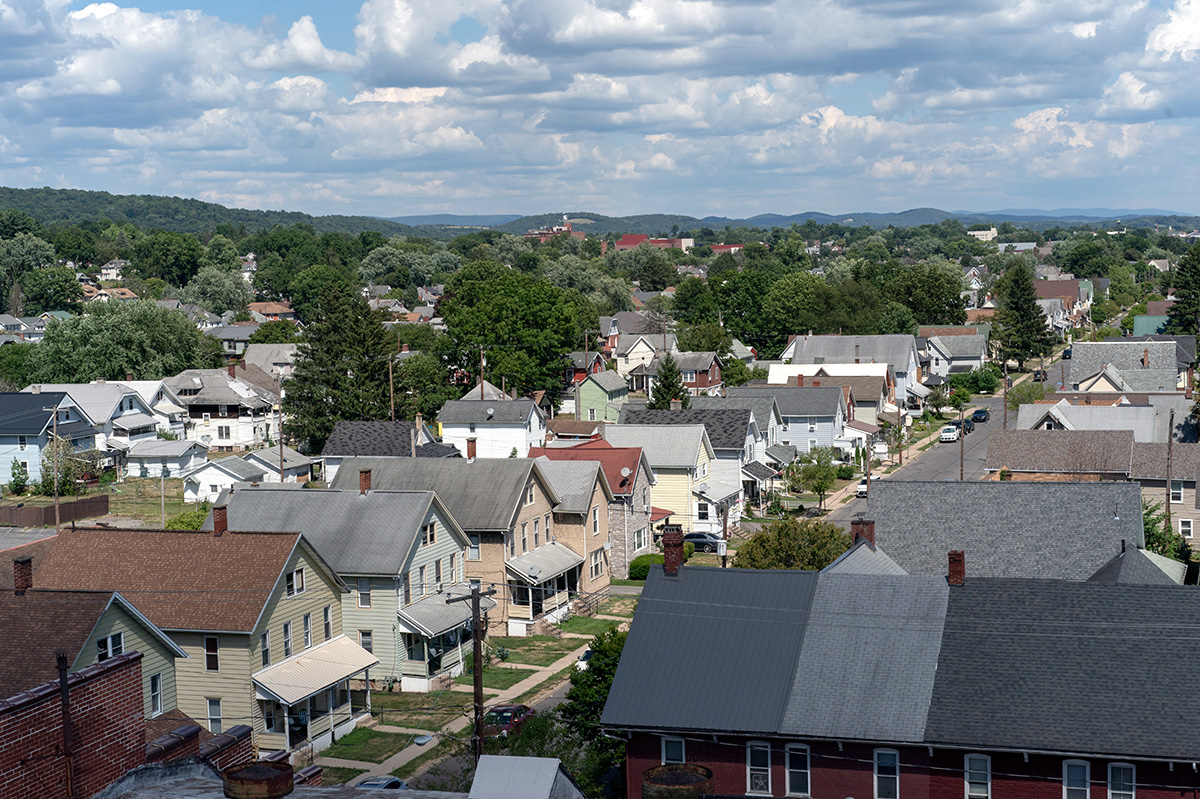
Too many Americans across the country are facing housing insecurity. This unprecedented, national housing crisis shows no sign of abating. As the crisis reaches more communities and more families, it is time to look for what one New York City official calls “empowered shepherds.” At the local level, these shepherds include anchor institutions–universities and colleges, faith-based institutions, and philanthropies–that can facilitate the creation of affordable housing. As employers, landowners, and mission-driven organizations, anchor institutions have incentives and resources to advance pro-housing strategies in their communities.
The Academy approved this new project in May 2025 with the goal of empowering leaders of anchor institutions to advance affordable housing solutions in their communities. The project, which builds off an exploratory meeting held in January 2025, has three key objectives: producing a blueprint document that enumerates options and best practices for local institutions, featuring new artistic work that uplifts the stories of Americans impacted by the housing crisis, and developing a data tool to support anchor institutions in their work.
Research on the roots of the housing crisis in America is well established, but this focus on local institutions and housing remains underdeveloped. The Academy’s housing initiative is working to move the field forward by gathering and disseminating practical, place-based solutions for leaders in higher education, philanthropies, and other anchor organizations.
PROJECT CHAIRS
Paula J. Giddings
Smith College
Shirley Malcom
American Association for the Advancement of Science
PROJECT STAFF
Jonathan D. Cohen
Joan and Irwin Jacobs Senior Program Officer for American Institutions, Society, and the Public Good
Kelsey Ensign
Louis W. Cabot Humanities Policy Fellow
Victor Lopez
Program Associate for American Institutions, Society, and the Public Good
Tony B. Shivers
Government Relations Officer
Betsy Super
Program Director for American Institutions and Global Security
Exploratory Meeting
Housing: A National Issue, A Local Solution
January 23–24, 2025
House of the Academy, Cambridge, MA
The Academy gathered an interdisciplinary group of leaders, practitioners, and scholars to discuss how anchor institutions–colleges and universities, philanthropies, and faith-based organizations–can alleviate the housing crisis in their communities. Building on the work of the Making Justice Accessible project and the Commission on Reimagining Our Economy, the participants determined that local institutions serve in many roles that can be deployed to advance affordable housing: they can be trusted conveners of public debates on land use, funders of development, conveners of and contributors to housing coalitions, or owners of land that can be built upon, to name just a few. While every institution resides in a unique local context and no single approach can be applied universally, many action items can be adapted to suit the specific housing needs of different communities.
PARTICIPANTS
Paula J. Giddings, Cochair
Smith College
Shirley Malcom, Cochair
American Association for the Advancement of Science
Christina Alexis
The Reinvestment Fund
Rukmini Balu
Duke University
Eve Blau
Harvard University
Prabal Chakrabarti
Federal Reserve Bank of Boston
Allison Clark
The John D. and Catherine T. MacArthur Foundation
Colleen Cotter
The Legal Aid Society of Cleveland
Marcia Fudge
Taft Stettinius & Hollister
Antonia Hernández
formerly, California Community Foundation
Angela (Angie) Hubbard
Metro Nashville
Laurie L. Patton
American Academy of Arts and Sciences
Rip Rapson
The Kresge Foundation
Jason Rojas
Trinity College
Jenny Schuetz
Arnold Ventures
Rob Stephany
The Heinz Endowments
Peter A. Tatian
Urban Institute
Satish K. Tripathi
University at Buffalo
Joe William Trotter, Jr.
Carnegie Mellon University
Ben Vinson III
Howard University
FUNDER
The James Irvine Foundation
Project Meeting
Higher Education and the Housing Crisis
April 11, 2025
Virtual
This event convened higher education leaders from the Academy’s Affiliates network to discuss how higher education can support affordable housing solutions in their communities. As anchor institutions, colleges and universities are uniquely suited to address the housing crisis by leveraging their land ownership, economic and political influence, convening power, and research capabilities. The meeting highlighted higher education’s responsibility in mitigating the housing challenges and provided a forum for leaders to share best practices to help their institutions, and the nation, navigate the housing crisis.
SPEAKERS
Laurie L. Patton
American Academy of Arts and Sciences
Jenny Schuetz
Arnold Ventures
Peter A. Tatian
Urban Institute
Meeting
Meeting on Political Economy and American Democracy
October 19–21, 2025
Tarrytown, NY
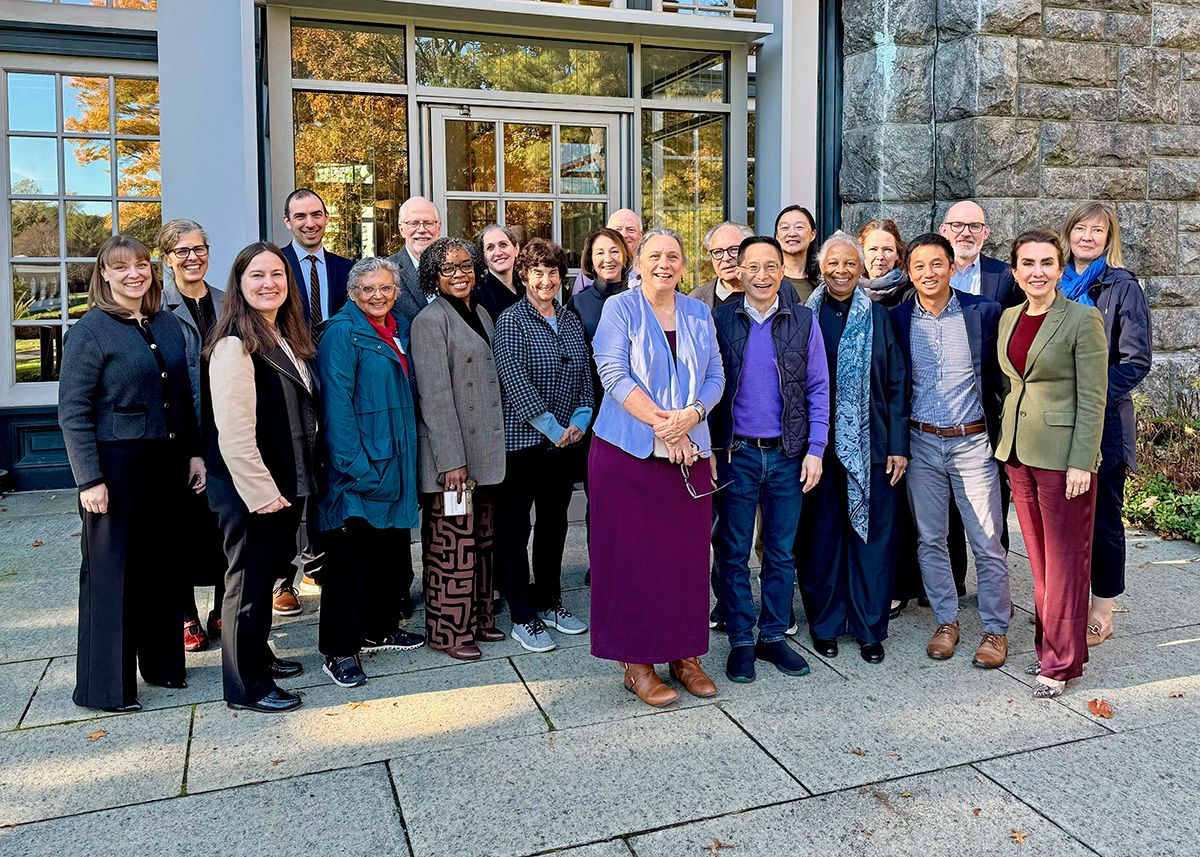
The Academy’s Commission on Reimagining Our Economy concluded its work in 2024 and the Our Common Purpose project will finish in 2026. The leaders of both projects convened a multidisciplinary group of leaders from civil society, philanthropy, and academia to help determine the Academy’s next areas of focus in the fields of political economy and democracy. Participants explained what they saw as the most pressing issues facing American democracy and the economy, and discussed how the Academy and similar organizations can shape public policy and people’s lives. Of particular interest was the topic of young Americans, their distrust in institutions and their concern for their future. Follow-up meetings and conversations will build on this meeting and continue the process of scoping the Academy’s future areas of work.
Project
Making Justice Accessible
Project Meeting
Inequality, Access to Justice, and the Rule of Law
April 3, 2025
House of the Academy, Cambridge, MA
In partnership with Harvard University’s Center for the Legal Profession, Equal Justice Works, and the Association of American Law Schools, this convening gathered over 150 thought leaders from law, business, government, civil society, and academia to discuss the systemic and reinforcing relationship between societal inequality and access to justice. The event began with a framing session on the main drivers of inequality in the United States and the world, followed by a discussion on how access to justice is both impacted by and contributes to those socioeconomic divides.
FEATURED SPEAKERS
Arne Duncan
Create Real Economic Destiny
David Engstrom
Stanford University
Ben Jackson
Upsolve
Goodwin Liu
Supreme Court of California
Martha Minow
Harvard Law School
Kellye Testy
Association of American Law Schools
David B. Wilkins
Harvard Law School
Verna Williams
Equal Justice Works
Daniel Yi
Harvard Law School