Laurie L. Patton
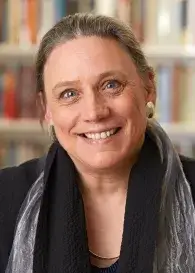
Earlier this fall, the Academy welcomed hundreds of new members and their guests to Cambridge for a joyous and inspiring 2026 Induction weekend. One of my favorite parts of the weekend is the Saturday morning program at the House of the Academy, during which Academy leaders share their experiences with the new members. Following those comments, the new members engage in group discussions among themselves throughout the building. The Saturday morning program also provides me with an annual opportunity to share some thoughts on the Academy and its mission of service to the nation and the world.
As I mentioned to our new members, in this, the 250th year of our nation, I have been thinking in particular about the relationship between the ordinary and the extraordinary. You have heard much during this anniversary year about our nation’s founders: leaders like John Adams and John Hancock. They were also the founders of the Academy. They were extraordinary individuals who lived extraordinary lives.
Yet those extraordinary lives were in many ways an accumulation of ordinary moments. Think of the Academy’s Legacy Recognition Honoree Abigail Adams, who corresponded constantly with John when they were apart about things like their garden and their children, weaving those daily details into deliberations about the purpose of America.
As we celebrate our nation’s 250th year, I have been researching our other founders—all sixty-two of them. Most of them you will never have heard of. But they too each contributed in extraordinary ways to freedom. Samuel Cooper, the minister on Brattle Street whose parsonage served as an informal meeting place for revolutionary strategy, was entrusted by Washington with one of eight copies of the Treaty of Paris that ended the Revolutionary War. John Bacon, the combative pastor who was ousted by his congregation, later made one of the first arguments that Black people and Native Americans should be allowed to vote, forever changing the Massachusetts constitution. These men have not become household names in American history. But, in the year 1780, when the fate of the new nation was far from certain, they decided to create the Academy, a society whose purpose was to gather knowledge in service of the nation.
I am struck too by the life of Maria Mitchell—a distinguished astronomer who was the first woman elected to the Academy in 1848 (and who would remain the only woman elected to the Academy until 1943). Maria was the first professor of astronomy at Vassar—in fact, the first professor of astronomy anywhere in the nation. She worked as a librarian in the Nantucket Atheneum from 1836 to 1856. It was while working as a librarian that she discovered in 1847 what was known as “Miss Mitchell’s Comet”—a groundbreaking discovery that led to international recognition. During her years at the Atheneum, she managed the collection and taught herself mathematics. I imagine on the days before and after she discovered the comet, she walked to the Atheneum door, settled in at her desk, and took care of business. She may have even paid a bill or two. “I was born of ordinary capacity, but of extraordinary persistency,” she wrote later in her career.
These are the ordinary moments that lend texture and humanity to lives of genius.
The American pursuit of art and science did not always have the texture and humanity that we hope it would have had. We are only now beginning to acknowledge and recognize the violence and inhumanity that nation-building also entailed. As you have entered the House of the Academy, you might have turned right to see the exhibit of acceptance letters on the walls of the atrium. The next time you visit, turn left to look at the plaque exhibiting the names of our Legacy Recognition Honorees—people who were not elected in their lifetimes because of the color of their skin, the nature of their origins, or whom they loved.
Perhaps it was an ordinary moment for the Academy’s first president James Bowdoin when he served on a panel to interrogate Legacy Recognition Honoree Phillis Wheatley about whether she could have actually written her beautiful poetry. But it should never have been business as usual to interrogate someone so gifted as Wheatley, who endured that moment of inhumanity with extraordinary grace. And there are so many other stories—unjust moments we must reckon with as we move toward the Academy’s own 250th anniversary in 2030.
The work of defining, cultivating, and recognizing excellence in the free pursuit of knowledge should be the work of our democratic nation. At the start of our nation’s next 250 years, we invite you to join us in cultivating and recognizing excellence in others. Join us in the election process, where you will have a chance to name those who may not have been honored to the degree that they deserved. Join us in one of our research projects, where we take on the challenging task of reaching across disciplines, sectors, and ideologies to produce knowledge for the common good. Join us at one of our local member events, where our practice of coming together to learn and talk across fields is both an everyday occurrence and a transformative experience. Join us in choosing Legacy Recognition Honorees and play a part in national healing.
As members of the American Academy, you have been recognized for a lifetime of ordinary moments that have led to extraordinary insights. You follow John and Abigail Adams as they discuss democracy and their gardens. Maria Mitchell, as she opens the door to the Nantucket Atheneum after a night of sweeping the sky. Phillis Wheatley, as she leaves her interrogation, determined to draft another poem. Thank you for all you have done to build on their luminous example.