
The Global Security program seeks to address crucial security issues affecting the international community. It draws on the expertise of a broad range of policymakers, practitioners, and scholars to design projects that engage with the pressing strategic issues of today. Project recommendations move beyond the idea of security as the absence of war toward higher aspirations of collective peace and security.
COMMITTEE ON INTERNATIONAL SECURITY STUDIES (CISS)
CHAIRS
Scott D. Sagan
Stanford University
Jennifer M. Welsh
McGill University
MEMBERS
Tanja M. Börzel
Freie Universität Berlin
Neta C. Crawford
University of St. Andrews
Matthew Anthony Evangelista
Cornell University
Tanisha M. Fazal
University of Minnesota
Martha Finnemore
George Washington University
M. Taylor Fravel
Massachusetts Institute of Technology
Lawrence D. Freedman
King’s College London
Stacie E. Goddard
Columbia University
Oona Hathaway
Yale University
Susan Landau
Tufts University
David J. Luban
Georgetown University
Rose M. McDermott
Brown University
Steven E. Miller
Harvard Kennedy School
Vipin Narang
Massachusetts Institute of Technology
Anne Woods Patterson
Georgetown University
Barry R. Posen
Massachusetts Institute of Technology
Paul H. Wise
Stanford University
CISS MEETINGS
May 1, 2026
Virtual
CISS members provided updates and guidance on a report about The Future of Security Studies and the Promoting Arms Control and Disarmament project. They also discussed emerging areas of interests, topics for potential future projects, and opportunities for collaboration. Staff previewed intellectual and philanthropic opportunities for future work.
December 1–2, 2026
House of the Academy, Cambridge, MA
CISS members provided updates on The Future of Security Studies report and its outreach strategy, previewed the itinerary for the December 2026 Track II dialogue and meetings in Shanghai and Beijing, discussed ongoing Climate Security exploratory work, and considered other topics for exploratory meetings in 2027.
Project
Promoting Dialogue on Arms Control and Disarmament

The current nuclear age is characterized by a simultaneous collapse of arms control agreements and the absence of any strategic dialogue among the three main nuclear players. To address this gap, the Promoting Dialogue on Arms Control and Disarmament project convened Track II dialogues between experts and former policymakers from the United States, Russia, and China. The current phase of the project focuses on U.S.-China strategic stability. These sessions are designed to identify critical short-term goals in arms control that would serve to minimize and reduce the potential risks of nuclear arms-racing and escalation. The meetings identify areas for cooperation and promote conceptual thinking about measures that might strengthen strategic stability and help to reduce the significant dangers of nuclear weapons being used in the future. Through targeted briefings and events with policymakers, the project also seeks to foster and strengthen knowledge on key issues and challenges facing the United States in arms control and international security, with particular attention to the careful management of the strategic competition posed by China and Russia.
PROJECT CHAIR
Steven E. Miller
Harvard University
PROJECT STAFF
Kaitlin Peach
Raymond Frankel Nuclear Security Policy Fellow (2025–present)
Mitch Poulin
Program Associate for Global Security
Betsy Super
Program Director for American Institutions and Global Security
FUNDER
The Raymond Frankel Foundation
PROJECT PUBLICATIONS
The Future of Nuclear Arms Control and the Impact of the Russia-Ukraine War, Nadezhda Arbatova, George Perkovich, and Paul van Hooft (American Academy of Arts and Sciences, 2024)
The Altered Nuclear Order in the Wake of the Russia-Ukraine War, Rebecca Davis Gibbons, Stephen Herzog, Wilfred Wan, and Doreen Horschig (American Academy of Arts and Sciences, 2023)
Missile Defense and the Strategic Relationship among the United States, Russia, and China, Tong Zhao and Dmitry Stefanovich (American Academy of Arts and Sciences, 2023)
Minimizing the Negative Effects of Advances in Military-Relevant Space Capabilities on Strategic Stability, Nancy W. Gallagher and Jaganath Sankaran (American Academy of Arts and Sciences, 2023)
Nuclear Perils in a New Era: Bringing Perspective to the Nuclear Choices Facing Russia and the United States, Steven E. Miller and Alexey Arbatov (American Academy of Arts and Sciences, 2021)
PROJECT MEETINGS
Track II Dialogue and Meetings
December 13–18, 2026
Shanghai and Beijing, China
American and Chinese scholars met for the fifth time to strengthen existing channels of academic exchange. Organized in partnership with Harvard’s program on Managing the Atom and the Shanghai Academy of Social Sciences, the meetings explored the evolving dynamics of China-U.S. relations through the lens of key regional and technological developments. Participants identified opportunities to promote constructive strategic stability, cooperation, confidence-building, and risk reduction.
DELEGATION CHAIRS
Steven E. Miller
Harvard University
Susan A. Thornton
Yale University
Project
Climate Security
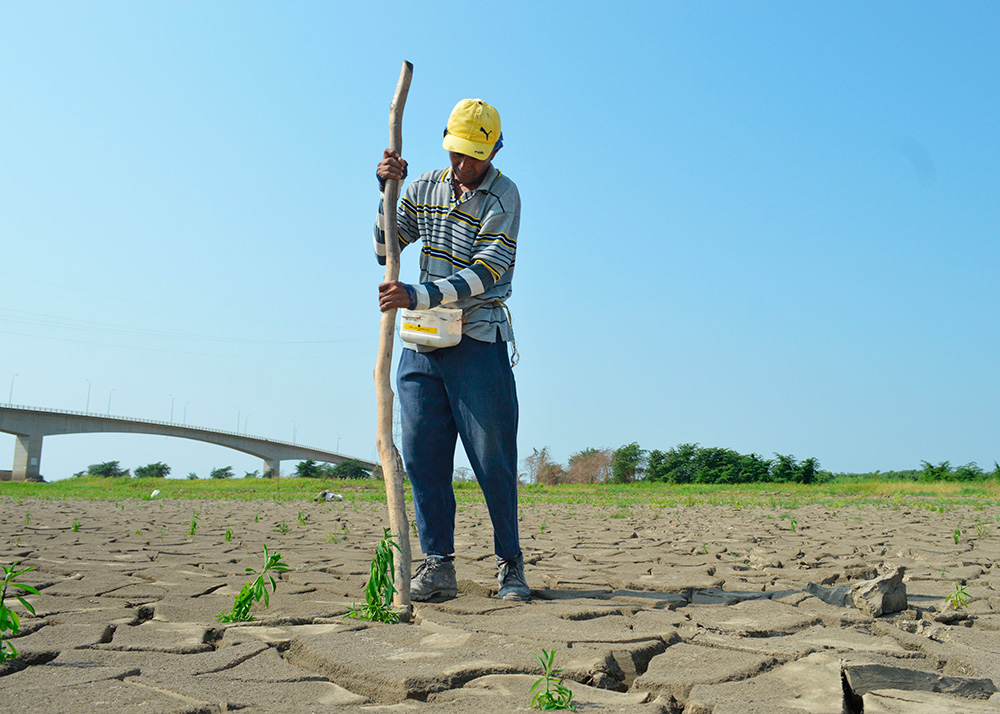
The Academy’s ongoing climate security work produces educational materials and brings together an interdisciplinary group of policymakers, scholars, and practitioners to explore climate change as a threat multiplier in the context of global security. Through exploratory meetings and roundtables held from 2024 to 2026, participants have explored how military interventions, unregulated new technologies, and the securitization of climate scholarship can both strengthen and threaten global security. Participants continue to consider what research is needed, who should be responsible for managing climate risks, and how to prevent harm and inequity in proposed solutions.
Project CHAIRS
Neta C. Crawford
University of St. Andrews
Tanisha M. Fazal
University of Minnesota
PROJECT STAFF
Kaitlin Peach
Raymond Frankel Nuclear Security Policy Fellow (2025–present)
Mitch Poulin
Program Associate for Global Security
Betsy Super
Program Director for American Institutions and Global Security
Project MEETING
Climate(s) of Insecurity
January 16, 2026
Virtual
This virtual roundtable explored the complex and contested relationship between climate change and conflict. Speakers discussed critiques of framing climate change as a security issue, including how security frameworks can help clarify drivers of conflict while also obscuring them.
MEETING CHAIRS
Tanisha M. Fazal
University of Minnesota
Jessica Hellmann
University of Minnesota
FEATURED SPEAKERS
Cullen Hendrix Peterson
Institute for International Economics
Jan Selby
University of Leeds
Project PUBLICATION
Solar Radiation Modification (SRM) Primer, Mitch Poulin (American Academy of Arts and Sciences, 2026)
Project
The Future of Security Studies

Security studies scholars conduct research and help policymakers address global violence and other risks to safety, including military conflicts, non-state threats, and nuclear security. The report on The Future of Security Studies, published by the Academy in 2026, recognizes that the field that emerged after World War II is facing new and serious challenges. The need for well-researched, policy-relevant expertise has never been greater, yet funding for security studies is declining. As a result, research centers are struggling to sustain the scholarship needed to address today’s most pressing security threats. In December 2025, the Academy hosted an exploratory meeting to examine these interconnected global and academic crises. The meeting produced recommendations for research centers and philanthropists on how to strengthen the field of security studies. Through public discussions and targeted conversations in the United States and abroad, the report on The Future of Security Studies aims to build broad support for concrete actions that can revitalize the field and ensure scholars have the resources they need to address today’s global security crises.
PROJECT CHAIRS
Scott D. Sagan
Stanford University
Jennifer M. Welsh
McGill University
Rose McDermott
Brown University
PROJECT STAFF
Kaitlin Peach
Raymond Frankel Nuclear Security Policy Fellow (2025–present)
Mitch Poulin
Program Associate for Global Security
Betsy Super
Program Director for American Institutions and Global Security
FUNDER
The Raymond Frankel Foundation
Project MEETING
The Future of Security Studies
November 9, 2026
Virtual
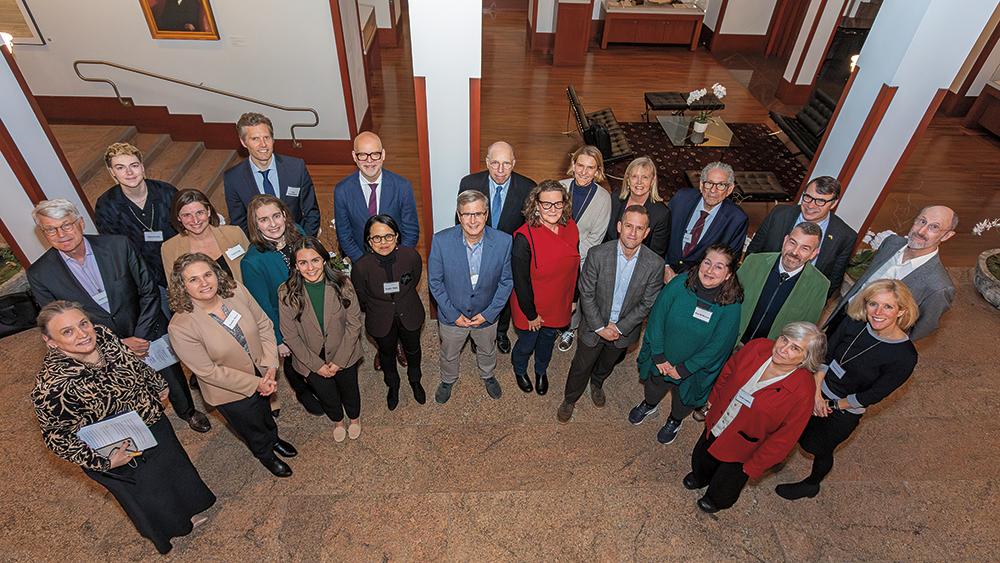
This meeting brought together philanthropists and leading security studies scholars to discuss the report on The Future of Security Studies. Participants explored the most critical security crises today, the funding and infrastructural obstacles facing security studies scholars, and recommendations for addressing these challenges.
PROJECT PUBLICATION
The Future of Security Studies, Scott D. Sagan, Jacob N. Shapiro, Rose McDermott, and Jennifer Welsh (American Academy of Arts and Sciences, 2026)