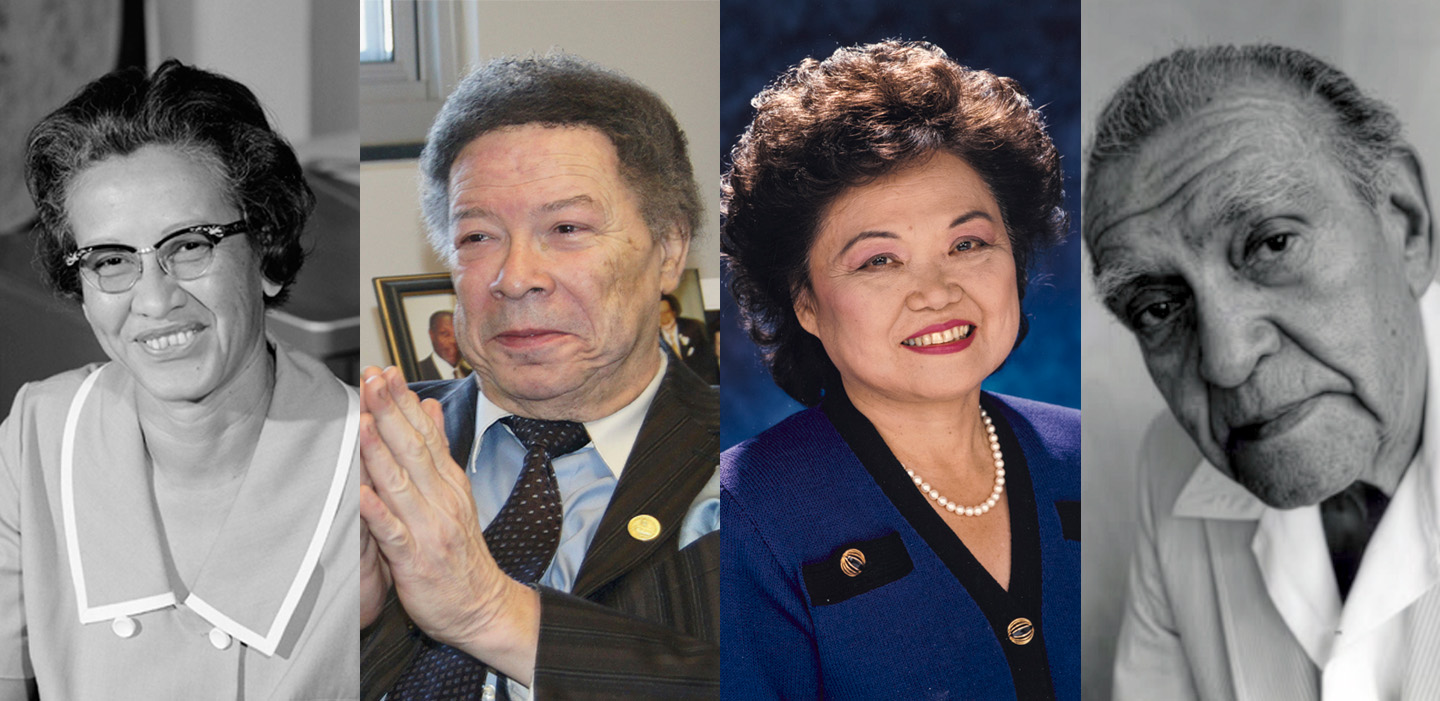
The Legacy Recognition Program, initiated in 2024, is an important part of the Academy’s overall effort to address and reconcile its history regarding racism, sexism, and inequality. The program highlights the contributions of scholars, researchers, writers, artists, business leaders, community leaders, and others whose accomplishments have been overlooked or undervalued due to their race, ethnicity, gender, or sexual orientation. The Legacy Recognition Honorees for 2026:
Henry “Hank” Aaron (1934–2021)
Athlete; Company executive; Advocate (civil rights)
Julian Francis Abele (1881–1950)
Architect
Alvin Ailey (1931–1989)
Dancer; Choreographer
Sadie Tanner Mossell Alexander (1898–1989)
Lawyer; Advocate (civil rights)
Louis Daniel Armstrong (1901–1971)
Musician (trumpeter, vocalist)
Ella Josephine Baker (1903–1986)
Community organizer; Nonprofit organization executive; Advocate (civil rights)
Clarissa “Clara” Harlowe Barton (1821–1912)
Nurse; Educator; Nonprofit organization founder and executive; Humanitarian
Annie Jump Cannon (1863–1941)
Astronomer
Elizabeth Catlett (1915–2012)
Artist (sculptor, printmaker); Educator
Elizabeth “Bessie” Coleman (1892–1926)
Aviator
Rupert Costo (1906–1989)
Writer (nonfiction writer); Historian; Publisher; Engineer; Farmer; Philanthropist
Matilda Arabella Evans (1866–1935)
Physician; Hospital founder and administrator
Ella Jane Fitzgerald (1917–1996)
Musician (singer); Songwriter; Composer
Aretha Louise Franklin (1942–2018)
Musician (singer, pianist); Songwriter
William Augustus Hinton (1883–1959)
Bacteriologist; Pathologist; Educator
Billie Holiday (1915–1959)
Musician (singer)
Omar ibn Said (1770–1864)
Islamic scholar; Writer (autobiographer)
Creola Katherine Johnson (1918–2020)
Mathematician
Ernest Everett Just (1883–1941)
Biologist; Embryologist; Cytologist; Writer (science writer)
Henrietta Swan Leavitt (1868–1921)
Astronomer
John Robert Lewis (1940–2020)
Advocate (civil rights); Member, U.S. House of Representatives
Lin Yutang (1895–1976)
Writer (essayist, novelist, translator, nonfiction writer); Linguist
Audre Lorde (1934–1992)
Writer (poet, novelist, essayist); Advocate (civil rights, women’s rights)
Festus Claudius “Claude” McKay (1890–1948)
Writer (poet, novelist)
William D’Arcy McNickle (1904–1977)
Anthropologist; Historian; Writer (novelist, short story writer); Advocate (Native American rights)
Patsy Takemoto Mink (1927–2002)
Lawyer; Member, U.S. House of Representatives; Advocate (women’s rights)
Henry Morgenthau, Sr. (1856–1946)
Lawyer; Businessman; Diplomat; U.S. Ambassador to Turkey
Mary Alice Nelson (Molly Dellis or Molly Spotted Elk) (1903–1977)
Dancer; Actor; Writer (novelist, nonfiction writer)
Nam June Paik (1932–2006)
Artist (multimedia and video artist, sculptor)
Alexander Lawrence Posey (1873–1908)
Writer (poet); Humorist; Journalist; Politician; Academic administrator
Tatiana Avenirovna Proskouriakoff (1909–1985)
Archaeologist
Richard Franklin Lennox Thomas Pryor (1940–2005)
Comedian; Actor
Arturo Alfonso Schomburg (1874–1938)
Historian; Writer (nonfiction writer, essayist); Curator; Political activist
Nettie Maria Stevens (1861–1912)
Geneticist
Mary “Mollie” Church Terrell (1863–1954)
Journalist; Educator; Advocate (civil rights)
Vivien Theodore Thomas (1910–1985)
Surgeon; Educator
Michel-Rolph Trouillot (1949–2012)
Anthropologist; Scholar
Charles Henry Turner (1867–1923)
Zoologist; Entomologist; Behavioral scientist
Levi Watkins, Jr. (1944–2015)
Surgeon; Educator; Advocate (civil rights)
Sarah Winnemucca, Thocmetony (Shell Flower) (1844–1891)
Historian; Writer (autobiographer); Lecturer; Educator; Advocate (Native American rights)
Legacy Recognition in Action: Honoring Bruce Lee
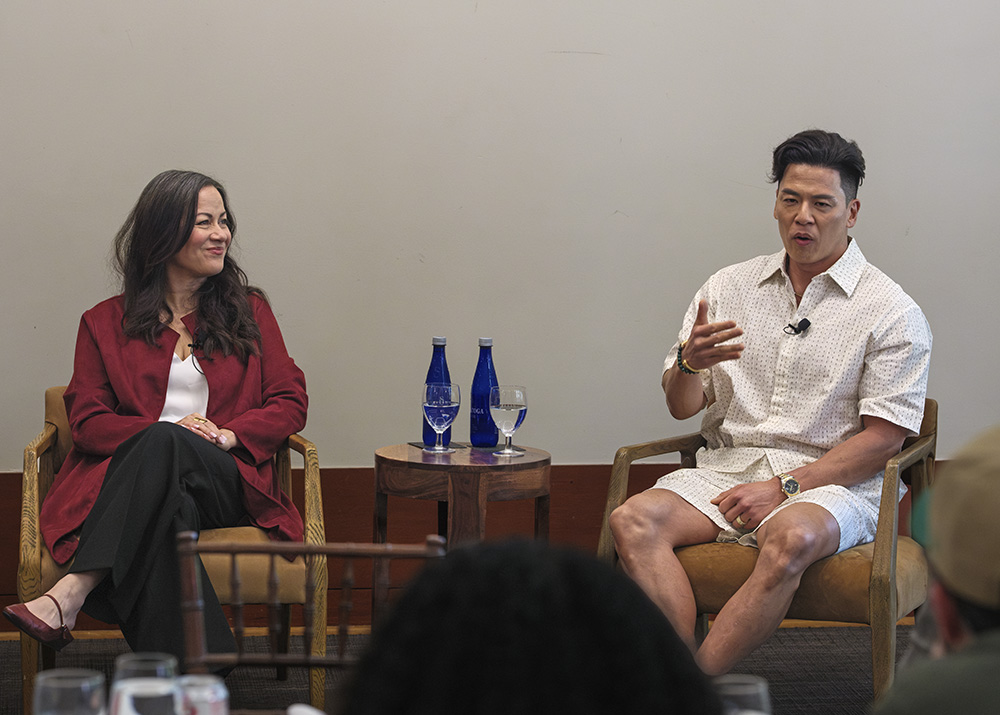
On May 20, 2026, Academy members, scholars, and staff gathered for a luncheon discussion to celebrate Bruce Lee, who was named a Legacy Recognition Honoree in 2025.
To mark the occasion, Academy President Laurie L. Patton led a conversation with Shannon Lee, president of the Bruce Lee Foundation and Bruce Lee’s daughter, and actor and foundation trustee Rich Ting. They reflected on Lee’s remarkable achievements, the values that guided his work, and the enduring impact he continues to have on people around the world.
Lee transformed popular perceptions of Asian representation in entertainment and introduced millions around the world to martial arts philosophy and practice. Through his work as an actor, filmmaker, and philosopher, he challenged stereotypes, expanded cultural horizons, and inspired generations to pursue excellence, self-discipline, and personal growth.
The gathering offered a powerful illustration of the Legacy Recognition Program’s purpose: to ensure that transformative lives and contributions remain part of our shared understanding of excellence and continue to inspire future generations.