
Academy projects in Science, Engineering, and Technology (SET) seek to strengthen the capacity of science, engineering, and technology to improve the common good. This goal has never been more important for the nation or for the world than it is today. Global challenges increasingly require collaboration across disciplinary, professional, and national boundaries. Rather than generate new scientific research, the role of the Academy has been uniquely interdisciplinary and cross-sectoral, bridging the social sciences and arts with the physical sciences to support a national understanding, belief, and trust in science and discovery. Leveraging the diverse expertise of its members and a wide network of external specialists, the Academy conducts in-depth studies to assess the implications of scientific and technological progress. These studies inform actionable policy recommendations for stakeholders across government, academia, the nonprofit sector, and industry.
ADVISORS
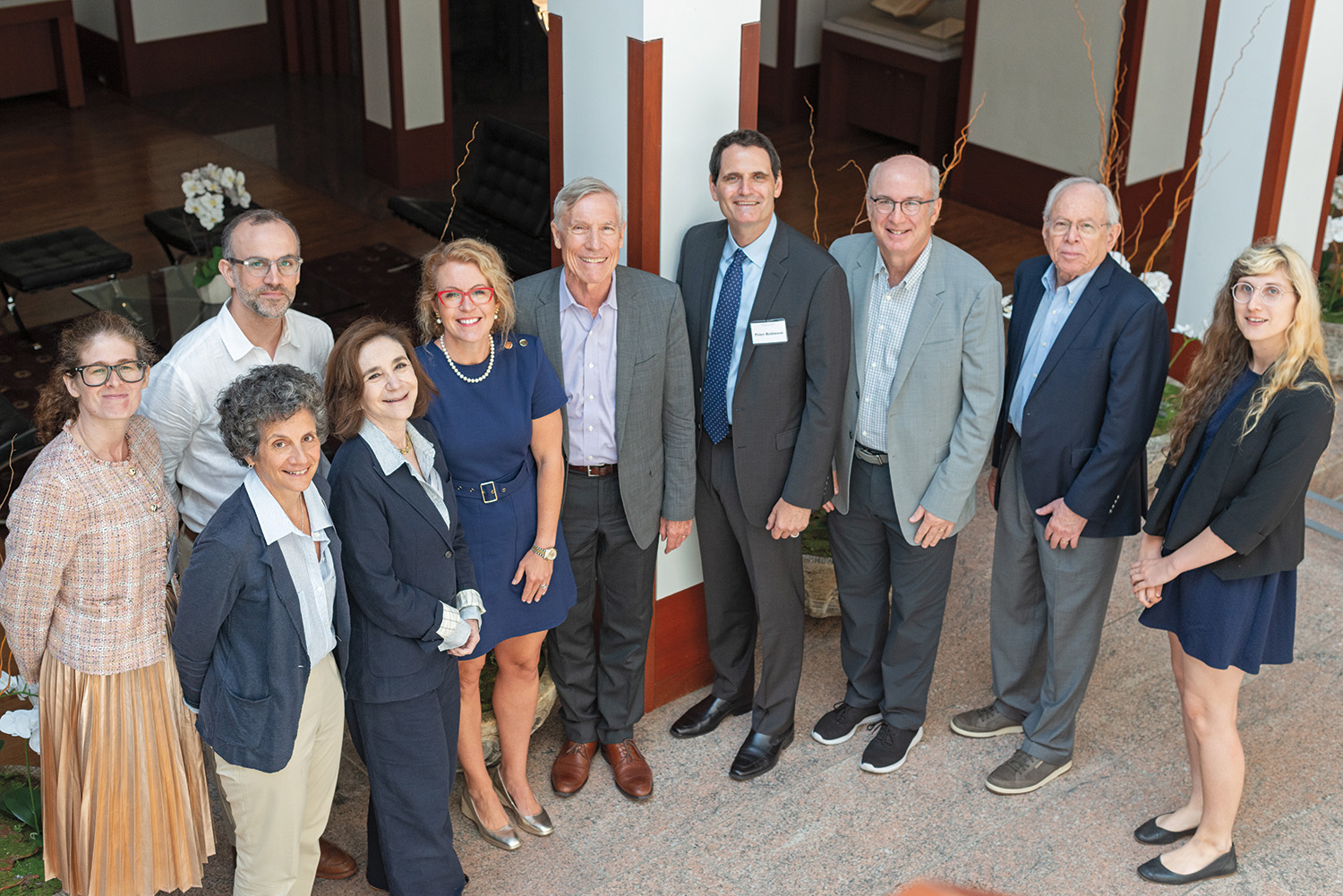
Robert F. Higgins, Cochair
Causeway Media Partners
Shirley Tilghman, Cochair
Princeton University
Maya Ajmera
Society for Science
Ken Alder
Northwestern University
Nancy C. Andrews
Boston Children’s Hospital
Juan Enriquez
Excel Venture Management
Efi Foufoula-Georgiou
University of California, Irvine
Fred H. Gage
Salk Institute for Biological Studies
Paula A. Johnson
Wellesley College
James M. Manyika
Google
Joe Palca
formerly, National Public Radio
Mercedes Pascual
New York University
Peter L. Slavin
Cedars-Sinai Medical Center
ADVISORS’ MEETINGS
January 12, 2026
Virtual
The advisors discussed five potential projects that had been developed under the Science and Democracy work and nominated two to move forward into full project development.
March 7, 2026
Virtual
The advisors reviewed and provided feedback on an early draft of the new “When the Facts Change” project.
May 4, 2026
Virtual
The advisors discussed the first round of Council feedback on the project “When the Facts Change” and discussed several SET events, including one on “How Can We Assess Recent Changes to Vaccine Policy?” and a roundtable on Science Education.
Project
When the Facts Change

Scientific self-correction is essential, but the way it enters public life has become increasingly fragile. Routine updates–such as COVID-19 revisions, environmental thresholds, nutrition guidance, retractions after replication failures–are often incorrectly interpreted as inconsistency, political influence, or institutional incoherence.
This project maps scientific revision itself: the evidence flows, incentive structures, organizational behaviors, communication strategies, media reframing, and public interpretations that shape how scientific updates are produced and received. By examining both fast-moving and slow-moving domains with a shared analytic structure, the project identifies the recurrent patterns that shape how scientific change is understood.
STEERING COMMITTE MEMBERS
Holden Thorp, Chair
American Association for the Advancement of Science
Ken Alder
Northwestern University
Alta Charo
University of Wisconsin–Madison
Kirsten Ellenbogen
Great Lakes Science Center
Jennifer Hochschild
Harvard University
Richard Milne
RAND Europe
Jessica Steier
Unbiased Science
PROJECT STAFF
Kate Carter
John E. Bryson Director of Science, Engineering, and Technology
Jennifer Gentili
Program Manager for Science, Engineering, and Technology
Jennifer Jones
Civic Science Fellow
FUNDERS
Rita Allen Foundation
Burroughs Wellcome Fund
PROJECT MEETINGS
June 30, 2026
October 6, 2026
October 28, 2026
November 19, 2026
Virtual
During the initial project meetings, the steering committee identified case study topics and leadership, drafted working hypotheses, and refined the project description.
“What Are Facts?” Roundtable
November 13, 2026
Virtual
In popular culture, facts exist as stable features of the world. But in science or in public life, a fact is a claim about the world, supported (or not) by a body of evidence and judged, by at least some, as sufficiently well-established to be “true.” This understanding provokes deeper questions about the social construction of knowledge. What makes something a fact? What or who gives a claim such status, and what happens when the grounds for doing so shift?
This roundtable examined the epistemic life of facts: the oft ill-defined relationship among observation, interpretation, consensus, and authority. The participants provided an interdisciplinary perspective that engaged deeply with the tensions between facts as features of reality and as claims that depend on authority. The participants were invited to write short essays extending these questions and reflecting on what the asterisk in “When the Facts* Change” points to.
PARTICIPANTS
Ken Alder
Northwestern University
Renee DiResta
Georgetown University
David Lee
Clarity Partners, LP
Nicholas Lemann
Columbia University
Goodwin Liu
Supreme Court of California
Laurie L. Patton
American Academy of Arts and Sciences
Patti Saris
United States District Court for the District of Massachusetts
Jessica Steier
Unbiased Science
Jeannette Wing
Columbia University
Civic Science Fellowship
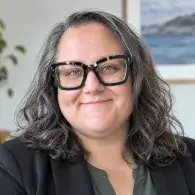
In 2026, the Academy was selected as a host organization by the Civic Science Fellows Program, a national interdisciplinary initiative that brings together scientists, practitioners, communicators, and community leaders to strengthen the relationship between science and society. As part of this eighteen-month fellowship, the Civic Science Fellow will serve as a key member of the program team working on the When the Facts Change project.
In September 2026, Jennifer Jones joined the Academy as a Civic Science Fellow. Jones has a Ph.D. in Coastal Resources Management from East Carolina University and served as a Fulbright Scholar in Ireland from 2021–2023. She has contributed to several peer-reviewed volumes on the theory, infrastructure, and governance of civic and citizen science, including the institutional conditions that make public participation in knowledge production both durable and equitable.
Jones’s Civic Science Fellowship at the Academy is supported by generous grants from the Rita Allen Foundation and Burroughs Wellcome Fund.
Project
AI and Mental Health Care

America is suffering a mental health crisis, with up to 40 percent of Americans now living with a chronic mental health disorder. An ongoing provider shortage and poor insurance coverage mean that less than half receive treatment–and the rates are even lower for minority populations and those living in rural areas. Given the serious physical, emotional, and societal consequences of untreated mental health disorders, particularly among youth and historically underrepresented groups, it is imperative to understand the causes and find effective solutions to this epidemic.
Technology may be both mental health’s savior and its downfall. Americans on average spend six hours a day consuming digital media, which has mixed effects of connecting communities and empowering the disenfranchised, while also increasing loneliness and creating powerful addictions. Technology can improve diagnosis and treatment through AI-assisted psychotherapy, virtual reality exposure therapy, and behavioral tracking to identify mental distress. With 92 percent of Americans owning a smartphone, building access and increasing equity in health care is possible if significant concerns about coverage and privacy are addressed.
While many studies examine how social media impacts the mental health of children and young adults, these investigations cannot keep pace with the rate of technological change. It is important to acknowledge the significant societal changes that are already taking place. Systems in health care, education, and policy need tools and guardrails to support innovation and protect the most vulnerable groups in society.
The project on AI and Mental Health Care leverages the Academy’s power to convene interdisciplinary groups to help identify key policy priorities that will advance the understanding and application of emerging technologies in mental health care.
PROJECT CHAIRS
Paul Dagum
Applied Cognition
Sherry Glied
New York University
Alan Leshner
American Association for the Advancement of Science (Emeritus)
STEERING COMMITTEE MEMBERS
Daniel Barron
Brigham and Women’s Hospital
Marian Croak
Google
Alison Darcy
WoeBot
Holly DuBois
Avail Telemedicine
Henry T. Greely
Stanford University
Eric Horvitz
Microsoft
Kacie Kelly
Meadows Mental Health Policy Institute
Arthur Kleinman
Harvard University
Jaron Lanier
Microsoft
Robert Levenson
University of California, Berkeley
Peter Slavin
Cedars-Sinai Medical Center
Sherry Turkle
Massachusetts Institute of Technology
PROJECT STAFF
Kate Carter
John E. Bryson Director of Science, Engineering, and Technology
Gates Palissery
(June 2025–April 2026)
Hellman & Simons Fellow in Science and Technology Policy
Jennifer Gentili
Program Manager for Science, Engineering, and Technology
PROJECT PUBLICATION
AI and Mental Health Care: Issues, Challenges and Opportunities (American Academy of Arts and Sciences, 2025)
PROJECT OUTREACH MEETINGS
How Can Tech Companies and Practitioners Work Together to Safely Provide Mental Health Care Using AI?
In collaboration with the American Psychological Association
May 18, 2026
Virtual
As AI technology continues to advance, more people are turning to it for their mental health care. Multiple studies have shown that general-purpose large language models (LLMs) or chatbots can miss signs of suicidal ideation, fail to recognize or appropriately address mental health crises, and sometimes provide harmful responses to those seeking care. While these risks are serious, AI technology also has the potential to help address disparities in access to mental health care. This panel, cohosted by the American Psychological Association and the Academy, brought together experts in technology and mental health care to discuss how to reduce the harms AI may cause when used for mental health care while harnessing its potential to expand equitable access to that care.
SPEAKERS
Paul Dagum
Applied Cognition
Leanna Fortunato
American Psychological Association
Adrienne Stith, Moderator
American Psychological Association
Can Regulation Keep Pace with AI in Mental Health Care?
June 24, 2026
Virtual
Efforts are underway to regulate the use of artificial intelligence in mental health care on both the federal and state levels. Building on the Academy’s and the American Psychological Association’s recent reports on AI in mental health care, this panel brought together experts in the current policy/regulatory landscape to discuss current and proposed policies, where they see the need for more (or less) regulation, and why.
SPEAKERS
Kacie Kelly
Meadows Mental Health Policy Institute
Alan I. Leshner, Moderator
American Association for the Advancement of Science (Emeritus)
Aubrey Shick
Launch and Logic
Vaile Wright
American Psychological Association
Other Meetings
Modernizing Academic Appointment & Advancement Readout
December 3, 2025
Virtual
Following an in-person convening on November 6, 2025, the Academy and Open Research Community Accelerator (ORCA) held a virtual readout session for institutional leaders who were unable to attend. The session reviewed the convening’s key observations and action items, including the disconnect between current tenure and promotion systems and the values that research universities publicly espouse, such as equity, relevance, and public engagement. The discussion highlighted critical questions about the role of scholarship in society. Participants noted that aligning STEM tenure and promotion with the public good could help universities better serve their communities, diversify their research agendas, and restore public trust in science.
PARTICIPANTS
Abbas Benmamoun
Duke University
Randi Chmielewski
Rita Allen Foundation
Monica Coleman
Robert Wood Johnson Foundation
Ishan Dasgupta
Dana Foundation
Patricia Friedrich
Arizona State University
Jennifer Hochschild
Harvard University
Adam Jones
Gordon and Betty Moore Foundation
Patrick Kenney
Arizona State University
Laurie Leshin
California Institute of Technology
Emily Miller
Association of American Universities
Fred Nafukho
University of Washington
Deepa Rao
University of Washington
Suzanne Rivera
Macalester College
Colleen Ryan
Tufts University
Beth Shepard-Rabadam
Bryn Mawr College
Nicole Stanton
Wesleyan University
Joy Ward
Case Western Reserve University
Sheldon Watts
Robert Wood Johnson Foundation
Partners
Erin McKiernan
Director of Programs & Strategies, ORCA
Caitlin Schleicher
Director of Communities & Partnerships, ORCA
Greg Tanabaum
Executive Director, ORCA
Modernizing Tenure Roundtable on Entrepreneurship and Tenure
April 17, 2026
Virtual
This roundtable examined how private-sector work experience can impact reward, promotion, and tenure (RPT) processes. The discussion explored several key questions: What does encouraging innovation and entrepreneurship look like in practice? How can institutions support these activities realistically? Where can institutions foster collaborations between the private and public sectors? And what are the benefits and challenges for academic researchers who engage in private-sector work? The roundtable opened with remarks from Ben Vinson, Mary Croughan, and Robert Gourdie, followed by Q&A.
PARTICIPANTS
Abbas Benmamoun
Duke University
Mary Croughan
University of California, Davis
Michael Dougherty
University of Maryland
Steven Goodman
Stanford University
Robert Gourdie
Virginia Polytechnic Institute and State University
Lori Graham-Brady
Johns Hopkins University
Natalie Guess
University of Southern Mississippi
Charles Hasemann
Michigan State University
Kate Hudson
Association of American Universities
Jonathan Kregor
University of Cincinnati
Terry Magnuson
University of North Carolina at Chapel Hill
Aaron F. Mertz
Aspen Institute
Nick Miller
Michigan State University
Colleen Ryan
Tufts University
Jamilia Sly
Icahn School of Medicine at Mount Sinai
Laura Vandenberg
University of Massachusetts Amherst
Ben Vinson III
Hutchins Center, Harvard University; formerly, Howard University
William Vizuete
University of North Carolina at Chapel Hill
Partners
Erin McKiernan
Director of Programs & Strategies, ORCA
Caitlin Schleicher
Director of Communities & Partnerships, ORCA
Greg Tanabaum
Executive Director, ORCA
Modernizing International Tenure Roundtable
June 22, 2026
Virtual
Open Research Community Accelerator (ORCA), the Academy, and the Embassy of the Kingdom of the Netherlands in the United States convened a virtual roundtable on what American universities can learn from reward, promotion, and tenure (RPT) practices in other countries. The roundtable featured presentations from Jeroen Geurts and Maarten Voors on present reform efforts in the Netherlands. Stephen Curry moderated the discussion.
PARTICIPANTS
Gilda Barabino
Olin College of Engineering
Nezha Bouanani
Ministry of Education, Culture and Science, Netherlands
Michelle Budig
University of Massachusetts Amherst
Kelly Cobey
University of Ottawa Heart Institute; Declaration on Research Assessment (DORA)
Paige Cooper Byas
Burroughs Wellcome Fund
Mary Croughan
University of California, Davis
Stephen Curry, Moderator
Imperial College London
Sarah de Rijcke
Leiden University
Michael Dougherty
University of Maryland
Jeroen Geurts
VU Amsterdam
Henk Kummeling
Utrecht University; CoARA
Giovanna Lima
Declaration on Research Assessment (DORA)
Terry Magnuson
University of North Carolina at Chapel Hill
Aaron Mertz
Aspen Institute Science & Society Program
Emily Miller
Association of American Universities
Hande Mutlu-Eren
Columbia Climate School
Sarah Rovito
National Academies of Sciences, Engineering, and Medicine
Bernhard Sabel
Otto von Guericke University of Magdeburg
Sean Sapcariu
Luxembourg National Research Fund; CoARA
Heidi Schweingruber
National Academies of Sciences, Engineering, and Medicine
Karen Stroobants
CultureBase Consulting
Laura Vandenberg
University of Massachusetts Amherst
Maarten Voors
Wageningen University
Partners
Erin McKiernan
Director of Programs & Strategies, ORCA
Caitlin Schleicher
Director of Communities & Partnerships, ORCA
Greg Tanabaum
Executive Director, ORCA
INTERNATIONAL PARTNERS
Renske Heemskerk
Education & Science Counselor, Embassy of the Kingdom of the Netherlands in the United States
Stefan Penders
Policy Adviser for Internationalisation, Universities of the Netherlands
Knowledge Diplomacy
Cohosted with the Royal Society
January 21–22, 2026
The Royal Society, London
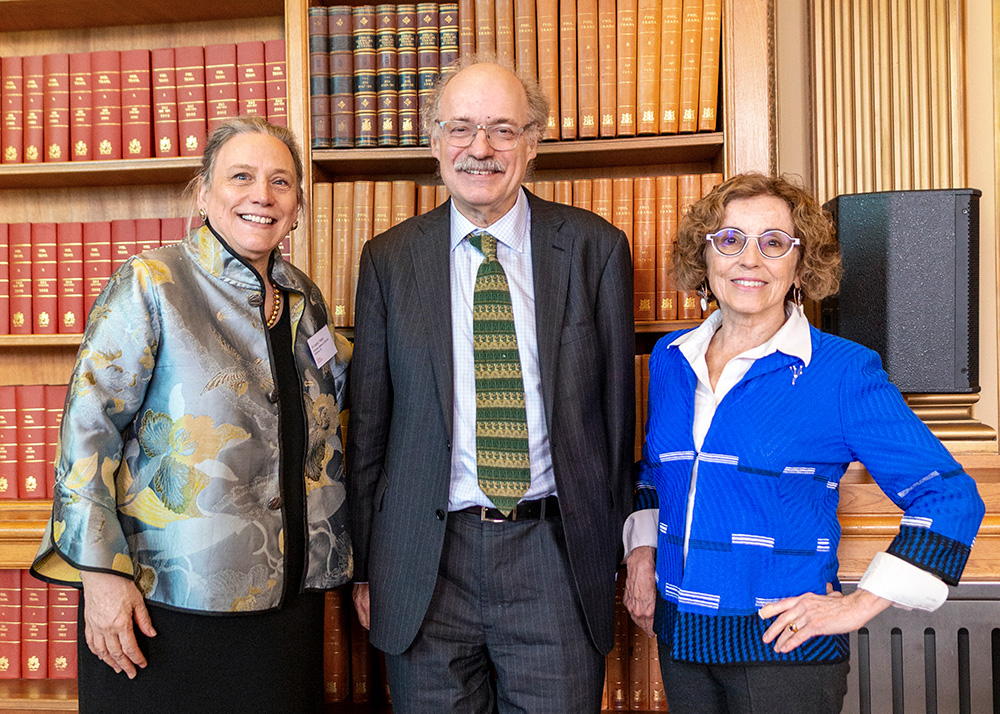
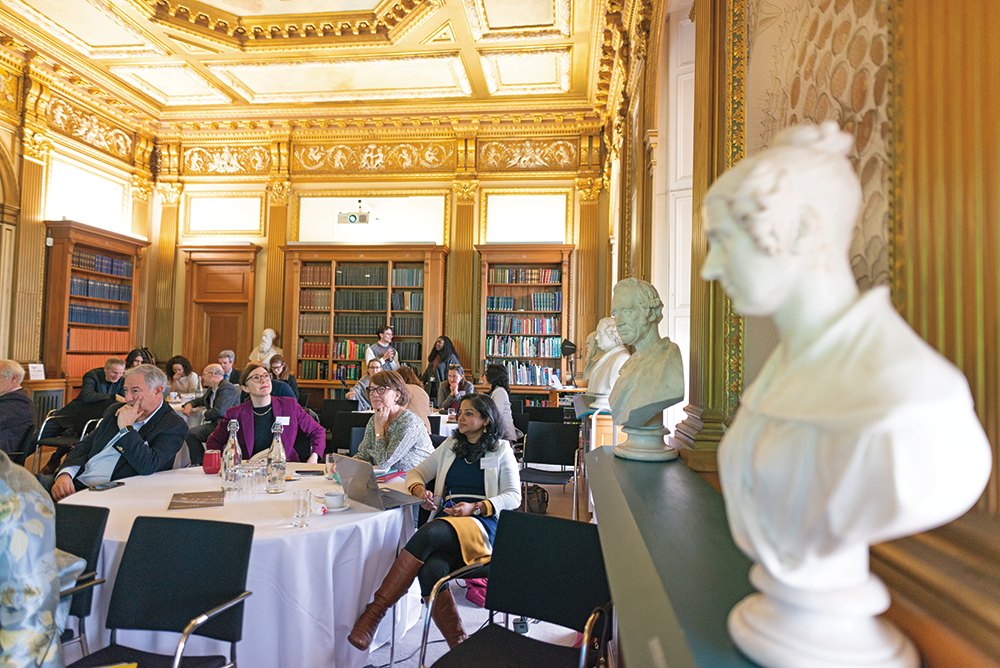
In an increasingly volatile world, the nature and authority of knowledge are becoming more contested. Assumptions that once underpinned democratic societies are no longer widely shared, and knowledge is under threat worldwide from geopolitical, financial, ideological, and technological forces. As a result, knowledge is losing its anchoring role in public life. Trust in the institutions that produce and communicate knowledge is declining, and widespread disinformation is transforming how knowledge is received. Expert guidance is increasingly contested, not only on scientific grounds but also when its conclusions are politically inconvenient. At times, these disputes serve as proxies for broader social, political, and ethical divisions shaped by narratives rooted in ideology, identity, or grievance. Together, these developments raise questions about who has the authority, who gets to produce knowledge, how knowledge should be used, and whose interests it serves. They challenge, and in some cases reject, long-held principles of empirical evidence, open inquiry, and debate that can be traced back to the Enlightenment. At the same time, AI and other technologies are transforming how knowledge is produced, raising new questions about what types of knowledge are credible. Rebuilding trust in knowledge, and addressing the threats to it, will require institutions that can bridge intellectual, disciplinary, and geopolitical divides without retreating into abstraction or partisanship. Knowledge diplomacy, defined as “the process of building and strengthening relations between and among countries through international higher education, research, and innovation,” can help meet this challenge. This joint meeting of the Academy and the Royal Society brought together researchers, policymakers, and public leaders from the arts, humanities, and social and natural sciences and explored how knowledge diplomacy can help clarify the role of expertise, strengthen the foundations of knowledge exchange and public reasoning, rebuild trust, and restore the crucial role of knowledge as a public good in service to society.
PARTICIPANTS
France Córdova, Cochair
Science Philanthropy Alliance
Mark Walport, Cochair
The Royal Society
Aileen Adams
The Rape Foundation
Ash Amin
University of Cambridge
Mary Beard
University of Cambridge
Cathleen Campbell
formerly, CRDF Global
Aisling Conboy
Wilton Park
Geoffrey Cowan
University of Southern California
Carlos del Rio
Emory University School of Medicine
Juan Enriquez
Excel Venture Management
André Fenton
New York University
Julia Gillard
Wellcome Trust
Tim Gore
University of London Institute of Paris
Domenico Grasso
University of Michigan
Nikita Hari
University of Oxford
Susan Hull Grasso
University of Michigan
Asli Kaymak-van Loo
Embassy of the Kingdom of the Netherlands in the United Kingdom
William Kirby
Harvard University
David Krakauer
Santa Fe Institute
Marta Kwiatkowska
University of Oxford
Arthur Lupia
University of Michigan
Eliza Manningham-Buller
formerly, MI5
Robert Mokaya
Royal Society of Chemistry
Kimberly Montgomery
American Association for the Advancement of Science
Denis Newman-Griffis
University of Sheffield Centre for Machine Intelligence
Jane Norman
University of Nottingham
Gilbert Omenn
University of Michigan
Richard Ovenden
University of Oxford
Sudip Parikh
American Association for the Advancement of Science
Laurie L. Patton
American Academy of Arts and Sciences
Karen Pierce
UK Special Envoy to the Western Balkans
William Press
The University of Texas at Austin
Martin Rees
formerly, The Royal Society
Nancy Rothwell
University of Manchester
Anthony Seldon
Wellington College Education
Ismail Serageldin
Bibliotheca Alexandrina
Barbara Shinn-Cunningham
Carnegie Mellon University
Clare Siviter-Groschwald
University of Bristol
Chris Smith
University of Cambridge
Barbara Snyder
Association of American Universities
David Spergel
Simons Foundation
Paul Stein
Floral Energy Limited
Andrew Thompson
University of Oxford
David Willetts
Foundation for Science and Technology
Jeanette Winterson
Author
Joy Zhang
University of Kent
FUNDER
Gordon and Betty Moore Foundation
MEMBER EVENTS
How Can AI Impact Human Memories?
February 23, 2026
Virtual
As artificial intelligence curates our past, filters our present, and predicts our future, who controls the narrative? When algorithms decide what we see and hear, are they determining what we remember, what we forget, and what we believe to be true? Neuroscientist James DiCarlo, and psychologists Robert Goldstone and Suparna Rajaram explored AI’s growing role in personal and collective memory. From deepfakes to recommendation engines, from digital nostalgia to algorithmic amnesia, the conversation focused on how does machine learning shape our perception of history, identity, and truth?
SPEAKERS
James J. DiCarlo
Massachusetts Institute of Technology
Robert L. Goldstone
Indiana University
Laurie L. Patton
American Academy of Arts and Sciences
Suparna Rajaram, Moderator
Stony Brook University
ORGANIZING PARTNER
Marcia Johnson
Yale University
How Can We Assess Recent Changes to Vaccine Policy?
March 16, 2026
Virtual
Recent shifts in federal vaccine policy are reshaping the core assumptions that have guided public health, the pharmaceutical industry, and clinical practice. This Academy event brought together experts in clinical care, regulation, and industry to examine the volatile situation, assess what is at stake, and discuss what can be done to protect the nation’s long-term capacity to develop, test, and deliver vaccines.
SPEAKERS
Norman Baylor
formerly, FDA’s Office of Vaccines Research and Review
Penny Heaton
Johnson & Johnson
Paul Offit
Children’s Hospital of Philadelphia
Laurie L. Patton
American Academy of Arts and Sciences
Organizing Partner
Nancy C. Andrews
Boston Children’s Hospital
Health Care Economics
September 25, 2026
Virtual
The American health care system is among the most impactful of U.S. institutions. It is also one of the most difficult to navigate or reform. High and rising costs, gaps in health care insurance coverage and access, and uneven outcomes have proven difficult to address. Drawing on perspectives from clinical care, health policy, and economics, this panel discussion explored what is most broken, what is at stake, and what are some promising areas for meaningful reform.
SPEAKERS
Elizabeth H. Bradley
Vassar College
Elisabeth Rosenthal
Kaiser Health News
Michael Oliver Thorner, Moderator
University of Virginia School of Medicine
Dan Tortorice
College of the Holy Cross
ORGANIZING PARTNER
David Bloom
Harvard University
Strengthening State and Local Scientific Capacity
Cohosted with Science for Georgia
April 27–28, 2026
House of the Academy, Cambridge, MA
State and local governments make consequential decisions on issues that increasingly require scientific and technical expertise, including public health, infrastructure, environmental management, economic development, emerging technologies, and disaster preparedness. Yet the mechanisms connecting policymakers with scientific expertise vary considerably across the country. In many places, expertise exists but pathways for accessing and applying it remain fragmented, informal, or dependent on individual relationships.
The Academy, in partnership with Science for Georgia, convened scientists, state and local leaders, policy experts, journalists, and practitioners to examine how states and communities can build stronger and more durable scientific capacity. The discussion considered existing models for connecting science with public decision-making, such as science-policy fellowships, expert advisory structures, data-sharing and preservation efforts, regional partnerships, and approaches to public engagement. Participants discussed which models are most feasible, adaptable, and useful across different political, fiscal, and institutional environments.
PARTICIPANTS
David Patterson, Cochair
University of California, Berkeley
Amy Sharma, Cochair
Science for Georgia
Mary Elizabeth Adler
National Security Commission on Emerging Biotechnology
Lashrecse Aird
State Senator, Virginia
Kimberly Atkins Stohr
The Boston Globe
Megan Camaisa
Calidi Biotherapeutics
Carrie Cihak
King County, Washington
Karen Jackson
Apogee Strategic Partners, LLC
Julianne McCall
California Council on Science and Technology
Chuck Ng
Foundation for Science & AI Research
Jenni Owen
Duke University
Rachel K. Owen
Missouri Science and Technology (MOST) Policy Initiative
Dan Pomeroy
Scientific Citizenship Initiative
Steven Shirey
Carnegie Institution
for Science
Julian Spergel
Georgia Environmental Protection Division
Taylor Spicer
Engineers & Scientists Acting Locally
Elijah Ullman
American Association for the Advancement of Science
Jeffrey Ullman
Stanford University
Sheila Vakharia
Drug Policy Alliance
Brandy Wade
U.S. Department of Veterans Affairs
Shawn Westerdale
University of California, Riverside
STEM Literacy and Education Roundtable
May 26, 2026
Virtual
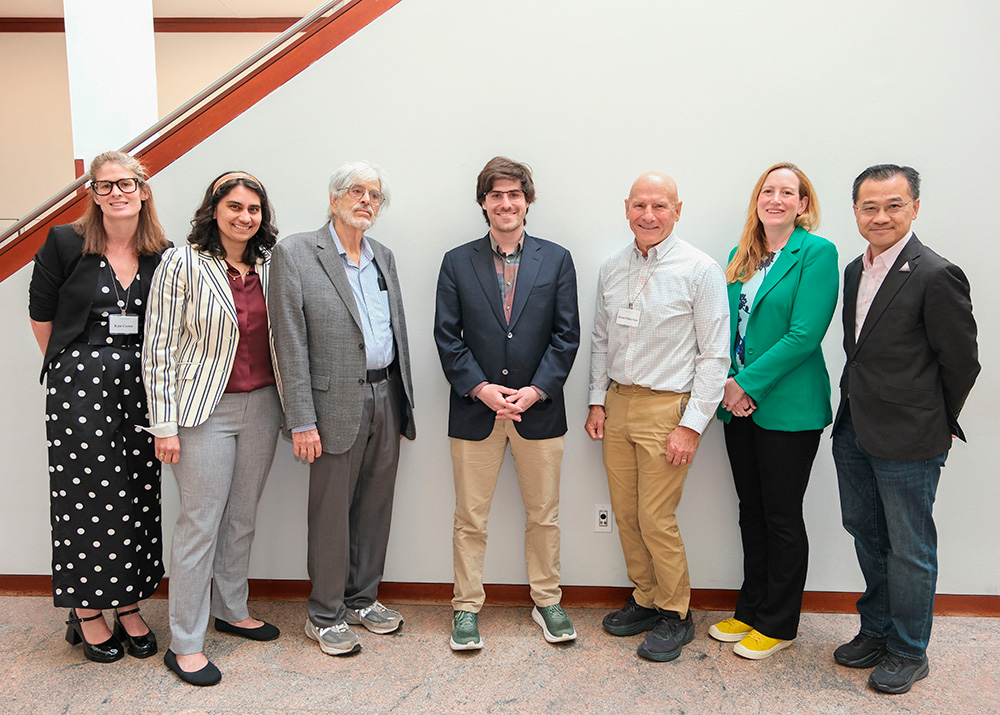
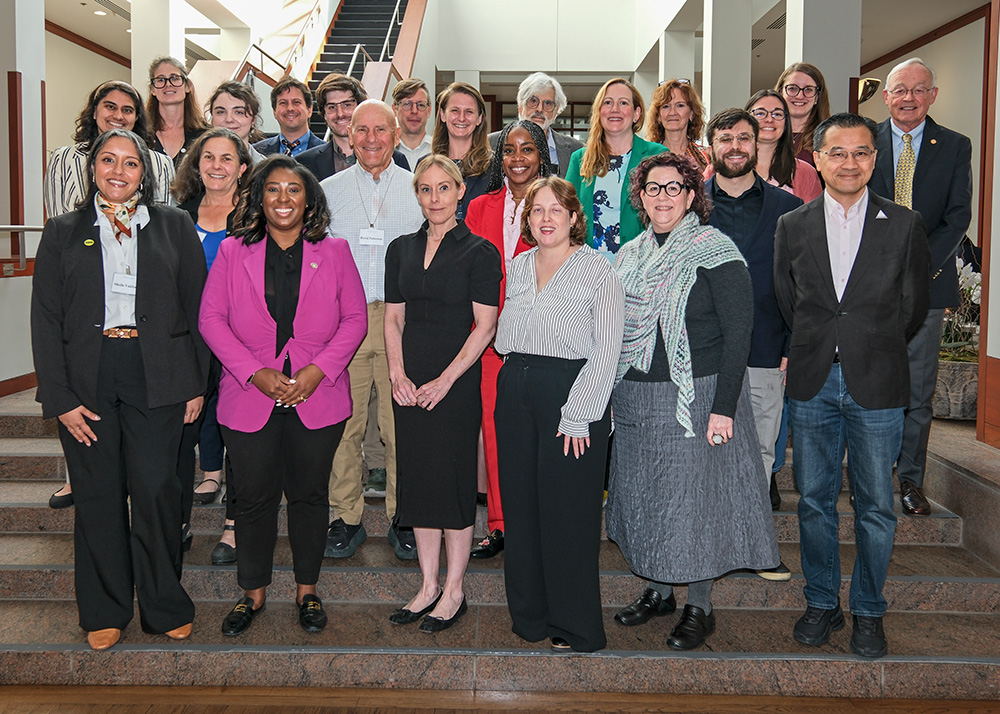
The Academy’s Science, Engineering, and Technology and Education program areas jointly convened a virtual roundtable to examine the effectiveness of current approaches to STEM education and science literacy. Leaders in higher education, science organizations, and philanthropy addressed inequities in access to STEM learning, gaps in science literacy, and changing levels of public confidence in scientific expertise. Participants considered how the Academy’s convening power to bring diverse groups of experts together might help clarify the key tensions in this space, connect existing efforts, and identify practical ways to strengthen STEM literacy without duplicating work already underway.
PARTICIPANTS
Maya Ajmera, Chair
Society for Science
Gilda Barabino
Olin College of Engineering
Sean Decatur
American Museum of Natural History
Kirsten Ellenbogen
Great Lakes Science Center
Michele Glidden
Society for Science
Evelynn Hammonds
Harvard University
Paula Johnson
Wellesley College
Susanna Loeb
Stanford University
Deborah Loewenberg Ball
University of Michigan
Shirley Malcom
American Association for the Advancement of Science
Bobbi Newman
American Institutes for Research
Laurie L. Patton, Moderator
American Academy of Arts and Sciences
Chandrika Tandon
Tandon Capital Associates
Shirley Tilghman
Princeton University
Suzanne Wilson
University of Connecticut
Travis York
American Association for the Advancement of Science
PROJECT STAFF
Kate Carter
John E. Bryson Director of Science, Engineering, and Technology
Jennifer Gentili
Program Manager for Science, Engineering, and Technology
Molly Kent
Program Coordinator for Education
Pamela Taylor
Program Director for Education