
By Kaitlin Peach, Raymond Frankel Nuclear Security Policy Fellow, and Mitch Poulin, Program Associate for Global Security and International Affairs
The field of security studies has long been defined by great power politics, interstate conflict, and traditional military threats.1 However, shifts in the global balance of power, the rising influence of non-state actors, and the increasing urgency of nontraditional threats—such as climate change, infectious disease, biological weapons, and the risks associated with artificial intelligence—are challenging key assumptions in the field. In addition, security studies institutions are facing major funding cuts as U.S. government support for academic research and foundation support for security studies decline.
These challenges are prompting security studies scholars and programs to ask several pressing questions: How can the field be sustained and strengthened? How can security studies remain prepared to address current and future challenges, without becoming overly focused on the crisis of the moment? How can the field remain resilient amid funding constraints? And beyond reflecting on how the subject is taught, how should scholars best communicate their research to policymakers to maximize real-world impact?
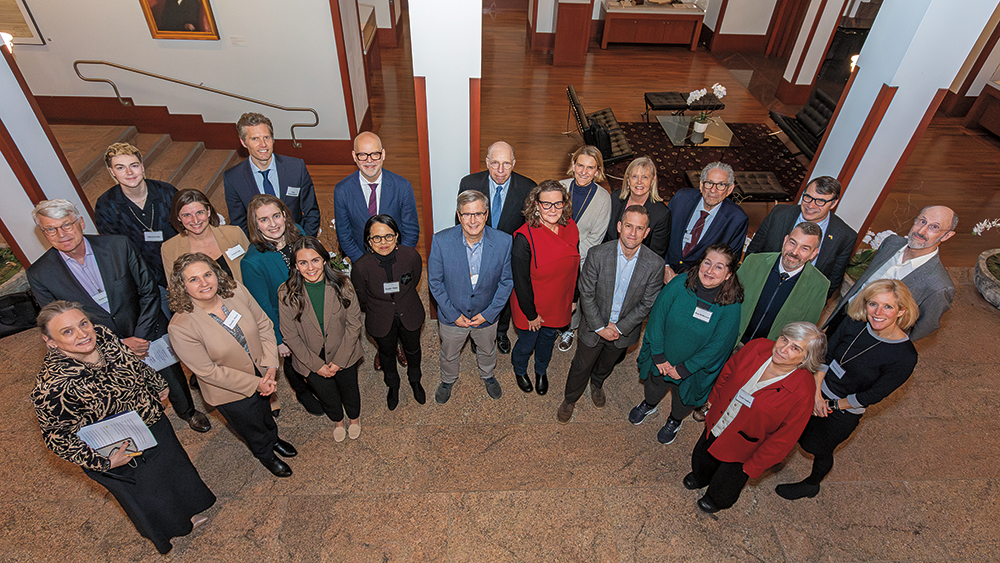
On December 4 and 5, 2025, the Academy convened a Future of Security Studies exploratory meeting, chaired by Rose McDermott (Brown University), Scott Sagan (Stanford University), and Jennifer Welsh (McGill University). The Academy has long been a leader in the field through its Committee on International Security Studies.2 The meeting brought together an interdisciplinary group of scholars and practitioners to reflect on the field’s trajectory and its ability to address both near- and long-term security challenges. Participants also identified key topics and research questions related to today’s most pressing security issues.
Building the Field
The field of security studies emerged after World War II, with a primary focus on armed conflict and threats to state security. Scholars developed foundational theories to explain the causes of interstate war, the dynamics of escalation and crisis management, and—with the proliferation of nuclear weapons—the possibilities for nuclear deterrence. Over time, the field expanded to include topics such as human, environmental, and health security to reflect a broader understanding of both traditional and nontraditional threats to states and individuals. Alongside this substantive shift has been a growing recognition of the role that ethics and law play in shaping how threats are addressed and managed.
One of the meeting’s key themes was the persistent “pipeline” problem in security studies: How can the field ensure a strong and sustainable pool of expertise? The participants highlighted three primary factors that are contributing to the shortage of expertise.
First, like many academic disciplines, security studies is facing a funding squeeze that makes it difficult for scholars to conduct research and to recruit and support new students. Postdoctoral positions are especially critical, as they help train early-career scholars to develop cutting-edge expertise and learn how to connect their academic research to policy debates. Today’s challenges reflect both sudden and longer-term shifts in the funding landscape. Recent disruptions include the cancellation of federal grants to researchers and universities, such as the Department of Defense’s Minerva Research Initiative that was terminated in 2025.
Longer-term changes include a shift in funding priorities away from traditional security issues, such as nuclear security and arms control, toward emerging security challenges like climate change, health security, and migration. Additionally, several major funders of nuclear security research have stepped away. For example, the MacArthur Foundation has discontinued its funding, and the Stanton Foundation has ceased operations, removing another source of support.3 Yet there are some positive developments: the federal government has reinstated some grants, and the Consortium to Reduce Nuclear Dangers recently awarded $5.4 million to twelve projects selected from a pool of five hundred applicants.4
A second challenge concerns the field’s ability to maintain a diverse pipeline of scholars and practitioners with expertise in a range of topics and areas. Students often focus on topics they see as urgent, but universities may offer fewer courses in these areas. As a result, some subjects remain underexplored, only to reemerge later as pressing issues.5 For example, during the Cold War, there were many experts and scholars knowledgeable about nuclear weapons and strategic studies. By the early 2000s, as terrorism dominated the headlines and counterterrorism became a primary focus of national security strategies, the number of people with that expertise declined. Today, nuclear weapons are again playing a central role in international politics, but there are fewer scholars equipped to analyze what’s happening and to help inform policy.6 Participants emphasized the importance of continuing to nurture generations of talent across a broad range of topics.
Third, security issues cross disciplinary and geographic boundaries, and require expertise in both technology and policy. To address this, the field needs to explore ways to better integrate and collaborate with scientists, including social scientists from other disciplines. Too often, as participants noted, the current research incentives trap students in disciplinary silos, limiting their ability to approach problems systemically and holistically. For example, students studying nuclear relations between two states also need to understand how other parts of that relationship, such as those involving economic issues, can influence the likelihood of conflict or cooperation.
Key Research Questions
Despite these challenges, participants noted the growing body of research on current and emerging security issues. This research includes topics that cut across both traditional and emerging subfields. They emphasized that existing theories, methods, and institutional arrangements—and the researchers who use them—must adapt to address today’s new security environment.
New Security Challenges
Participants noted that many emerging threats do not fit neatly into traditional, Cold War–era security frameworks focused on great power rivalry, territorial defense, and nuclear deterrence. Today’s security environment is shaped by a new distribution of power—among both states and non-state actors—and by threats in domains where conventional security models often fail to provide guidance.
In one session, experts in computer science and epidemiology explained that AI-powered military technologies and biological weapons differ from conventional weapons because they are easier to access and they make it harder to identify the source of the threat. Discussants considered how traditional deterrence theories might apply to these threats, while also noting where these modern threats challenge traditional models of threat escalation and call for new oversight mechanisms and theoretical approaches.
Many participants highlighted underexplored emerging threats in the international political economy, such as the development of and access to critical minerals, semiconductors, batteries, and renewable energy sources, as well as the race to shape industrial and labor policies. They stressed the need to examine how private-sector technological advancements are reshaping the relationship between states and corporate actors in international security. Participants also noted that uncertainty about the evolution of some technologies—and their impact on geopolitical rivalries—remains a persistent challenge in today’s security studies field.
Leadership Psychology
Another key theme from the discussion was how leaders perceive risk, access and process information, and make decisions under uncertainty. Some participants questioned whether realist narratives, which assume self-interest and rationality, adequately account for the behavior of contemporary personalist leaders. Others highlighted the influence of ethics and values in shaping leaders’ choices. Many expressed a desire to better understand and incorporate insights from psychology and organizational dynamics, as well as in studying case studies of historical crises more deeply. Several suggested that political scientists collaborate with psychologists, despite constraints such as the “Goldwater Rule,” which restricts public statements about the mental health of public figures. Others emphasized the importance of understanding how AI is transforming leaders’ cognition and decision-making processes.
Domestic Politics, Democracy, and Governance
Participants emphasized the role of domestic politics in shaping foreign policy, especially in democratic societies. They agreed that internal threats to democracy, including rising political polarization, can significantly influence how states assess and respond to security challenges. Some pointed to the erosion of personnel and institutional capacity within the U.S. government and called for more research on the security implications of these disruptions. They also stressed that global security experts have a key role to play in restoring and strengthening expertise and transparency in government institutions.
The Need for Clear Communication
Throughout the meeting sessions, participants returned to the question of how to communicate complex security concepts to non-academic audiences, such as policymakers and students. Many agreed that, to have the most impact, scholars should think like academics but avoid academic jargon. Some recommended that in addition to publishing in academic journals, scholars should engage wider audiences through blogs, podcasts, and social media. Participants also expressed an interest in engaging with diverse and interdisciplinary perspectives as a way to develop a more comprehensive set of models that can help students and policymakers reason systemically about emerging economic, technological, and sociopolitical issues.

Conclusion and Next Steps
The questions raised at the Academy’s meeting on the Future of Security Studies highlighted that the field is at an inflection point. Keynote lectures during the meeting by New York Times reporter David Sanger and Ambassador Nicholas Burns (Harvard University) underscored that these questions are crucial not only for academics but also for policymakers. With funding shrinking and security threats rising, participants agreed that the field must update its frameworks and overcome disciplinary silos to meet current and future challenges. The research questions raised during the meeting provide a roadmap for a more adaptive and collaborative approach. Addressing them will ensure the field’s relevance and empower scholars to help society navigate an increasingly complex global security environment.
The Future of Security Studies exploratory meeting was made possible by the Raymond Frankel Foundation. For more on the Academy’s work in security studies, visit the Academy’s website.