2142nd Stated Meeting | January 29, 2026 | San Diego Natural History Museum
On January 29, 2026, the Academy’s San Diego Committee, in partnership with the San Diego Natural History Museum, organized a discussion on the importance of science in our everyday lives and its impact on our future. The program featured Rommie Amaro (University of California, San Diego) and J. Craig Venter (J. Craig Venter Institute) in conversation with Peter Cowhey (University of California, San Diego). Judy Gradwohl (San Diego Natural History Museum) and M. Margaret McKeown (U.S. Court of Appeals for the Ninth Circuit) provided welcome remarks. An edited transcript of the program follows.
Judy Gradwohl
Judy Gradwohl is President and CEO of the San Diego Natural History Museum (The Nat).
Good evening. We are delighted to welcome you to the San Diego Natural History Museum, The Nat. I am especially excited to co-host tonight’s program with the American Academy of Arts and Sciences. Our organizations share a deep history. The Academy was founded 245 years ago; The Nat is now in its 152nd year, which makes us feel positively embryonic. Both The Nat and the American Academy were created with a bold purpose and a shared belief in the power of inquiry, learning, and public engagement. At our core, we’re dedicated to bridging the gap between science and everyday life. In a time when information is everywhere but attention spans are scarce, the challenge is no longer just reaching people; it’s cutting through the noise, building trust, and helping people understand why science matters in their lives.
Here at The Nat, basic science is at the heart of what we do. Our team of sixty-plus scientists conducts fieldwork across Southern and Baja California, documenting species, monitoring ecosystems, and tracking ecological change over time. They care for our collections of more than nine million specimens, which is an irreplaceable record of life in our region. These collections are the backbone of conservation, climate research, and biodiversity research. And this work is particularly meaningful here because we live in the most biologically diverse county in the continental United States—a richness made possible in part by the Kumeyaay people, the original stewards of the land. Our goal is to help shape a future in which plants, wildlife, and people thrive together, and where everyone feels connected to this extraordinary place. This is why programs like tonight’s matter so much.
It is now my pleasure to introduce Judge Margaret McKeown. It’s hard to know where to begin with someone of her distinction. She has served for more than twenty-five years as a judge on the U.S. Court of Appeals for the Ninth Circuit and is a member of the American Academy of Arts and Sciences. She is an affiliated scholar at the Bill Lane Center for the American West at Stanford University and serves as a jurist in residence at the University of San Diego School of Law. Judge McKeown served as a special assistant to the Secretary of the Interior as a White House fellow. Originally from Wyoming, she serves on the board of the Teton Science School and is the author of the award-winning book, Citizen Justice: The Environmental Legacy of William O. Douglas—Public Advocate and Conservation Champion. Please join me in welcoming Judge Margaret McKeown.
M. Margaret McKeown
M. Margaret McKeown is a Judge on the U.S. Court of Appeals for the Ninth Circuit. She was elected to the American Academy of Arts and Sciences in 2020 and is cochair of the Academy’s San Diego Committee.
Thank you, Judy. I am delighted that The Nat and the American Academy of Arts and Sciences have collaborated on tonight’s program. I want to give a huge thank you to Judy and her staff for allowing us to be in the museum after hours.
I’m proud to be part of the Academy’s local committee in San Diego, which includes Dr. Tony Hunter, Dr. Susan Taylor, and Dr. Barbara Walter. We have 130 Academy members in San Diego. For those who may not be familiar with the Academy, let me give a very brief overview of the organization. The American Academy of Arts and Sciences is an honorary society and an independent research center, founded by John Adams, James Bowdoin, and other scholar patriots during the Revolutionary War. In their words, the purpose of the Academy is “to cultivate every art and science which may tend to advance the interest, honor, dignity, and happiness of a free and independent and virtuous people.”
The Academy’s members are quite diverse. They include Jane Goodall, Albert Einstein, Justice Scalia, Margaret Mead, Toni Morrison, Joan Baez, and Anderson Cooper. One member, in fact, has a connection to The Nat. Charles Darwin, elected to the Academy in 1874, has one of his specimens here at the museum. It’s the Brown Lacewing. I didn’t know what that was, so with ChatGPT’s help, I learned that it’s a tiny insect with tent-shaped wings. When Darwin was on one of his collection journeys to Tasmania in 1836, he collected this specimen, and it ended up here at The Nat, which is pretty fascinating.
Since those early days, the Academy has convened members, friends, and the public on important issues affecting our country and the world. Everything from eighteenth-century innovations on agriculture to fierce debates over evolution in the mid-1800s to nuclear weapons proliferation in World War II and, of course, now the health of our democracy in the twenty-first century. In every era, the Academy has been rooted in its ability to bring people together across different perspectives, different backgrounds, and different areas of expertise.
The question that we’re posing tonight—why does science matter?—could not be more important to those of us here in the San Diego community or, in fact, in all other parts of our country. Science touches everything—from the medicines we take to the ethical questions that we’re confronting. And its centrality to our lives must not be taken for granted. We hope that the panel discussion this evening will inform, inspire, and prompt you to ask questions.
Tonight’s program is in the great tradition of the Academy’s interdisciplinary conversations that are called Stated Meetings. They gave me a gavel to call our meeting to order. I have to tell you that in the courtroom, they don’t let judges use a gavel. I don’t know if they’re afraid that we don’t know how to use it or will misuse it. But here I am, calling to order the 2142nd Stated Meeting of the American Academy of Arts and Sciences.
I’m delighted now to turn things over to Peter Cowhey. Peter is Dean Emeritus and Qualcomm Chair Emeritus of the School of Global Policy and Strategy at the University of California, San Diego. He is also Vice Chair of the Board of Directors of The Nat.
Joining him in the conversation tonight are two esteemed scientists. Dr. Rommie Amaro is Professor and Endowed Chair in Chemistry and Biochemistry at UCSD. She leads the Amaro lab, which sits at the interface of chemistry, biology, physics, and pharmacology. Dr. J. Craig Venter is a Founder, Chairman, and CEO of the J. Craig Venter Institute. He is a biologist renowned for his contributions in genomics, including and most importantly the sequencing of the first draft human genome, and also the construction of the first synthetic bacterial cell. Dr. Venter is a member of the American Academy, elected in 2001.
We regret that philosopher Patricia Churchland is unable to join us this evening. Let me turn things over to Peter and the panel. Thank you.
Peter Cowhey
Peter Cowhey is Dean Emeritus and Qualcomm Chair Emeritus of the School of Global Policy and Strategy at the University of California, San Diego. He is also Vice Chair of the Board of Directors of The Nat.
Good evening. On behalf of my colleagues on the panel, I want to express our thanks to all of you for joining us. Tonight we’re exploring why science matters, and we are going to do that through three rounds of questions. In the first round, Dr. Amaro and Dr. Venter will each choose a favorite example that shows why science matters and how it made that achievement possible. In the second round, they’ll speculate about what they see as a major turning point for science in the future. And the third round will be a brief exchange about the challenges of doing science in today’s contentious climate.
Rommie, let’s start with you, and your favorite example that shows why science matters.
Rommie Amaro
Rommie Amaro is Endowed Chair and Distinguished Professor in Theoretical and Computational Chemistry at the University of California, San Diego.
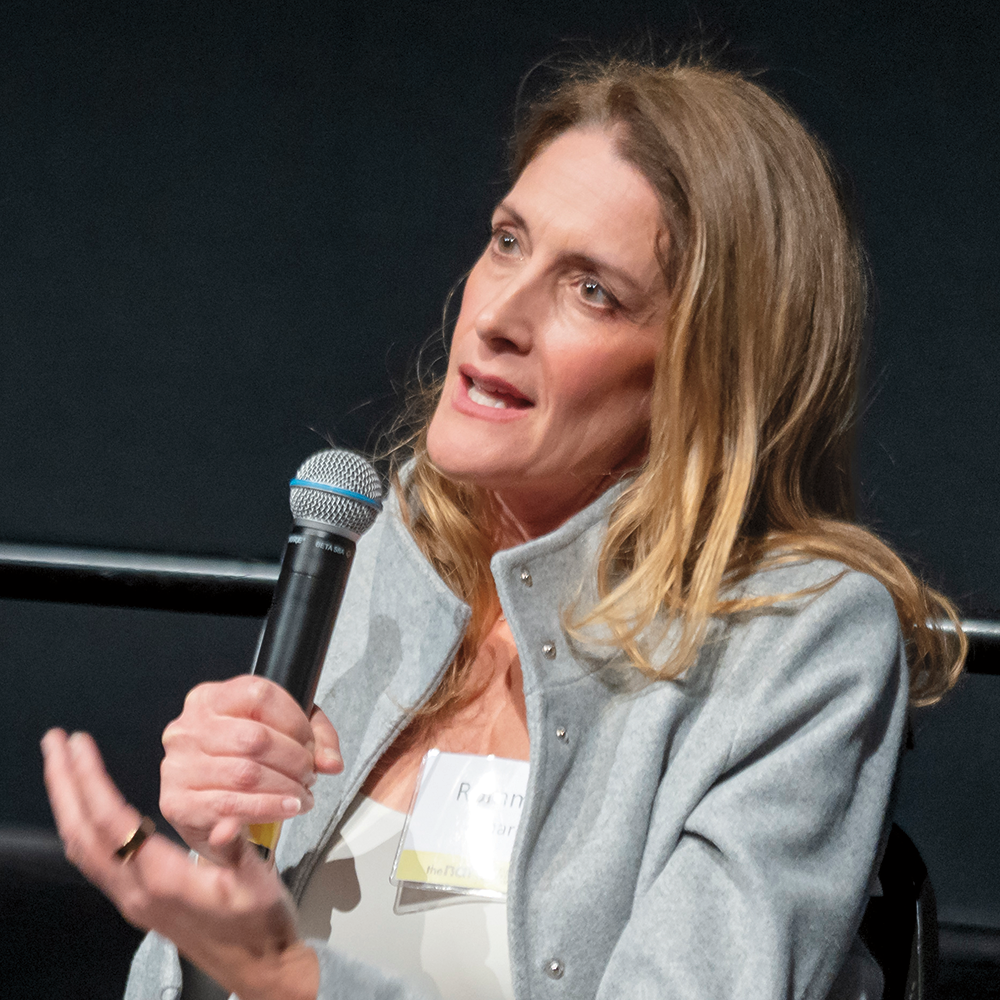
Thank you for including me in this conversation. I’m deeply humbled and honestly a bit stunned to be sitting beside Craig Venter, whose work inspired my journey in science. I was telling him earlier that when I was an undergraduate at the University of Illinois, the race to sequence the human genome was just coming across the finish line, and that amazing promise of science inspired me to devote my professional life to the study of science.
A great example that shows why science matters is COVID-19. We didn’t really know how dangerous it was, how rapidly it would spread, or even very much about it. It was a situation in which we faced enormous uncertainty and very high stakes, and science gave us the best framework to address those threats. We know that science doesn’t always get it right the first time. We have to continually update our models and hold ourselves accountable so that we can truly understand the full landscape of what we’re dealing with.
One of the things I remember most about the early days of the pandemic is that the global scientific community pivoted to study the virus. Scientists, clinicians, epidemiologists, and other researchers worked on their own little piece of the puzzle and then we all came together. As we know, one of the remarkable achievements was the development of the vaccines that saved so many lives, and still do.
In the process, we learned about viral biology and immune responses, and we did so at an unprecedented pace. The beauty of this global collaboration was that people left their egos at the door, and we were all rowing the boat in the same direction. But in terms of the scientific method and the scientific process, we saw the need to update our models much faster than we were accustomed to. We squished a decade of learning into eight months. I think this is a good example of why science matters.
COWHEY: Thank you, Rommie. Craig, you have a unique perspective on these matters.
J. Craig Venter
J. Craig Venter is founder, chairman, and chief executive officer of the J. Craig Venter Institute. He was elected to the American Academy of Arts and Sciences in 2001.
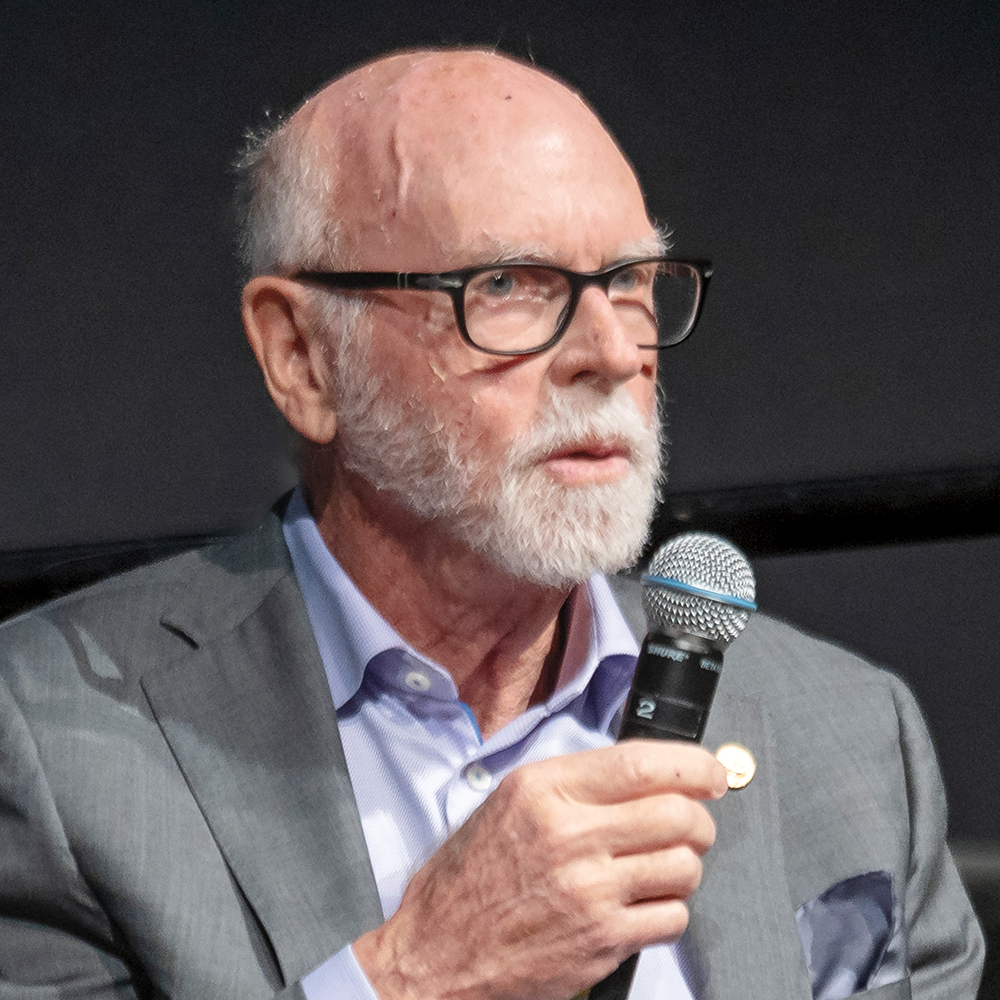
Thank you. Let’s go back to when the Academy was founded. In the 1700s, there were roughly 600 to 900 million people on this planet. Over 90 percent of families had at least one child die before they turned five. Because of this child mortality, people had large families, and they often waited several years before naming their children. It’s hard to imagine that today. So what changed?
There were improvements in sanitation: accessing clean water, getting rid of human sewage, and trying not to mix the two. Better sanitation led to a reduction in infant mortality and death overall. But it wasn’t until the mid-1800s when things really started to change. The development of vaccines had the largest impact on infant mortality and human longevity, even more so than sanitation. The first vaccines reduced mortality by 60–70 percent. It surprised me that antibiotics didn’t rank very high; they were considered relatively insignificant, though we know that antibiotics allowed a huge reduction in infant, birth, and surgical mortality.
In the 1850s, surgeons didn’t wear gloves, and they went from patient to patient without washing their hands. If your dentist did that today, you would sue them. Or I hope you would if you lived long enough. That’s the difference between antibiotics and vaccines. Antibiotics treat diseases; they don’t cure them or eliminate them, whereas vaccines eliminate diseases. Let’s look at the record with polio and smallpox. Polio has virtually been eliminated in the United States, with a few outbreaks in parts of the world. Smallpox has been eliminated as a disease. I was asked many years ago by the Secretary of Health to sequence the smallpox genome. The Russians were going to sequence a strain as well. And supposedly after we published the sequence, the remaining stocks were going to be destroyed to prevent the disease from reemerging.
I convinced the government not to destroy the stock because it would lead to a sense of false security. I knew that with the new synthetic methods that we were developing, we could reproduce smallpox. And so now we can remake any virus that causes disease in a matter of weeks.
COWHEY: Thank you, Craig. As I was listening to your account of the history, I was reminded that the recent Nobel Prize in Economics was awarded to several economists for their work examining what led to sustained economic growth globally. If you think about the Roman Empire through about the mid-1500s, economic growth in most of the world was practically zero. And what happened in the mid-1500s was that the tinkering and learning through small-scale experiments became married to the growth of scientific societies and organized science and what we would think of today as medicine and engineering. This led to innovation and its dissemination in rapid ways. So, we not only reduced death, but we opened opportunities for growth along the way. And your story exactly fits that tale.
Let me ask you to think a little about what comes next. Rommie, your career is built at the intersection of different disciplines of science, and we’ve seen the discoveries that have come from that. So, what’s next?
AMARO: I would say that predictions are next. In my lab group, we call ourselves data integrators. We develop highly detailed three-dimensional models of biological systems in which we take data from many different kinds of experiments and integrate them into one cohesive model. We then propagate their dynamics over time so we can see how the proteins move and interact with each other. It’s a combination of all these different disciplines.
I’m perpetually excited by science, and I’ve always thought that it was a thrilling time to be a computational biologist because of Moore’s Law, which has given us an amazing wind beneath our wings for decades. And now with machine learning and AI contributing to these efforts, one of the things I’m most excited about is the development of digital twins, where we’re creating computer models or simulated models of biological systems that combine experiment, data, and theory (or simulation) with AI machine learning. This is helping us to understand how things work at the cellular scale. I think in the next five years, this research is going to be very impactful for health in general.
COWHEY: If you had to make a wild guess, and you’re not being held accountable for being correct, do you think it would overturn some notion that we have about biological systems?
AMARO: I think that’s possible for airborne disease transmission and measles. We need to understand how science works and we need to continually revise our models. I think learning how changes in the earth’s climate can contribute to new outbreaks will allow us to do better at forecasting, predicting, and responding.
COWHEY: Thank you. Craig?
VENTER: I have two answers. I’ll start with measles, because the answers depend on what we do as a society and whether we’re going to go in a more negative or positive direction. It takes very few people to change the direction of how things might happen. Measles is the most contagious viral disease that we know of. One child can contaminate everybody in a room who is susceptible, and historically measles has been one of the biggest killers because it spreads so rapidly. But that changed overnight with the measles vaccine. We went from an era when parents had large families because they expected some of their children to die before they turned five years old to smaller families because parents could trust that their children would survive.
The measles vaccine is an unusual situation because it’s based on herd immunity, which means a certain percentage of the population has to be immune to keep the disease in check. And that turns out to be a very high number, 95 percent of the population, which has to be maintained year after year. If the rates drop even a little, we start to see major outbreaks. For example, if only 85 percent of the population in this country is vaccinated, we will see an increase in infant mortality and families having to deal with losing their children again.
People mistakenly think that vaccination is an individual decision, but it isn’t for two key reasons. One, which I mentioned already, is herd immunity. Another reason is that measles has a unique effect: it can erase your immune system’s memory for weeks, months, or even years. So a child that survives measles is highly susceptible to all other infections for a period of time. If we lose our herd immunity, it’s not just measles that could return. It could become a watershed moment when other major infectious diseases return, potentially taking us back to the 1700s. That’s why COVID is such a powerful example of how quickly new vaccines can be developed to combat a new disease.
Let me turn to something more positive, and that’s the impact of genomics. Genomics is the discipline that’s already had and will continue to have a greater impact on humanity than any other scientific breakthrough. First, we learned how to read and assemble the genetic code. We can now take that digital code and convert it back into chemistry, and even into living systems. Using these techniques, we’ve developed the first synthetic flu vaccine. Influenza vaccines are still produced using relatively slow and primitive methods. Because it takes a long time to manufacture the vaccines, the decisions made by the World Health Organization about which strains to select have to happen far in advance. By the time the vaccine is available, the circulating strains may have changed, which is why the match is sometimes imperfect. With synthetic methods, we envision a very different model: one in which vaccines are generated digitally and produced rapidly, potentially with a small device attached to a desktop computer that could instantly print out a new vaccine based on the latest strains that are circulating. I think synthetic genomics has the potential to pave the way for a new industrial revolution, changing how we manufacture things, and even how we change our own species, hopefully for the better.
COWHEY: That’s an ambitious hope in today’s world. The scientific enterprise in the United States has been leading scientific advancement in the world since roughly World War II. We were not alone in producing those advancements. But I think it’s fair to say that we were at the epicenter of advancement.
VENTER: Emphasis on were.
COWHEY: Let me ask you about the various challenges that you face as working scientists, and how you’re coping with them. Rommie, let me start with you and ask about the people equation. A large part of our scientific community, in labs, universities, and organizations like the J. Craig Venter Institute, is made up of foreign-born PhDs, and their presence today is under scrutiny. At the same time, there aren’t enough young people who are studying science. You have an outstanding record of mentoring young scientists and helping them succeed. Rommie doesn’t often highlight this, but if you look at the teenagers winning major science awards in the United States, she has often been their mentor. How are you approaching these challenges around people and talent today?
AMARO: I’ll admit that it’s tough. There are about twenty in my group, and over half are foreign born. The diversity of thought and perspective that they bring as well as their skills have contributed mightily to the scientific gains in my group and, by extension, across the United States.
At the same time, I need to admit that in the current political climate, it feels as if every week there’s another challenge, which leads to more instability. There’s a strong dynamic in our group, with everyone supporting each other. And the university is supporting them too. I think larger organizations in San Diego are also doing what they can to support our international scientists. But it is quite worrisome. Part of being an academic scientist is training others, not only in the lab but also in the classroom. And that’s really a privilege of the professorate that we get to do that. But I don’t have the magic answer for this challenge. It’s tough right now.
VENTER: I think our only hope is if people vote their conscience. I was trained that science was an international community, and in the 1970s when I was at UCSD it was. At the time, the Soviet Union was considered our arch-enemy, yet we still had science exchanges. My mentor, Nathan Kaplan, brought several Russian scientists to work with us, including some very high-level researchers. Many of them arrived with government minders. Despite the political tensions, scientific and intellectual exchange continued.
Science exchange, and particularly intellectual exchange, with China, even just five years ago, was very different from what it is today. And that shift is concerning. In synthetic biology, for example, China is now outspending the United States by roughly fifteen to one. Their latest budget is over $15 billion, while ours is under $1 billion. And this is considered the most active area for the economy and for the future of science.
It wouldn’t be such a problem if science remained open, with free exchange and collaboration. But those interactions are now being restricted to a large extent, making things much more difficult. Science has always had strategic uses. The forefront of science has often been used to develop new weapons. What’s different now is that science itself is being weaponized because of its economic and health impacts. Human genome sequencing is a good example. In China, genomic sequences generated in the country cannot be shared abroad, but China has made a huge effort to collect genomic data from populations around the world. China is also the only country that I’m aware of that uses genomic sequences in ways that raise serious concerns, such as monitoring and tracking their minority populations.
As we become more isolated, things become more challenging. Science has long depended on the open exchange of ideas and, most importantly, people. My hope is that things will turn around, because once these infrastructures are weakened or dismantled, they can’t simply be restarted by flipping a switch. And we are already seeing a shift: U.S. universities are no longer the first choice for many international students because of the political climate in this country. They are choosing to train elsewhere, and that often means that they will build their careers elsewhere too. Our hospitals are feeling the effects, particularly from the lack of interns and residents. In many rural hospitals, interns and residents make up the majority of the health care workforce, which has a direct impact on patient care.
Though it may not sound like it, I’m generally an optimistic person. Our country has come to these impasses before in the past multiple times, and people always rise up. I think that’s all we can hope for at this stage.
AMARO: It is true how quickly you can destroy something that took so long to build. And rebuilding is a slow process.
VENTER: If you follow the news, you’ll see that measles is making a significant comeback in some areas. In other countries, the situation is even worse. In the United States, measles cases had dropped to nearly zero, but now there are outbreaks in about twenty states. Some of these outbreaks are concentrated in specific communities or cities where vaccination rates have dropped. As I mentioned before, if the vaccination rates drop to 85 percent, it will be very difficult to come back from that. People need to be aware of this risk. Our government is anti-vaccine and is particularly opposed to measles vaccines for children, so we have to hope those attitudes change quickly.
COWHEY: And you say you’re generally an optimist! Let me ask one last question before we turn to audience questions. The research funding story that you described, Craig, isn’t actually new. For some time now, U.S. government spending on science has been stagnant or in some cases has been declining. The salvation for certain fields has been business investment in research and development. In the United States, private-sector R&D spending is far larger than what the government is spending. That represents an epic turnaround from the period after 1945, when the federal government led investment in scientific research. Today, the balance has flipped, with business spending more than the government, even in areas of the most basic research.
The challenge is that businesses, understandably, set their priorities based on their commercial interests. This leads to heavy investment in areas like AI, while other fields that are not closely tied to the business mission receive less investment, or benefit only from a small amount of spillover. Craig, you’ve spent much of your career at the intersection of commercial and fundamental biology. What is your perspective on this dynamic, and what do you think it means for the future?
VENTER: I have started businesses as a way to fund research at my not-for-profit institute when the government would not provide funding. The government was so concerned about creating a synthetic cell that they were afraid to fund that research. So, I founded a company to finance the project in exchange for the IP. We also worked on the human genome, sequencing it in nine months instead of fifteen years, and for roughly $100 million instead of $5 billion. But who’s keeping score?
One thing that remains unique to this country is that we have both venture investment and philanthropic giving. In Europe and in Australia, there is very little venture funding, and philanthropic giving is also limited. In the United States, many people who have significant wealth feel a responsibility to give back, though there’s certainly room for improvement. Investment and philanthropy together help offset what government cannot or will not fund. Interestingly, most NIH funding has historically come during Republican administrations, not Democratic ones. It looks like Congress is trying to continue that trend, but we’ll have to wait and see.
COWHEY: I would add that in some of the work that we’ve done at UCSD, we’ve discovered that for university and independent laboratories like Salk, philanthropy is funding roughly the equivalent of 40 percent of the U.S. government budget for basic research. And that has been one of our saving graces. Let’s now turn to questions from our audience.
AUDIENCE MEMBER: Was the real turning point in public perception of vaccines driven more by the polio vaccine than the measles vaccine since polio had a much higher morbidity rate and a much more devastating impact on families?
VENTER: I’m old enough to remember standing in line to get the polio vaccine, which was given to us on sugar cubes. Before the vaccine, everyone knew someone who had polio or had died from it. I had a classmate who used a wheelchair because of it. It may feel more dramatic because it happened so suddenly; there was a clear “before” and “after” within our lifetime. Yet measles has actually killed far more people than polio. But it doesn’t have to be a competition.
AMARO: We are getting a lot of conflicting information right now about vaccines. Officials in the Department of Health and Human Services don’t agree with scientists and doctors about the importance of vaccines so the public is understandably confused, and we’re seeing vaccination rates drop below 95 percent.
VENTER: Part of the issue is acknowledging that vaccines can have side effects in some people. Adjuvants can cause reactions in certain individuals, and the Vaccinia vaccine caused major side effects that affected a large number of people. After we sequenced smallpox, we were asked to sequence the Vaccinia vaccine. We discovered that Vaccinia is actually a mix of at least five different viral isolates, rather than a single isolate. As a result, a new smallpox vaccine was developed using one of the isolates that did not cause major side effects, and that version is now kept as the standby emergency vaccine.
When most people are healthy and their children are no longer dying from disease, the side effects from vaccines that affect a very small percentage of people become much more visible. In the past, both the government and the pharmaceutical industry did a poor job of acknowledging that, largely because the overall benefit to society was good. But every vaccine, just like every medicine, can cause side effects in certain populations. I’m hopeful that as we learn and understand more about genomics, we’ll be able to predict these reactions and side effects more accurately.
AUDIENCE MEMBER: I think we all appreciate that science matters. But the essential question, which Dr. Amaro was getting at, is why trust science? There’s a recent article by Russ Douthat in the New York Times that featured an interview with Jay Bhattacharya, the head of the National Institutes of Health, and you can see that inherent distrust of science clearly. Bhattacharya developed many of his views during the COVID-19 pandemic, when he believed the response from scientists and public health officials was fundamentally misguided and that they were not telling the truth about two things. First, how infectious the virus was and its mortality rate. And second, how effective the lockdowns would be. So the question is, how do we communicate science more effectively and in a way that people who don’t have a science degree can understand and trust the science?
VENTER: I think the distrust of science goes back even further. A lot of people didn’t know that the NIH was funding gain-of-function research in Wuhan. Applying Occam’s razor, the hypothesis most worth scrutinizing is that COVID-19 originated in a Wuhan laboratory, not as a deliberately engineered super-contagious pathogen but as a result of gain-of-function research that may have accidentally infected researchers. How it might have spread from there, whether they went to the market or it came from some other route, isn’t known, in part because some people involved in the U.S. government aren’t talking about it, and the Chinese government has not allowed access to investigate.
So COVID began as a mystery. And no one had definitive answers at the start. Experts were making their best educated guesses. And those guesses were treated as facts because policies had to be made. Tony Fauci is a friend and brilliant scientist. He and others were relying on the best knowledge that we had from previous pandemics. They were using the kinds of strategies you see in movies like Contagion: trying to control a major pandemic but not knowing how to do that. In hindsight, those early guesses weren’t really that far off. The pandemic was under control faster than I expected. But those early decisions were based on informed guesses. It’s hard to ask people to follow public health guidance when you’re telling them you’re still figuring things out.
AMARO: This is why I think it’s important to talk about science as a method and as an ongoing process. We’re constantly updating our models as new data comes in. So, it shouldn’t be surprising if the guidance changes six months later when a new variant appears. We haven’t done a great job of making that clear. And this applies to masking too. As somebody who understands droplet transmission, that whole debate was frustrating. I understand that policymakers need to project confidence so people will trust their guidance. But in the end, we are suffering from our own inability to educate people about how science actually works.
VENTER: Different countries took different approaches. Sweden tried to achieve herd immunity by allowing widespread infection, and that didn’t turn out so well. So, while some of the methods may have felt heavy-handed, wearing masks was one of the smartest steps. But it is hard for people to understand the scientific process. It was always taught dogmatically as if everything was an absolute. My good friend and colleague for twenty years, Ham Smith, a Nobel laureate who died last year, and I actually believed something that most scientists believed at the time. When we set out to build the first synthetic cell, we assumed that biology was fundamentally understood. We thought we could go through the scientific literature, identify all the components required for life, assemble them into a genome, boot it up, and we would produce a living cell. It didn’t work. Our designs failed. The biggest surprise was what we learned through trial and error: roughly a quarter of the genes essential for life are of unknown function. When we look at the human genome, over half the genes are of unknown function. And from all the sequencing my team has done in the oceans and elsewhere, we have approximately a 100:1 ratio of genes of unknown functions compared to the ones we do understand. When we started, if you asked most scientists, they would have said that the rules of biology were already known, and that we understood how everything works. My most quoted line is, “We don’t know shit about biology.”
COWHEY: Wasn’t there a rock and roll song about that? Our next question.
AUDIENCE MEMBER: I’m a scientist, so friends and family often come to me when they want answers about something. I find myself explaining the nuance of science: that we do know a lot, but our understanding is always evolving. Every time new evidence emerges, our knowledge gets updated. I sometimes wonder whether, at least with vaccines, we’ve almost become too successful. Because vaccines work so well, people have forgotten how severe these diseases were before we had them. When you no longer see people dying from those illnesses, it becomes easier to forget how important the vaccines really are. There’s a saying that life is a progressive narrowing of choices. How do you make sure that the choices you make along the way, scientific and ethical, are good ones?
VENTER: This is an important question because there’s a whole discipline called bioethics and many people expected bioethicists to act like “the priests of science,” telling people what was ethical and what was not. My view is just the opposite: every scientist has to have their own ethical framework that guides their work. When we set out to make the first synthetic lifeform, we didn’t just start and say, “Let’s go for it.” We spent a year and a half conducting a review with the community, and that review was led by bioethicists. Then in 2010 we announced the first synthetic cell, and President Obama announced a new bioethics committee to review the creation of synthetic life. I think it was the first time in modern science when an announcement got responses from the President and the Pope on the same day.
President Obama applauded our attempt at making synthetic life. The Pope said, “Dr. Venter did not create life, he just changed one of its motors.” But we welcomed his comments because it calmed people down. We all have our own ethical standards that develop throughout our lifetime, and I apply my standards every day in the work that I do.
AMARO: I think that at least in science, depending on the specific domain, there’s generally more acknowledgment of ethical concerns and a greater appreciation for the complexity of these situations. Often, there isn’t a single “right” answer or a clear line to draw, which is just one of the many challenges that scientists navigate every day.
COWHEY: Thank you, Rommie and Craig, for this interesting conversation. Let me now turn things over to Judge McKeown to close our program.
McKEOWN: Please join me in thanking this amazing panel. We are fortunate to have resources like Craig and Rommie in our San Diego community. We’ve talked about all the challenges we have today: politics, policy, funding, basic research, and ethics. I’ll leave you with one thought, and that is, channel your inner genetic optimism.
© 2026 by Judy Gradwohl, M. Margaret McKeown, Peter Cowhey, Rommie Amaro, and J. Craig Venter
To view or listen to the presentation, visit the Academy’s website.