
2143rd Stated Meeting | April 16, 2026 | Stephen D. Bechtel, Jr. Auditorium, American Academy of Arts and Sciences
The April 16, 2026, event on “Honoring Excellence” marked the first joint convening of three of the nation’s oldest honorary societies: the American Academy of Arts and Sciences, the Phi Beta Kappa Society (PBK), and the American Philosophical Society (APS). Inspired by the semiquincentennial of the United States of America, the event celebrated the three organizations’ shared and long-standing commitment to democracy and the pursuit of knowledge. At the event, each society conferred a prize on an individual whose scholarly contributions embody those ideals.
This historic collaboration began with a welcome and call to order from Chair of the Academy’s Board of Directors Goodwin Liu (Supreme Court of California), who congratulated the Academy, PBK, and APS for “making history while celebrating history” and called on the members of all three societies to heed the call of service and engagement.
American Academy member Stefanie Stantcheva (Harvard University) presented the Academy’s Talcott Parsons Prize to Claudia Goldin (Harvard University) for her transformative scholarship illuminating the economic lives of women and the historical roots of gender inequality. Stantcheva offered a warm portrait of her Nobel Prize–winning mentor and friend, describing her as a model Academy member who “through her intellect and commitment to the common good . . . has transformed both scholarship and the world it seeks to understand.”
Phi Beta Kappa Secretary and CEO Frederick Lawrence introduced Greg Grandin (Yale University) as the recipient of PBK’s 2026 Ralph Waldo Emerson Book Award. Lawrence highlighted Grandin’s scholarship, particularly his new book America, América: A New History of the New World, describing it as a testament to exploration, intellectual inquiry, and deep understanding—the same values that inspired the founding of PBK in 1776.
Finally, Roger Bagnall, president of the American Philosophical Society, honored Jan Ziolkowski (Harvard University) with the Society’s Henry Allen Moe Prize in the Humanities in recognition of his paper “The Juggler of Notre Dame and the Medievalizing of Modernity.” Bagnall praised Ziolkowski’s scholarship as “an impressive and approachable multidisciplinary case study” that, much like the awards event itself, illuminates the enduring and important connections between the past and the present.
Following the presentations, the award recipients participated in a panel discussion moderated by Academy President Laurie L. Patton that explored the role of useful knowledge and the importance of free inquiry to a democracy. The awardees’ acceptance remarks as well as an edited transcript of the discussion follow.
Acceptance Remarks by Claudia Goldin
on receiving the American Academy’s Talcott Parsons Prize
Claudia Goldin, who was awarded the Nobel Prize in Economics in 2023, is the Samuel W. Morris University Professor at Harvard University. She was elected to the American Academy of Arts and Sciences in 1992.
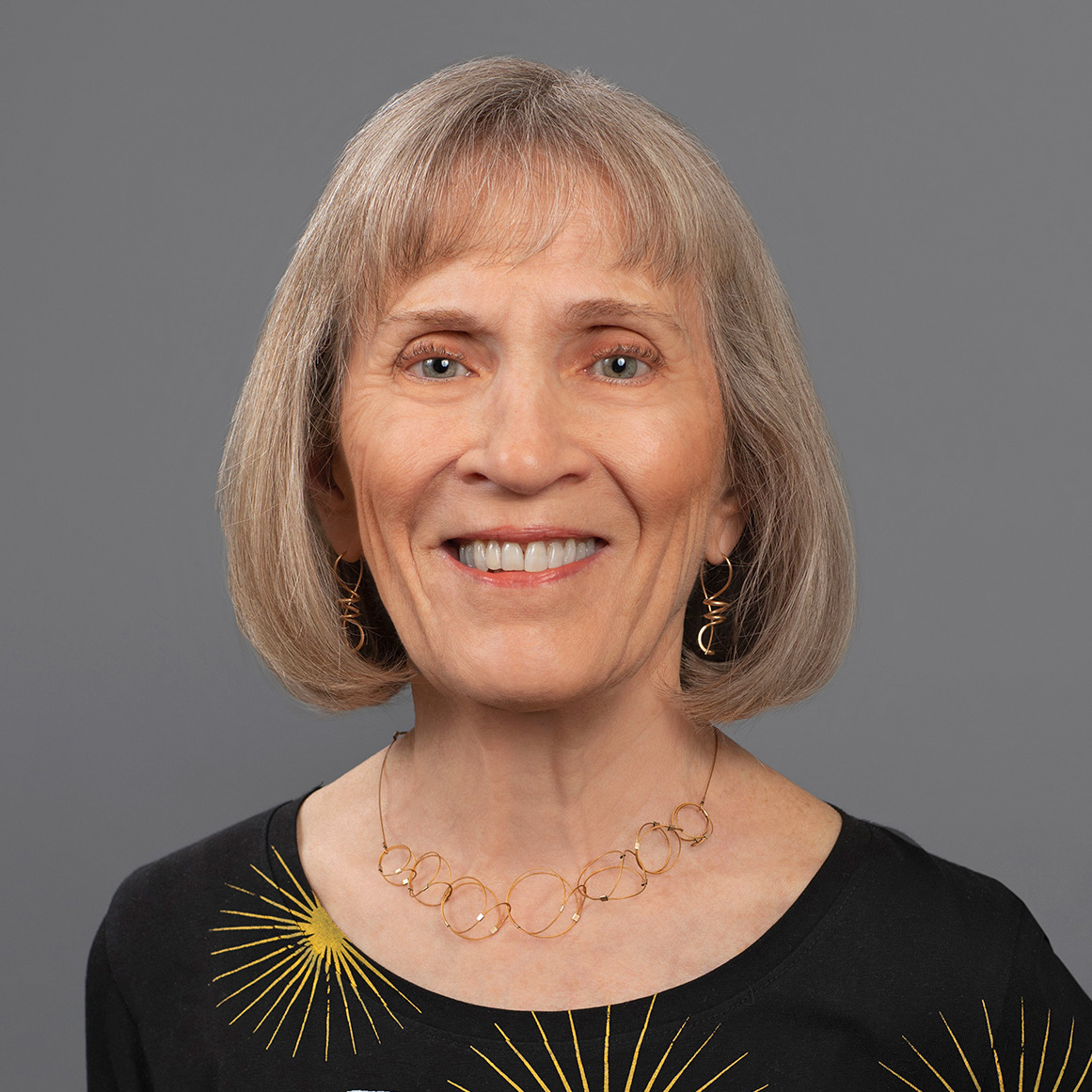
Thank you. I’m deeply honored and would like to explain why the Talcott Parsons Prize has special meaning for me. First, and most important, is that it’s awarded for contributions in the social sciences. I am proud to be included in a group of thinkers who have deeply influenced me. When I visited the Institute for Advanced Study a long time ago, Albert Hirschman and Clifford Geertz were there. They each made their own sense of a complicated world of people and social relations, and that fascinated me. Albert did it in his work on Exit, Voice, and Loyalty, and Cliff did it in his work on bazaar economies and his micro-study of cockfighting. Closer to home, I was greatly influenced by Robert Putnam’s work on social capital, and he inspired me to do work on that topic myself. Much nearer to my own research is Joan Wallach Scott’s work and books that encouraged me to think deeper historically on the topic of women’s labor.
Before I came to Harvard, I was on the faculty at the University of Pennsylvania, where I was a member of the economics department, but I was also a member of graduate groups in history, demography, sociology, and, of course, economics. It was a university without walls, with few disciplinary boundaries. Harvard is more siloed. Although I pride myself on being a social scientist, at Harvard I am an economist. Therefore, I’m even more honored that the Talcott Parsons Prize recognizes my identity as a social scientist.
The second reason why this prize is so special to me is that I’ve received other prizes, and all of them require that I travel, that I stay in a hotel, which I don’t like, and that I remain away from home for many days. This prize required that I cross Scott Street. I’ve lived in the shadow of the home of the American Academy for years and benefit from its Norton’s Woods every day. So a double thank you to the Academy for this honor.
Acceptance Remarks by Greg Grandin
on receiving The Phi Beta Kappa Society’s Ralph Waldo Emerson Book Award
Greg Grandin is Peter V. and C. Vann Woodward Professor of History at Yale University. He was elected to the American Academy of Arts and Sciences in 2010.
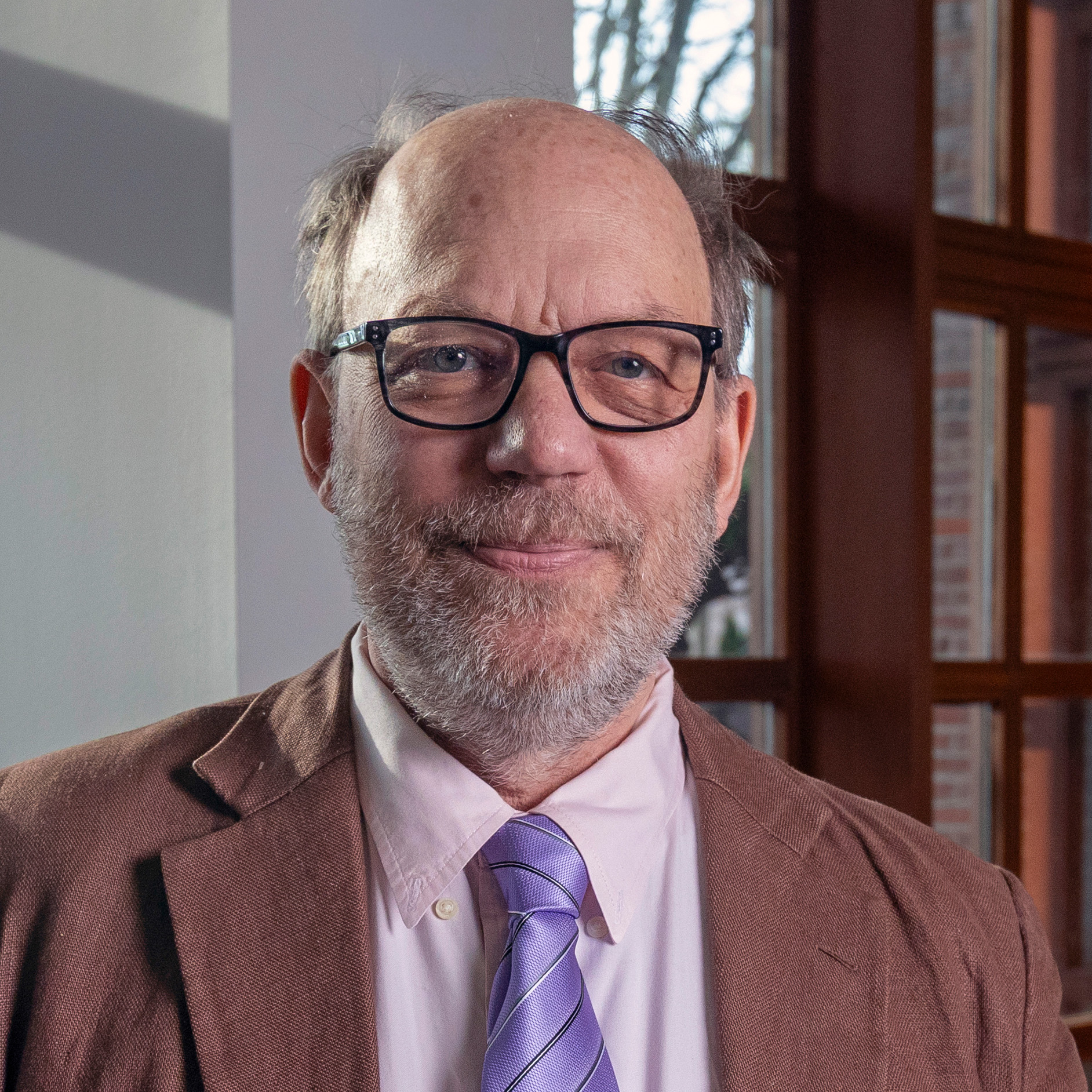
Thank you. It’s a privilege and a wonderful experience to receive this award. Ralph Waldo Emerson makes a small cameo in my book, America, América: A New History of the New World. José Martí, the Cuban revolutionary, was deeply influenced by Emerson. What’s interesting is that Martí saw in Emerson something beyond self-reliance and individualism. He saw Emerson’s self-reliance as the necessary precondition for a broader sociality. For Martí, sovereignty, whether personal or national, and for which he fought for in Cuba, was the basis for entering into a community of nations or a social republic.
One of the central arguments of the book is that there exists a fundamental tension between the United States’ fixation on individual rights and Latin America’s commitment to economic and social rights. The book traces this divergence back to the conquest itself, examining both the horrors of the conquest and the critiques of that violence. I follow that history through the tensions between the United States and Latin America, and, even earlier, between the British Empire and the Spanish Empire, to argue that these conflicts helped to create the conditions and terms of the modern world. What used to be called the rules-based order, or the liberal international order, is now either under threat or already gone.
The book came out in a very timely moment. I started writing it during the last months of the first Trump administration, and I finished it around the time of Trump’s second election. The book was published shortly before his inauguration. It was uncanny to watch the events that unfolded afterward: renaming the Gulf of Mexico as the “Gulf of America”; the series of extrajudicial killings of speedboat operators; renewed regime-change efforts in Venezuela; laying siege to Cuba, to go back to José Martí; and then turning our attention to Iran.
One of the arguments in the book is that Latin America, through its long conflict with the United States, played a role in bringing about the end of the doctrine of conquest and the rise of a multilateral ethos of sovereignty and arbitration. We’re living in a world today, however, where that’s unraveling quite fast. I would like to think that the book arrived at a timely moment.
Let me close by thanking several people who are not here: my family and my editor, Sara Bershtel at Penguin Press. My thanks also to the good people at Phi Beta Kappa and the American Academy of Arts and Sciences.
Acceptance Remarks by Jan M. Ziolkowski
on receiving the American Philosophical Society’s Henry Allen Moe Prize in the Humanities
Jan M. Ziolkowski is the Arthur Kingsley Porter Professor of Medieval Latin at Harvard University. He was elected to the American Academy of Arts and Sciences in 2010.
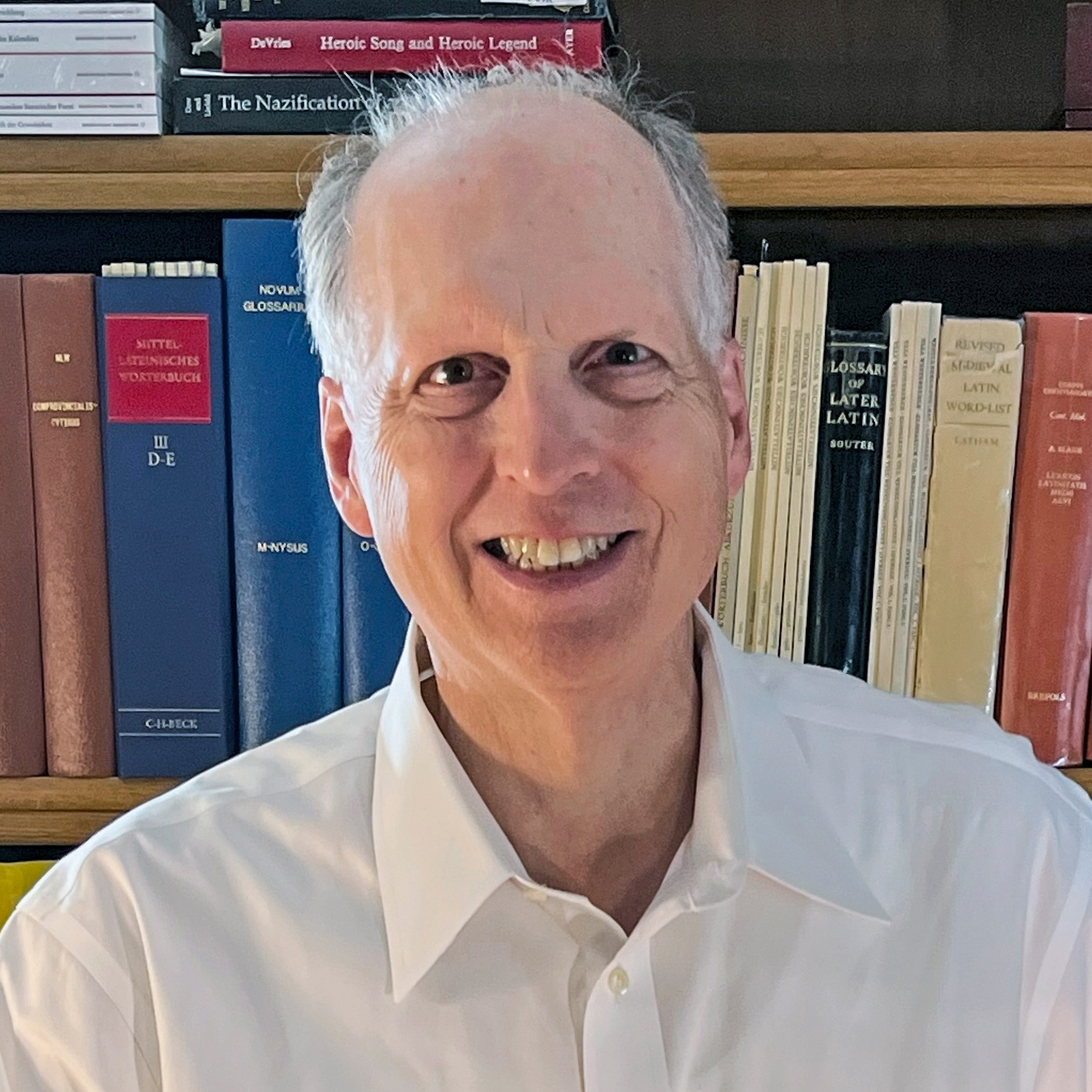
For starters, I owe appreciation to the three participating organizations. First, to the American Philosophical Society. Delivering the paper at a meeting of the Society in Philadelphia was an unforgettable experience. Receiving a prize named for the past head of the Guggenheim Foundation and later president of the APS compounded the honor. Second, my gratitude goes to the great educational enterprise almost next door, where I’ve taught steadily since 1981, and more broadly, to the groups that buttress higher learning and advance research in this nation, in this instance meaning specifically the American Academy, Phi Beta Kappa, and the APS. Over the decades, the backing of such academies and societies has bolstered among us the strength of conviction to follow our interest. Along the way, they did not press for results that would further any agenda of present-day preoccupations. Rather, they facilitated the pursuit of personal passions and of knowledge. In other words, I was not expected to be a political activist or a community organizer. Instead, I was given the opportunity to work steadily and steadfastly, and to do what most of us do, which is learn, teach, read, reflect, and write, and in the process—or so we hope—benefit, even if often only obliquely, the public. And third, and last, the tale itself of “Our Lady’s Tumbler” deserves a shoutout. My mission was to produce a kind of biography, to relate and interpret the story of the story. Immersion in narrative can be exasperating, but simultaneously exalting and exhilarating. The miracle of LeJongleur de Notre Dame reminded me of old acquaintances from bygone literature and culture whom I never had the pleasure of meeting, but whom I came to know as if still living, including Anatole France, Henry Adams, Mary Garden, and W. H. Auden. At the same time, the tale introduced me to new friends still with us, such as the artists and authors R. O. Blechman, 95 years old, and David Shannon, 55. Finally, studying the story enabled me to contribute to the delicate and desperately needed fabric of culture that helps hold together people of different languages and literatures, genders and sexualities, nations and ethnic groups, and races and religions, despite the oceans, ideologies, and economics that can separate us. In closing, I thank all of you for bearing with my thankfulness. If I could juggle, I should’ve done that instead.
Panel Discussion with the Prize Recipients
moderated by Academy President Laurie L. Patton
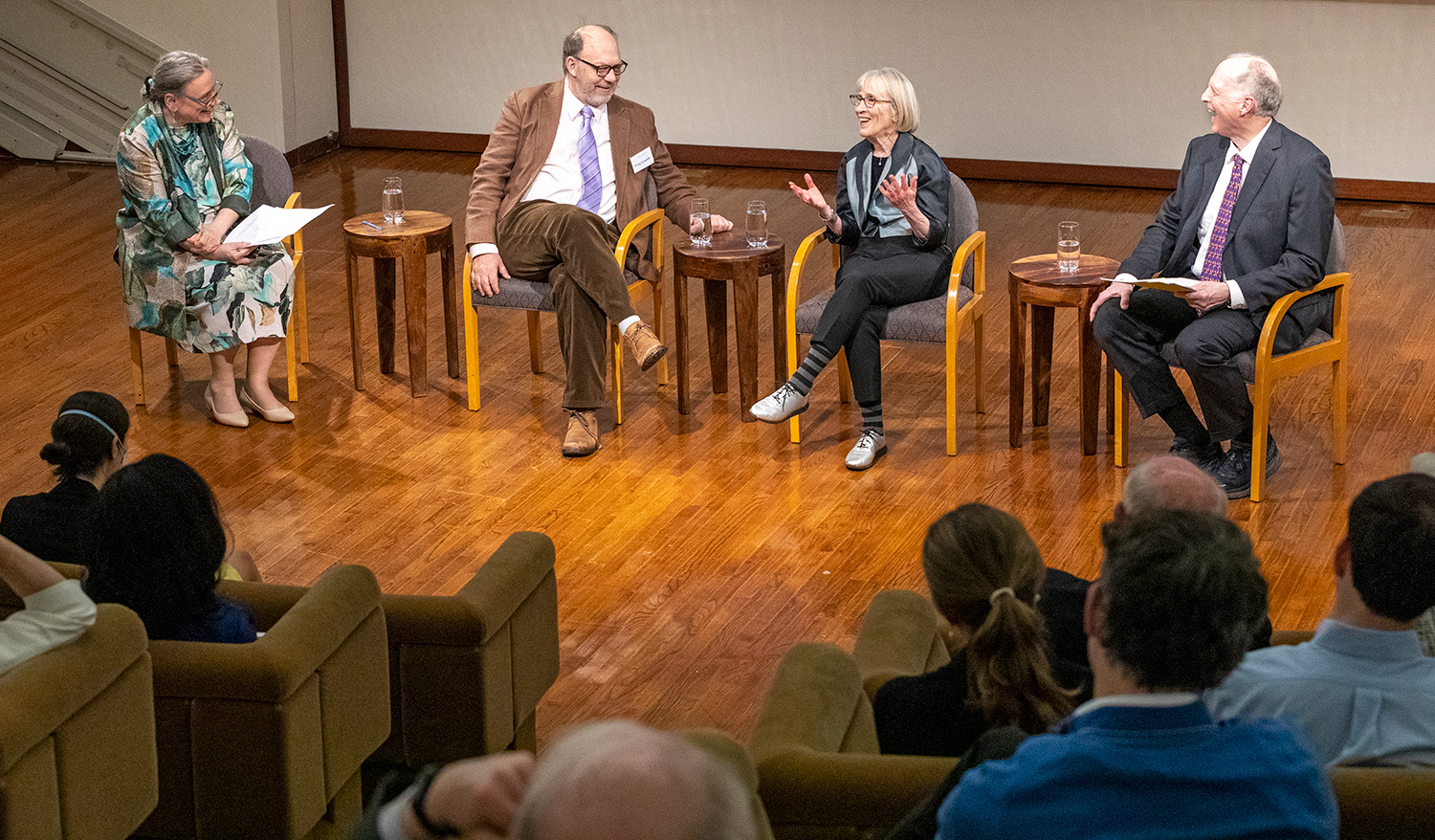
LAURIE L. PATTON: Congratulations to all three of our prizewinners. To start, I would like to share an interesting story about our beginnings. And while Phi Beta Kappa is not in this story, I am invoking the Society in spirit. When the Academy’s charter was granted in 1780, John Adams forwarded a copy of it, together with some publications of the American Philosophical Society, to Jean Luzac, publisher of the Gazette de Leyde, a Dutch and European revolutionary magazine. Adams noted that “at a time when the English Emissaries are filling all Europe with their confident assertions of the distress of the Americans, the enclosed papers show that both at Philadelphia and Boston people are so much at their ease, as to be busily employed in the pursuit of the Arts of Peace.” This is a wonderful testimony to our work together.
And that collaboration continued. The Franklin bust on display in our atrium was a gift from the American Philosophical Society in 1803. We had a joint committee with the APS in 1975 on a survey of sources in the history of biochemistry and molecular biology. We had another joint endeavor with the APS in 2007 on “The Public Good: Knowledge as the Foundation for a Democratic Society.”
Our work with PBK includes a symposium in 1979 on “Intellect and Imagination: The Limits and Presuppositions of Intellectual Inquiry.” The papers presented at the symposium were published in Dædalus, the Academy’s journal, in 1980. As these examples show, our three organizations have collaborated and interacted over the years. However, this is the first time in our almost 250-year-old history that the American Academy, the APS, and PBK have hosted an event together.
All three of you personify what it means to think about knowledge and how that looks in America today, and you do so in very different ways. My first question is one that I like to ask accomplished people when I meet them for the first time, which is, What is your question? What is the one question you’ll never know the answer to and you’ll never get tired of asking? Jan, let’s start with you.
JAN ZIOLKOWSKI: I suppose the question for me is one that underlies much of what I do: Why do people crave stories? Why do they need them? What do they get out of them? In some ways, these questions have become more pressing lately, given AI and the potential of LLMs to generate stories. And that leads me to ask, What’s the essence of individual stories? What do they mean? How have they changed? Why have they changed? What can we learn from them about people of the past? What can we learn from them about people today? And then, what can we, as individual readers, learn about ourselves?
PATTON: Wonderful, thank you. Claudia?
CLAUDIA GOLDIN: I don’t have a single question. I am a historical detective, and detectives are given the question. It may be a question deep in one’s mind. There is, of course, the existential question, whose answer is 42.1 And Earth was created to figure that out.
PATTON: Thank you. Greg?
GREG GRANDIN: When Claudia mentioned that she is a social scientist, it reminded me that the discipline of history isn’t a social science, in fact, it’s not a science at all. It can’t be falsified; it can’t be reproduced. For me, the question is the relationship between the present and the past, the degree to which the present always sets the agenda of what you ask about the past. So what do we actually know about the past that isn’t determined by the present? Maybe the answer is 42, I don’t know. William Appleman Williams, a diplomatic historian from back in the day, grappled with this. He challenged the very foundations on which we understand the past. One of his great quotes is, “The schizophrenic profession of a historian is a harrowing way to stay sane.” I think what he was referring to is that by simultaneously living in the past and the present that all historians do, one’s footings are never secure.
PATTON: I’m struck by the multiplicity in all of your answers, whether it’s following a single thread and seeing it repeated over time, or it’s being given a question and pursuing it in multiple ways, or it’s that doubleness of the historical pursuit. When we think about useful knowledge, which is the reason why our three societies began in some way or other, the discourse around useful knowledge in the eighteenth century was very different from what it is today. I’m obsessed with John Adams’s quote, which I’ll paraphrase: I can do the hard work of politics so that my grandchildren can be learned in the arts. When you think about useful knowledge, how do you understand the usefulness of your own work? Useful to whom, and in what ways? Greg, why don’t we start with you.
GRANDIN: This is a difficult question. It’s hard to gauge who you’re reaching and who you’re speaking to. Who’s reading it? Who’s using it? And what are they using it for? It is very satisfying to receive emails that say that your book did this and that. You feel that it’s at least useful to that person. But it seems like we’re living in a world in which the radius of usefulness is getting smaller and smaller, and that scary.
PATTON: And that radius of usefulness is getting smaller and smaller when you are making a really compelling case for hemispheric history.
GRANDIN: Yes.
PATTON: And that in itself is fascinating. If I were to introduce the idea of hemispheric history to my students at Duke, Emory, or Middlebury, they would absolutely love it. And they would have no idea how to pursue it. I wonder if that synthetic capacity has been useful in some way. Has it been useful for your students or for your work?
GRANDIN: I think so. History is very fragmented and territorial. It is broken up by fields and regions, and there isn’t a lot of interchange. In terms of usefulness, U.S. politicians, if they wanted, could look at Latin America, for instance, and take lessons from it, and then incorporate those lessons into policy that transforms the fortunes of the United States in terms of its ability to project its power and also consolidate its power during moments of crisis. At the current moment, though, it’s hard to imagine that being the case.
PATTON: Claudia, you embody the use of expertise in policymaking. How do you think about the usefulness of knowledge, and has your sense of it changed over time?
GOLDIN: I think of my work, and what I want to do, as affecting the human condition by listening to people today and listening to those in the past. What gratified me the most after I received the Nobel Prize were the messages that began with the words, “I cried.” The award meant so much more to me because it meant so much to people who felt forgotten, for whom this award validated, vindicated, and made them feel important. Whether they were doing work on gender, whether they were doing work in economic history, whether they were doing work that was large. Whatever it was, this award made them feel better; it made them feel whole. And for that, it was very meaningful to me. I remember a man from Spain wrote to me about how much the award meant to him. It was as if his team had won the World Cup.
PATTON: Claudia, you have operated in two very different spheres: in a deeply intellectual one involving economic history, and in your work negotiating for others. Do you use different parts of your brain for your work?
GOLDIN: No, it’s all the same. I was essentially a forensic accountant. I dug into the numbers, and I added them up. I wondered why others didn’t see the data, since they were sitting on these numbers all this time. I collected as much information as I could. We were given information that was confidential, but there was a lot of stuff out there in the press that I could put together and say, “You see? It’s wrong.”
PATTON: Even though you said earlier that you didn’t have a question, if I were to be asked what Claudia’s question was, it would be, “You’ve been sitting on these numbers all this time, why didn’t you see this?”
GOLDIN: That’s right.
PATTON: Jan, what about you? How do you understand the usefulness of your work? As a Sanskritist myself, we live in a world that doesn’t think our knowledge is quite useful.
ZIOLKOWSKI: That’s definitely true. I don’t expect that what I do brings immediate benefit to very many people at all, but I do regard it as forming part of a tissue that helps to hold people together. In many places, the worst conflicts come about not for lack of medicine, or lack of utilities, or lack of any other material goods, but rather because of differences among people that could be defined as cultural. I think that part of the contribution of the order that has now dissolved helped to tie people together so that they were brought together culturally, politically, and economically. About the quotation from John Adams that you paraphrased earlier, he said, “I must study politics and war, that our sons may have liberty to study mathematics and philosophy. Our sons ought to study mathematics and philosophy, geography, natural history, and naval architecture, navigation, commerce, and agriculture, in order to give their children a right to study painting, poetry, music, architecture, statuary, tapestry, porcelain.” There’s obviously a lot that we would edit to revamp his statement. But at the same time, there’s a commodiousness of vision of allowing for this multiplicity of learning, of knowledge, of putting the practical and the theoretical alongside each other. And that’s something that I’m afraid will be walked back or dissolved now because of technology and politics. I hope that those of us who are engaged in education can present an effective case for a breadth of vision about education, because young people need more than ever to be given the hope of transforming the world around them. And I mean transforming by starting with themselves, rather than to be prepared to be cogs in a transaction between business and higher learning. The two are unfortunately often more interlocked than is healthy.
PATTON: I love your “commodiousness of vision,” or “breadth of vision,” phrasing because all three of our scholarly societies are about the relationship between the expert and the world. In order to make that relationship generative in a democracy, you need a commodiousness of vision, or a breadth of vision.
Let me turn to my next question. Do you consider yourselves public intellectuals? Do you think of that obligation to engage with the public as part of your larger vocation? Anyone can jump in.
GOLDIN: I view myself as a reluctant public intellectual.
PATTON: Please say more.
GOLDIN: There’s no more to say. I’m reluctant.
PATTON: Because?
GOLDIN: Because I don’t preach. Because I’m not someone who tells people what to do or how to run their lives. And therefore, I also do not do policy. So I’m not quite certain how to be a public intellectual.
PATTON: Greg, how about you?
GRANDIN: Being a public intellectual is a bit fraught right now. It means a lot of different things. I guess it depends on what the purpose is. If you’re doing it to build a bigger public audience, if that’s the objective, then I don’t know how useful it is to be a public intellectual. As someone who comes at U.S. history from a Latin American perspective, I can see how what passes, say in response to the Trump administration, is very much bounded by a certain kind of nationalist, even chauvinist politics, trapped within a historiography that is more a category of practice than of analysis. Latin Americans would look at other ways to explain the rise of somebody like Donald Trump, who, like many of these public intellectuals, has an enormous audience. I don’t know if I would consider myself a public intellectual since I write to the moment.
ZIOLKOWSKI: In pulling together thoughts for this evening, I did a number of n-gram searches, and I was struck by the parallels between public-facing public intellectual, on the one hand, and influencer, on the other. It could just be fortuitous, but I also see a certain danger in becoming too responsive to the present, which obviously can lead to politics, and politics can mean being associated with either winners or losers at different times, and that can have consequences. On the other side, I worry a lot about the young people, especially my students, who have enormous potential and are very bright people who can contribute a lot to the world. I think that they just need a chance, as we all do, to escape sometimes from what can be the nightmarishness of the news cycle. I’ve thought about it in terms of a possible relationship between doomscrolling and doom-schooling, in which the students need to bear the weight of fixing the world, so we push them toward majors that aim to solve the world’s problems. At the same time, they’re digesting tremendous anxiety about whether the majors that they’ve been encouraged to choose are lucrative or will lead to any employment at all. And that’s a pessimistic point of view. Yet I am optimistic because I still believe in the liberal arts model. Even if liberal is a word you can’t say, and art is a word you can’t say, I still think that flexibility is something that the three organizations believe in deeply. And personally, I would like to celebrate that.
PATTON: All three of our organizations today are feeling the pressure around the freedom of intellectual inquiry. All three of you work in areas in which inquiry could be constrained—politically, institutionally, or methodologically. What does the “free pursuit of inquiry” mean in your field today? And what threatens it most?
GOLDIN: My field is highly dependent on data and on the believability of data, and that has been seriously threatened. How we run the economy is very dependent on data. There are longitudinal datasets that have been stopped and will never be completed. There are data that have been collected, very important census data of businesses, for example, but where are these data? The agency no longer has people, so who’s going to release the data? And then it’s simply the believability of the data. Small companies can put out their own CPIs (Consumer Price Index). All you have to do is have a market basket and price it. This wouldn’t be the first time in American history that a President and administration have tried to hide the fact that there’s unemployment. During Hoover’s administration, he did not want the special census of unemployment to be released. So we’ve been there. And that’s what I fear the most: the improper collection of the data, and the honesty of the data.
GRANDIN: There are so many things that threaten the free pursuit of inquiry today. Hampshire College is closing. Museums are closing. There are threats to liberal arts schools. Large schools are focusing on certain disciplines to the expense of others. And, of course, there’s the threat posed by unregulated AI, which weakens trust. How would we imagine free speech if there’s no trust? You don’t even know if the images you’re seeing are real or not. We’re going to need a different paradigm. The closing of so many venues that would support speech and allow free inquiry is chilling. It’s hard to process what all of this means.
PATTON: I love the idea and the call to think about a new paradigm around freedom of expression. Jan?
ZIOLKOWSKI: I worry, on the one hand, about how much people edit themselves out of fear of misspeaking, and then on the other hand, about how freely many other people seem to feel in speaking uncivilly, vulgarly, rudely, with an utter lack of empathy. As far as the pursuit of truth, it becomes easier and easier to get access to about 80 percent of the facts, but the remaining 20 percent can contain falsehoods and fraudulences that are shared with great freedom. I see more urgency now than ever for people who are scholars, who can verify what is likely to be true and what is not. That’s becoming harder as we shift away from a book culture to whatever we have now, which seems to be a kind of shoveling-up of what is available on the web, which includes a certain amount of falsehood or fabrication. And I don’t understand why we don’t question it more. I’m not damning the whole enterprise, but I do worry with the ill effects of social media that many of the same people who played a role in that are now taking care of the next generation, and woe betide us if we cannot figure out ways to check the untruthfulness of it.
PATTON: “Hallucination” itself as a descriptor is a falsehood. A friend of mine put it the following way: falsehood is increasingly unconstrained while truth is increasingly constrained. All three of our organizations have been asked in various ways to stand up for freedom of inquiry, and we will have various responses. And we will invoke the history of our nation to support that. We all carry our histories constantly. We’re telling the history of the founding of the nation through the founding of our societies. I think we are being called to offer hope, to each other, to our world, and to the next generation.
On to our last question. What is one part of your work that still genuinely excites you and gives you hope that you might pass on to the next generation? Let’s start with Jan.
ZIOLKOWSKI: To the detriment of the world, I have a million projects that fire me up that I love working on. But I also know that the more that I am able to learn, the more aware I am of the insufficiency of my own knowledge. And the more I feel dependent on the future, hoping to hand on a baton that’s not oily but sturdy enough so that it can be taken. Also knowing that the next stages need to be carried on by other people and hoping that they’ll be there. And hoping that it will be international, cross-national, and transnational. One of the painful aspects of the past months has been the rupture of ties to other countries. I’m in favor of increasing ties to as many countries as possible.
In preparing for this evening, I thought about a poem written by Johann Wolfgang von Goethe in 1827 called, “To the United States,” that has in it the line, “Amerika, du hast es besser”: “America, you have it better.” Out of love for this country, which is exceeded by my love for humanity, I would want us to be a place deeply connected to as many others as possible. Nearly 200 years ago, Goethe wrote about the hope that America would be regarded as something admirable. I still find that vision compelling.
PATTON: Jan, you invoked America, so I’m going to go to Greg next. What gives you hope that you might pass on to the next generation?
GRANDIN: If you study history honestly, you see that hope and persistence often emerge in the harshest conditions. People endure repression and hardship, circumstances which many of us fortunately never have to face, and continue to fight for a better future. Speaking as someone who’s worked on Latin America for a long time, I see a continent shaped by repression and political violence, yet still deeply committed to promises of the Enlightenment. They believe that sovereignty and nationalism are stepping stones to universalism. And when I say “they,” I’m talking about a vast majority of the population, the political left and the center-left, who still have a vision of politics rooted in the best traditions of the Enlightenment. Take Colombia, for example, where environmental activists face staggering levels of violence and murder, yet they continue fighting for clean water and the protection of the forests. Or Brazil, where labor unions persist despite severe repression. What’s remarkable is the determination of people to continue fighting for justice.
PATTON: Thank you. That’s very powerful. Claudia?
GOLDIN: What I would tell my students is, follow your curiosity. And there’s no better time to do that than now. I’m going to be optimistic and say something that’s very different from what others have said, which is that AI is my friend. AI lets me follow my curiosity, because at 2:00 in the morning, I have my friend Chat. If I want to know what’s in the Congressional Record, I can go to Widener Library at Harvard, though not at 2:00 in the morning, and find it. It would take me an enormous amount of time. With AI, it takes me a nanosecond and costs me nothing to do. I know that this means that I have disemployed an army of research assistants. But, honestly, they wouldn’t be gaining that much from doing this work for me. And I can do it very quickly. And my students can also do it very quickly. Harnessing AI correctly means that you can follow your curiosity ad infinitum.
PATTON: Thank you. Before we adjourn, let me turn to Paula Giddings, Chair of the Council at the American Academy, who will offer some concluding remarks.
Paula J. Giddings
Paula J. Giddings is the Elizabeth A. Woodson 1922 Professor Emerita of Africana Studies at Smith College. She was elected to the American Academy of Arts and Sciences in 2017 and serves as Chair of the Academy’s Council and Vice Chair of the Academy’s Board of Directors.
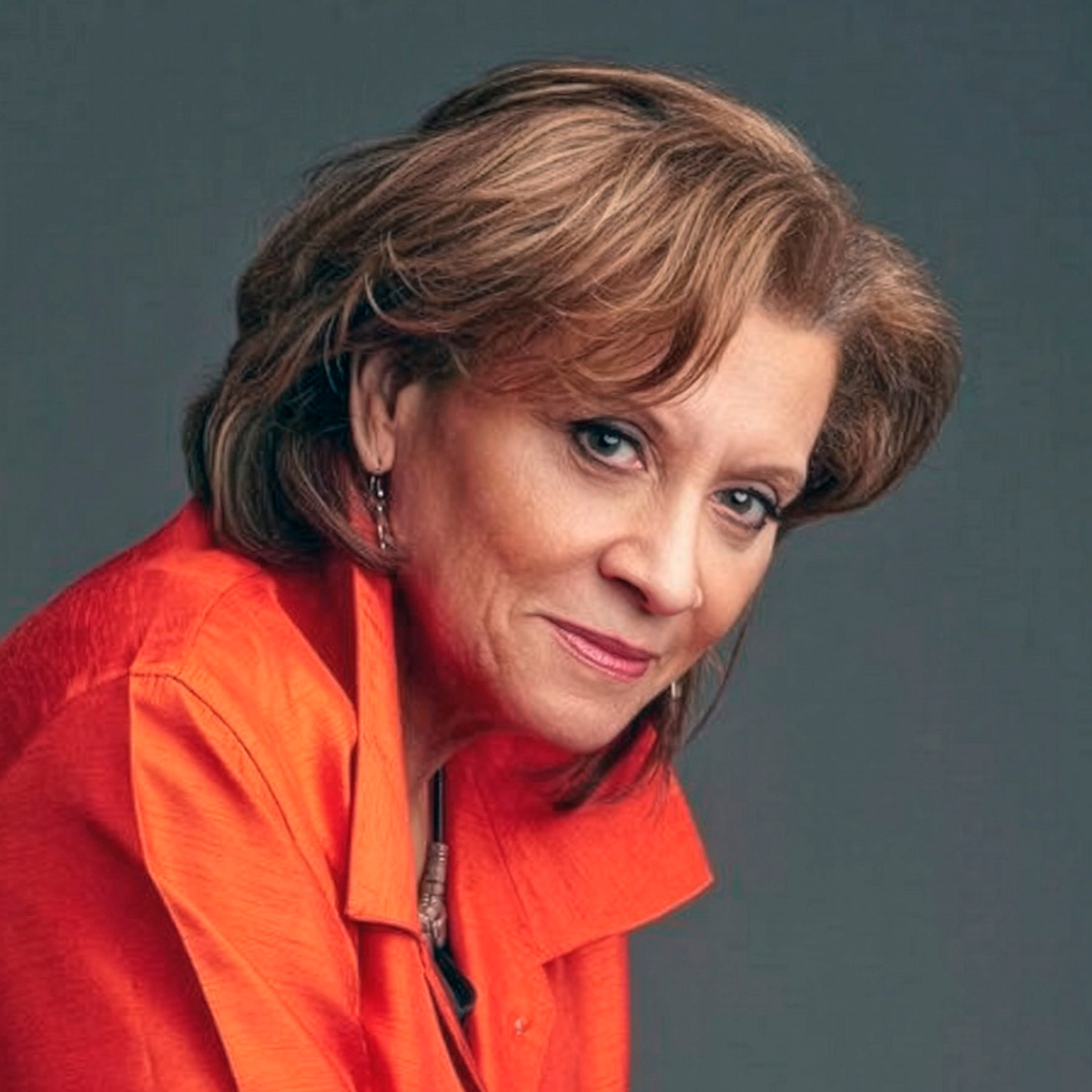
Good evening everyone! Please join me in congratulating Claudia, Greg, and Jan, and thanking them for a wonderful discussion.
For this historic occasion, I wanted, in my closing remarks, to find a way to look to the past and the present of our organizations at the same time. So I imagined a conversation with our founders—and it went something like this.
“Sirs, you must be surprised to see someone like me standing before you today. It should be your first indication that things are changing. In fact, so much so that I will be attending a Legacy Recognition Committee meeting next week at the American Academy of Arts and Sciences—to which you are invited.”
“What does such a committee do?” you ask.
“Well, it recognizes individuals whose accomplishments have been overlooked or undervalued due to their race, ethnicity, gender, or sexual orientation.”
“Hmm,” you say. “We can’t think of anyone we could’ve missed. You know, we have pretty high standards around here. Our members must be rational, intelligent, enlightened, and be full of useful knowledge.”
“Sirs, one of our first honorees was Phillis Wheatley. I think you may have heard of her. She was captured from West Africa at the age of seven, enslaved here in Boston, where she published poems as a teenager, learned Latin and Greek, published a reinterpretation of Ovid, and published a volume of poetry during the Revolution that reflected the themes of liberty, tyranny, and virtue through the lens of her circumstances. Her very life is a testament to the flaws in your Enlightenment model, don’t you think?”
“Well. There’s always an exception.”
“Oh, no, no, no, no. Wheatley’s biographer says that there were lots of Black Bostonians who were extraordinarily talented.”
“Look, back in our day, we didn’t have that DEI stuff. And we sure as hell didn’t feel as if we had to do things to apologize or redeem ourselves.”
“Sirs. You are making a mistake. And not the first one, I might add, if you think that that is what the Legacy Program represents.”
“Go on. . .”
“Part of it, as you infer, is to make this august organization live up to the ideals you all are always talking about. You know, the common good, upholding democratic ideals, and so on. But think of this. The intellectual journey of those on that legacy list, from being the objects of knowledge in your day to the producers of knowledge in ours, has also given us new revelations and intellectual traditions.”
“Such as . . .?”
“Such as the idea that lived experience, along with structural analysis, should be counted as useful knowledge. And that the complexity of that experience cannot be defined through a single silo of study. That realization, sirs, gave us the present model of interdisciplinarity, something we talk a lot about in the Academy. It allows engagement with real-world problems, creates new questions, methods, and domains of inquiry. Did you know, sirs, that it was the formalization of Black studies in the late 1960s that gave us that model in higher education? And that Black studies paved the way for other interdisciplinary fields, such as women’s studies, ethnic studies, Indigenous studies, Jewish studies. These are often thought of as being isolated and single dimensional when, in fact, these disciplines are the most capacious and require mastery of multiple fields.”
“If they’re so great, why are people trying to get rid of them?”
“Well, as Toni Morrison would say, it’s because they reveal hidden structures of power.”
“Hmmm. So where does this leave us?”
“Our present circumstances, in the 250th year of the Declaration of Independence, remind us, as the legendary journalist Ida B. Wells would say, that progress is not inevitable. But the realities embedded in the recognition of our legacy is a cause for not only hope, but pride. . . . That is if ‘we can keep it.’”
Oh, and one last thing. I hereby adjourn the 2143rd Stated Meeting of the American Academy of Arts and Sciences.
© 2026 by Claudia Goldin, Greg Grandin, Jan M. Ziolkowski, and Paula J. Giddings, respectively
To view or listen to the presentation, visit the Academy’s Website.