By Sara Mohr, Pforzheimer Foundation Fellow
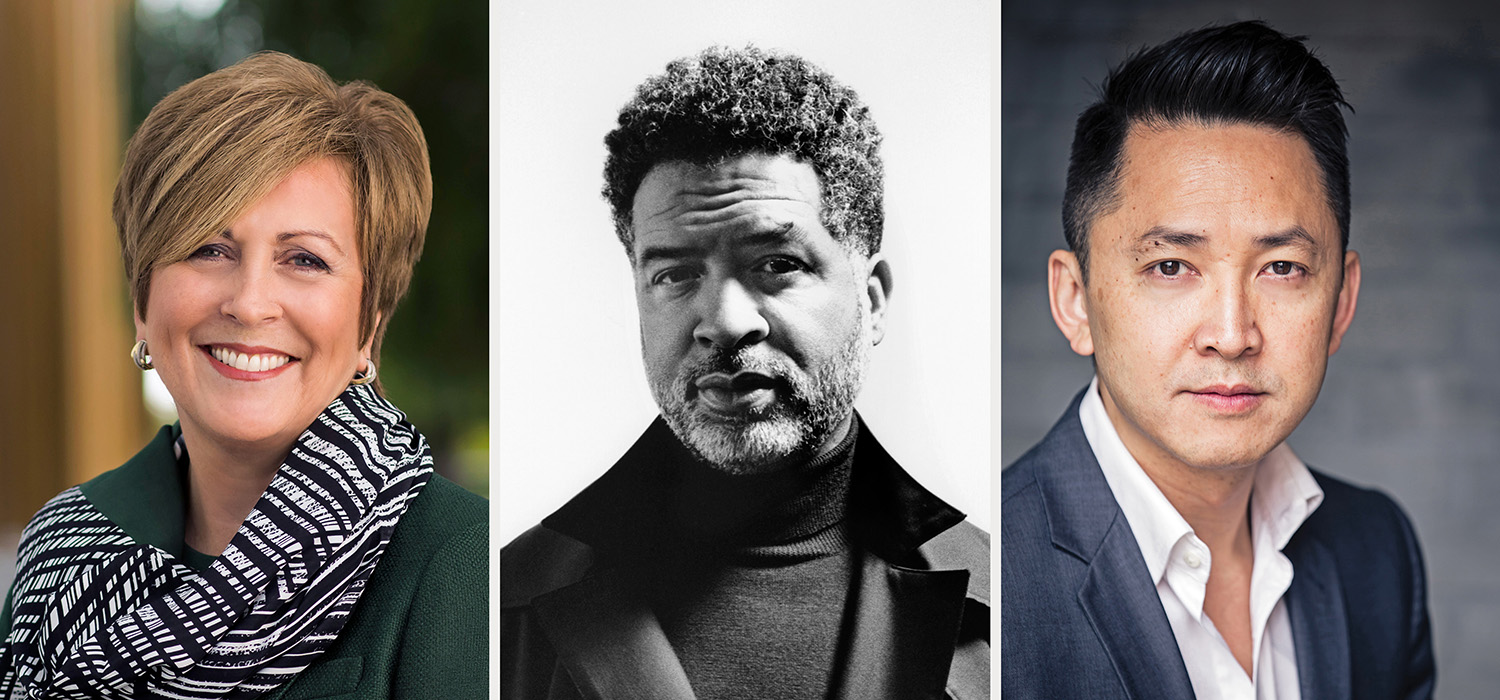
As part of a series of virtual discussions, the Academy hosted a conversation on May 11, 2026, that explored why artists create and how today’s political climate may be changing their motivations and artistic practices. Deborah Rutter, Vice Provost for the Arts at Duke University, moderated the conversation, which featured Jason Moran, jazz pianist and faculty in jazz studies at the New England Conservatory of Music, and Viet Thanh Nguyen, author and Aerol Arnold Chair of English at the University of Southern California. They discussed the challenges of producing art in the United States today and the power the arts have in helping us imagine and connect to our past, present, and future.
Deborah Rutter opened the conversation by asking the panelists when they first realized they would be artists and when they began to identify as such. She shared that she began playing violin in school and realized early on that art was what she wanted to dedicate her life to, often asking herself, “How can I live around art and be a part of it?”
Jason Moran recalled that music had always been a part of his schooling and upbringing. He viewed the arts as something accessible to everyone, and he simply kept saying “yes” to opportunities to create music. But he didn’t fully think of himself as an artist until much later in his career, while recording his third album. Reflecting on his journey, he acknowledged that art became both his passion and his livelihood, and he cherished having “the ignorance to go forward” and pursue music without fully knowing how it would shape his life.
Viet Thanh Nguyen described a very different experience. He grew up as a Vietnamese refugee in a household without books, raised by parents who ran a grocery store, so his love of literature was a deliberate choice. Although he won an award in the third grade for a story he wrote as a class assignment, Nguyen didn’t take writing seriously until college. He also emphasized that writing is both an art and a trade. In his view, it is not possible to escape the commodification of what we put into the world. He spoke about resisting the literary world’s emphasis on “craft,” to detach it from the notion of labor, while still acknowledging that writing is labor and art is work. Writers produce art, but they are also embedded in an industry shaped by issues such as commodification and inequality.
Nguyen also reflected on the relationship between work and play in his writing process. He described writing The Sympathizer as playful and with a sense of improvisation that allowed him to trust the instincts he had developed over seventeen years of writing. At the same time, he noted that the demands of the work outside of the writing itself can pull a writer away from those moments of play. Some of that work, he later explained, involves confronting parts of himself he would rather avoid, along with all of the joy and love he has experienced. Nguyen said that when he has achieved success with his work, it is because he has been honest with himself, which motivates him to remain true to that in his future work.
The panelists also discussed how art helps people build connections, develop empathy, and see our world through different lenses and from different perspectives. Rutter described artists as the storytellers of our time, who give voice to what is happening in our world right now, rather than waiting for history to tell the story later. Moran agreed, saying that musicians capture attention in a way that feels like telling a story. He shared that his song about his family, “Gentle Shifts South,” which features the voices of his family members from recorded interviews, was a way of making space for his family story and ancestry, something that is part of every song he performs. Nguyen added that readers turn to stories to make connections to their lives, even when those stories are not about the here and now. Thinking about his experience writing The Sympathizer, he recalled thinking about the Iraq War while he wrote about the Vietnam War. When readers make those kinds of connections, the stories can offer some instruction or catharsis that can meaningfully shape their lives.
Rutter asked the panelists if current events make it especially challenging to be an artist today. Nguyen and Moran both agreed that there has never been a good time to be an artist because there are always challenges that come with creating art. Rutter added that there are often patterns to these challenges, and artists’ responses to them often repeat over time. Speaking about working in the United States today, Nguyen described the difficulty of creating art in what he sees as an anti-intellectual society and culture. He discussed his decision to leave his position at the University of Southern California and work outside of the support of the higher education system, which makes him more vulnerable to the ebbs and flows of our capitalist economy. Moran shared similar concerns about our country, stating that he believes the United States does not reward deep research, while he also acknowledged that the country is still young and continuing to grow and evolve. As a faculty member at the New England Conservatory of Music, Moran also reflected on the challenges of teaching art in the current moment. He wants his students to have the tools they need to produce art despite what’s going on in the world, but he also recognizes that current events should meaningfully influence their work.
So, what can we do? How can we better support artists and the arts? Moran recalled meeting visual artist Adrian Piper, who encouraged him to think more intentionally about assigning meaning to music and argued that “artists ought to be writing about what they do.” By sharing more about their creative process and the meaning behind their work, artists can help break down barriers between themselves and the public. Moran also emphasized the importance of supporting the artists we know, noting that small, personal acts of support can have a significant impact. Nguyen addressed the skepticism people sometimes express about the value of art by asking, what would the world look like without art? So much of what we take for granted—movies, clothing, music—is art. In the same way that book bans highlight the power of literature, skepticism about art often proves how important art really is.
Rutter closed the conversation by quoting President John F. Kennedy, who offered these words in 1962 on behalf of the National Cultural Center, which was later renamed the John F. Kennedy Center for the Performing Arts in his honor: “I am certain that after the dust of centuries has passed over our cities, we too will be remembered not for victories or defeats in battle or in politics, but for our contribution to the human spirit.”1 Despite the challenges posed by current events, there is still reason to be hopeful that the arts will endure and will continue to thrive.
For more information about the Academy’s work on the arts, visit the Academy’s website.