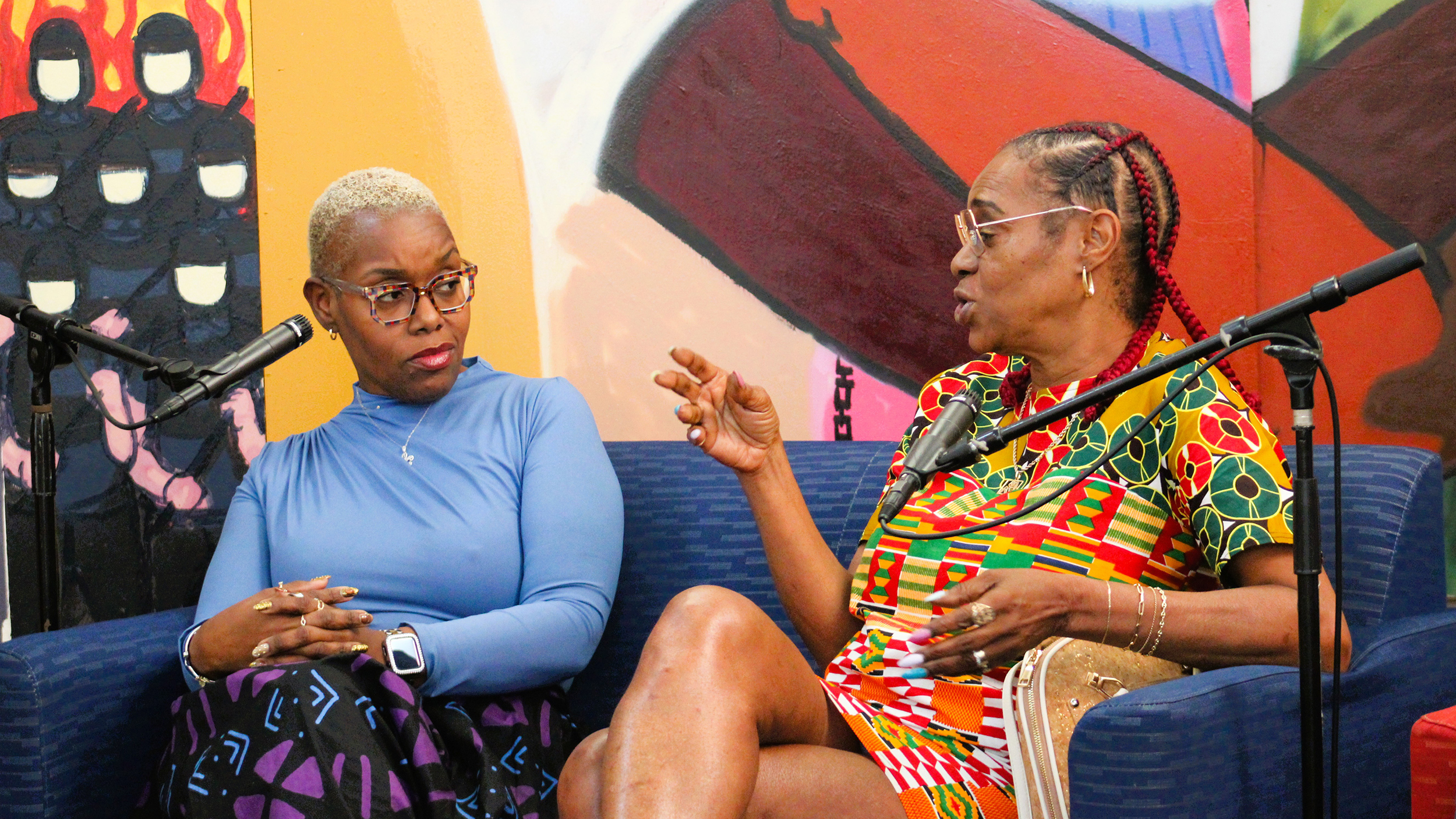
(From left to right) Rochelle Willcox and Kelly Pearson Boles. Photo: Nigell Moses.
New Orleans. It’s a city of gumbo and jambalaya, beignets and red beans, parades and po-boys. The Crescent City, known for both its Mardi Gras beads and Hurricane Katrina, is the birthplace of jazz and home to the second-line, a cultural tradition that celebrates, honors, and welcomes people from all walks of life.
“ Democracy is in the second line. Everybody can play a part, and everybody's invited,” said Anne Collins Smith. “Democracy is in our resistance. It’s in our culture.”
As America marks the 250th anniversary of the Declaration of Independence, Black women in New Orleans have their own ideas about what freedom and democracy mean in their lives. On May 20 and May 26, during community conversations at the New Orleans Public Library’s REACH Center, Black women gathered to talk about democracy through the lens of family, work, and community.
In this conversation, we ask: What does life, liberty and the pursuit of happiness look like for Black women who uphold cultural traditions and celebrations in a Southern city that is a political battleground in a red state? We hear from Anne Collins Smith, first Black female chief curator at the New Orleans Museum of Art; Rochelle Wilcox, founder and CEO of Wilcox Early Learning Centers; Kelly Pearson Boles, also known as Queen Kelly of the Black Osceolas tribe of the New Orleans Black Masking Indians; and Pearlie Hardin Elloie, who helped desegregate Tulane University’s School of Social Work in 1965.
For these women, thriving means having agency over one’s own life—a job that pays livable wages, affordable housing, food for their families and health care that supports the mental as well as physical needs of a community. Thriving is also about freedom.
And that’s the beauty of the second line. As Smith notes of second-lines, “We don’t discriminate. You are welcome. Black men can be pretty and light in the system that doesn’t see them otherwise. That’s the way democracy works for me.”
Queen Kelly, Smith, and Wilcox all noted that they are witnessing an erosion of democracy with recent Supreme Court actions diluting the Voting Rights Act and the Louisiana state legislature eliminating the position of an elected city official. But, they said, giving up is not an option.
“Yes, we are being challenged. We are being challenged constantly, but we're not defeated,” Queen Kelly said. “In order to stop that defeat, we gotta keep fighting. There is still a fight.”
But 87-year-old Pearlie Hardin Elloie has seen this fight before. As the nation celebrates 250 years of the Declaration of Independence, she’s a little cautious about the term “democracy.”
“Sometimes there's a disconnect between what we want things to be and what they are,” said Elloie. “But always, there are people who continue to struggle to make those things, actual things, true things, so that we're not still some 200 and some odd years later struggling with diversity—but it would be something that is a part of what we are and what we do.” Let’s listen as these women talk about how they are living out the ideals in the Declaration of Independence.
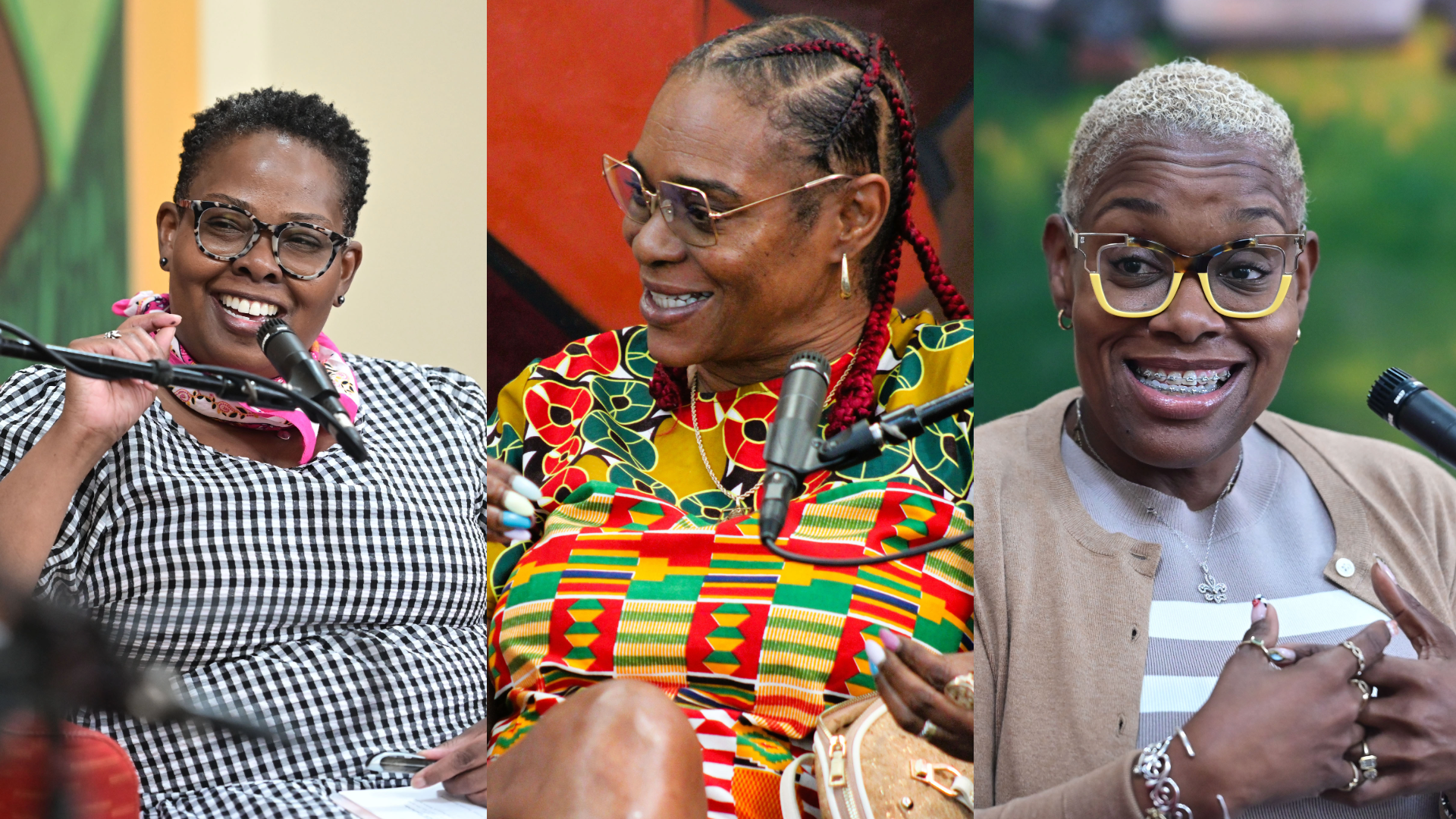
(From left to right) Anne Collins Smith, Kelly Pearson Boles, and Rochelle Willcox. Photos: Cheryl Gerber and Nigell Moses.
Listen: Black women in New Orleans talk about freedom, community, and democracy
© 2026 Lottie Joiner
Lottie Joiner is an award-winning journalist whose work has focused on covering race and racial inequality, identity, and African American history and culture. Her work has been published in a number of publications including The Washington Post, TIME, Essence, and The Nation.
Honoring excellence and leadership. Working across disciplines and divides. Advancing the common good. From 1780 to today.
Our Common Purpose, the Academy's ongoing and bipartisan work to strengthen democracy in 21st century America, produced recommendations, reflections, and reasons to pursue a more perfect reunion.
These initiatives, seeking structural and societal advances, were developed in recognition that a healthy democracy requires both responsive political institutions and a robust civic culture.