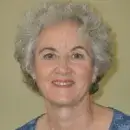
Alice L. Alldredge
Alice Alldredge, a professor emerita in the Ecology, Evolution, and Marine Biology department at the University of California at Santa Barbara, is a biological oceanographer known for her contributions to our understanding of the marine carbon cycle and zooplankton ecology. The steady downward sedimentation of particles formed in the surface ocean into the deep sea is one of the largest processes on the planet. This sedimentation sequesters carbon into the deep sea, helps mitigate global warming, and provides food for organisms living on the ocean bottom.
Alldredge is a pioneer in studying the physical and chemical characteristics, sinking rates, and ecological role of these large visible particles, known as marine snow because of their resemblance to an underwater snowstorm. With colleagues Uta Passow and Bruce Logan, she revealed the existence of a new class of sticky transparent particles formed from the polysaccharide exudates of phytoplankton and bacteria that serve as the glue to aggerate smaller particles into marine snow. Her work also highlights the biology of appendicularian zooplankton whose abandoned feeding structures are sources of marine snow and the migration behavior of zooplankton on coral reefs and sandy bottoms.
Alldredge is a Fellow of the American Geophysical Union and the American Association for the Advancement of Science. She is the recipient of the Henry Bryant Bigelow Gold Medal in Oceanography from Woods Hole Oceanographic Institution, and the Hutchinson Award from the Association for the Sciences of Limnology and Oceanography (ASLO). She is also the recipient of the Distinguished Teaching Award and the co-founder and first chair of the Interdepartmental Graduate Program in Marine Science at the University of California, Santa Barbara.
Alldredge received a B.A. in Biology from Carleton College and a Ph.D. from the University of California, Davis.