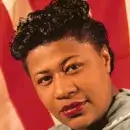
Ella Jane Fitzgerald
Ella Jane Fitzgerald (1917–1996) was one of the most influential and recognizable figures in jazz and popular music in the twentieth century. Dubbed “The First Lady of Song,” “Lady Ella,” and “Queen of Jazz,” Fitzgerald was the most popular female vocalist for more than half a century. She had a notable sense of rhythm, a deft sense of swing, a highly resonant voice, a three-octave range, and near-perfect elocution, diction, and phrasing. Using her legendary talent of improvisation, combined with her hallmark scat singing, she invented her vocals as she sang, taking a standard tune and transforming it into something entirely new.
During her seven-decade career, she created a legacy of acclaimed performances and a celebrated body of work—from jazz classics, live concert recordings, and the recording of the Great American Songbook, with Fitzgerald singing and interpreting the music of Cole Porter, Ira and George Gershwin, Duke Ellington, Harold Arlen, Johnny Mercer, Richard Rogers, Lorenz Hart, Irving Berlin, and Jerome Kern. She recorded and performed with many great musicians, including Frank Sinatra, Louis Armstrong, Count Basie, Duke Ellington, Nat King Cole, and Oscar Peterson. She performed at top venues all over the world, to standing-room-only crowds. Her audiences included people of every socioeconomic background, race, religion, and nationality, who shared one thing in common: they loved her and her musical performances. Throughout her career, she broke down barriers and paved the way for generations of performers.
Overcoming racial discrimination, a broken home, and poverty, she built an extraordinary legacy through her talent, determination, and artistry. Her remarkable voice took her to venues around the world, including places where African Americans did not go in the late 1950s and 1960s during the era of racial segregation. Her success opened doors not only for herself, but for many African American performers who followed. At the first Grammy Award ceremony in 1958, Ella was the first African American woman to win a Grammy Award. She went on to win thirteen Grammys and received the Recording Academy Lifetime Achievement Award in 1967. She and Carol Channing were among the first stars (and first female celebrities) to perform during the Super Bowl halftime show in 1972.
She was also the first vocalist to be honored with the National Endowment for the Arts Jazz Masters Fellowship and the first Black woman to headline the Copacabana nightclub in New York and the Mocambo Club in Hollywood. Fitzgerald performed gratis at numerous charitable fundraising benefits and also supported many charitable organizations. The Ella Fitzgerald Charitable Foundation, which was established during her lifetime, continues her charitable legacy.
By the end of her career, Fitzgerald had recorded two thousand songs, sold over forty million records, and received many honors that recognized her immense cultural impact, including numerous DownBeat Magazine (both Readers Poll and Critics Poll) Best Performer awards, the National Medal of Arts awarded by President Ronald Reagan, the Presidential Medal of Freedom, the Kennedy Center for Performing Arts’ Medal of Honor Award for lifetime achievement, a Commander of Arts and Letters Award from France, the Recording Academy Lifetime Achievement Award, the first ASCAP Award in recognition of an artist, the first Society of Singers Lifetime Achievement Award (named “Ella” in her honor), the NAACP’s inaugural President’s Award for lifetime achievement, the Honorary Chairmanship of the Martin Luther King Foundation, and many others. Her memorabilia and archives are housed at the Smithsonian National Museum of American History and the Library of Congress.