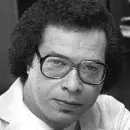
Levi Watkins, Jr.
Levi Watkins, Jr. (1944–2015) was a heart surgeon, civil rights activist, and the first to successfully implant an automatic defibrillator in a human patient at Johns Hopkins University. The first Black chief resident in cardiac surgery at Johns Hopkins, Watkins was instrumental in recruiting minority students to its School of Medicine, launching in 1975 a concerted nationwide drive to recruit talented minority students that became a model for medical schools elsewhere.
Born in Parsons, Kansas, and raised in Montgomery, Alabama, Watkins took part in the historic Montgomery Bus Boycott in 1955. He was educated at Tennessee State University (B.S. in biology with honors, 1966) and Vanderbilt University School of Medicine (M.D., 1970), where he was the first Black student to receive a medical degree. He was a medical resident at Johns Hopkins Hospital from 1971–1973 and a fellow in physiology at Harvard Medical School from 1973–1975, where he studied angiotensin physiology. This research by Watkins and others led to the clinical use of angiotensin blockers in the treatment of congestive heart failure, thereby improving and extending the lives of many patients who cannot tolerate ACE inhibitors. In 1980, Watkins performed the world’s first human implantation of the automatic implantable defibrillator. Watkins later developed several additional techniques for implanting this device. He also developed the cardiac arrhythmia service at Johns Hopkins.
In 1991, Watkins was promoted to full professor of cardiac surgery and appointed vice dean for postdoctoral programs and faculty development at Johns Hopkins. He had a profound impact on postdoctoral education in the country by establishing the nation’s first postdoctoral association at Johns Hopkins, a pioneering initiative adopted by institutions around the country. Vanderbilt University established the Levi Watkins, Jr., M.D. Chair in 2015 and named the Sutherland-Watkins College at Vanderbilt School of Medicine in his honor. The Johns Hopkins Hospital renamed the Outpatient Center on the East Baltimore campus the Levi Watkins, Jr. Outpatient Center in 2023. Tennessee State University, in partnership with Meharry Medical College, launched the Dr. Levi Watkins, Jr. Institute in 2020 to increase the number of underrepresented doctors and dentists in the United States.
A Family Reflection
Upon learning that their brother and uncle, respectively, was being recognized as a Legacy Honoree, Drs. Annie Marie Garraway and Levi A. Garraway shared this reflection:
During his career, Levi Jr. was laser focused on his specialty, his mentoring and outreach to students and colleagues, and his tireless efforts to help advance civil rights. Levi’s family saw him primarily at Christmas or at other times when he might be passing through (or when we might be invited to an event at Hopkins, such as his unforgettable Halstead Fellows induction). For Annie Marie, there might also be a telephone call from time to time. But those interactions, while often brief, were always powerful. Levi wanted to know how we siblings were doing, how our kids (his nieces and nephews) were doing – in school and subsequently in their careers.
Levi Jr. lived, breathed, and exemplified excellence in whatever he undertook, and impelled us to do the same. And he would provide unvarnished assessments of our progress: there was no “BS” with Levi. But also, Levi could be exceedingly generous – especially, and without fail, to the kids at Christmas time. In their words: “Uncle Levi came through!”
July 5, 2026