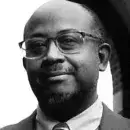
Michel-Rolph Trouillot
Michel-Rolph Trouillot (1949–2012) was a transformative scholar in multiple fields: anthropology (his main area), history, political economy, philosophy, and literature. He is best known for his books Silencing the Past: Power and the Production of History (1995), a meditation on archives, power, and historicity, and Global Transformations (2003), which explored the origins and application of social science in academia and its implications in the world.
Trouillot is considered one of the most influential and original thinkers of the Afro-Caribbean diaspora, having developed wide-ranging academic work centered on Caribbean issues. His work revolutionized how power, silencing, and archival absences are understood in the production of history. His landmark 1995 book, Silencing the Past: Power and the Production of History, remains a foundational text for analyzing how history is not just what happened, but a “production” shaped by power, with archives and narratives deliberately or implicitly omitting marginalized perspectives.
Born in Port-au-Prince, Haiti, Trouillot came to the United States in 1968 and was educated at Brooklyn College (CUNY) (B.A., summa cum laude, in Caribbean history and culture, 1978) and Johns Hopkins University (Ph.D. in anthropology, 1985). Before beginning academic study, he was a songwriter and activist involved in political protest against the Duvalier dictatorship in Haiti and against the American government’s treatment of undocumented Haitian immigrants. He wrote a book in Haitian Creole that was published in 1977, the year before he graduated from college: Ti Dife Boule sou Istoua Ayiti, a history of the Haitian Revolution of 1791–1804. He taught at Duke University (1983–1988), where he helped establish the Caribbean Studies Program, and at Johns Hopkins (1988–1998), where he was the Krieger/Eisenhower Distinguished Professor of Anthropology and director of the Institute for Global Studies in Culture, Power, and History. He served at the University of Chicago from 1998 until his death in 2012.
Trouillot cofounded the magazines Lakansyèl, Lire Haiti, and Les Cahiers du Vendredi, symbols of his determination and commitment to maintaining productive dialogue and reflection about Haiti among Haitians. Trouillot was a National Humanities Center Fellow in 1985–1986 and a Guggenheim Fellow in 1990. The Caribbean Philosophical Association awarded him the 2011 Frantz Fanon Lifetime Achievement Award “for the originality of his interrogations in the human sciences, especially anthropology and history, and his articulation of the importance and challenges of Haiti in contemporary discussions of freedom and reclamations of the past.”
A Reflection from His Sister, Évelyne Trouillot
Remembering my brother…
Evoking Rolph outside the family and friends circle is always a somehow delicate and bittersweet exercise of finding the right compromise between the familial and the academic spheres. However, my brother himself excelled at joining the two worlds. In a family where lively discussions and debates were as common as laughing and listening to music, Rolph was expert at raising an apparently banal issue that would captivate and engage most of us. While eating with Haitian music in the background he would carelessly evoke an idea, an hypothesis and suddenly what seemed a casual family event would become an intense and passionate debate about a social or historical issue. That practice stays with each of us. I know for a fact that some of my writing would not have been or would have been different if Rolph had not been in my life. He left his mark on all of us: the laughter, the humor, the intelligence and the sharpness of his mind, and the great affection that he always managed to convey.
Since his passing, I had the privilege to meet individuals through my travels who were eager to tell me about their relationship with my brother. From his youth as a lean and passionate activist to his later years as a dedicated and challenging University professor, from Louisiana to Accra, from Port-au-Prince to San Juan, I've met people who told me how he impacted their lives. Every time, the sadness of his absence materializes along with the feeling of contentment brought by the knowledge that somehow he remains alive in other people's' minds. These encounters allow me to rejoice in the renewed happiness of having known him.
Delmas, Haiti, September 2026
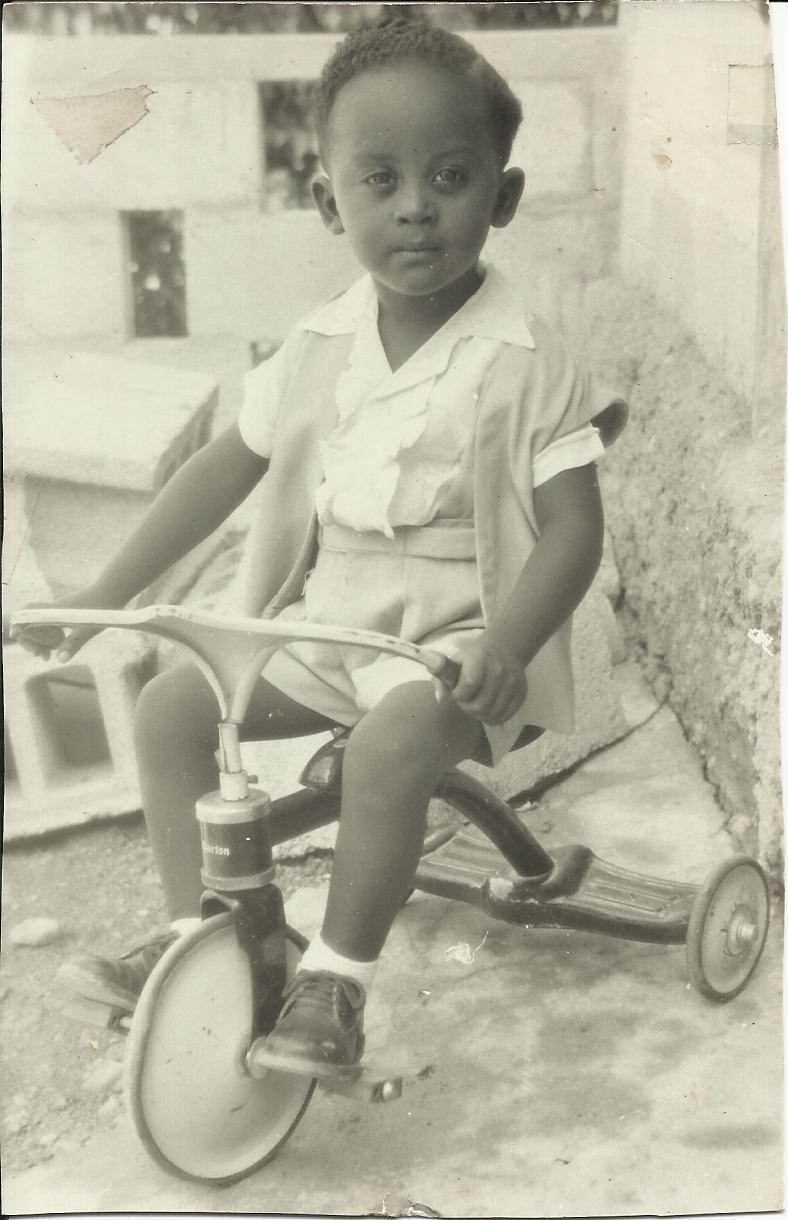
She also shared a photograph from his childhood: