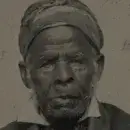
Omar ibn Said
Omar ibn Said (1770–1864) was a Fula Muslim scholar from Futa Toro in West Africa (present-day Senegal), who was enslaved and transported to the United States in 1807 during the transatlantic slave trade. Remaining enslaved for the rest of his life, he wrote a series of Arabic documents in which he quoted from memory the Qur’an, the Arabic Bible, and important Arabic texts on Islamic theology and mysticism.
In 1831, he authored the only known Arabic-language autobiography written in the United States by an enslaved person while in captivity. The fifteen-page handwritten memoir is significant not only as one of the best-known accounts of an enslaved Muslim from West Africa living in the United States, but also because it challenges conventional understandings of the slave narrative. His story draws attention to the many Africans brought to the United States as slaves who were followers of Islam. Such accounts counteract prior assumptions of African life and culture.
Omar ibn Said spent twenty-five years of his life studying in a Muslim seminary. In 1807, he was captured during a military conflict, enslaved and taken across the Atlantic Ocean to the United States. He escaped from a cruel enslaver in Charleston, South Carolina, and journeyed to Fayetteville, North Carolina. There, he was recaptured, sent to jail, and sold to James Owen, whom Omar ibn Said described as being gracious toward him. The Owen family provided him with an Arabic translation of the Bible, as his enslavers wanted to show that he converted to Christianity as a justification of the benefits of slavery. They falsely claimed that Omar ibn Said was offered multiple opportunities to return to Africa, but that he chose to remain in the United States, preferring to remain a slave because that had brought him to Christianity. To the contrary, his Arabic documents reveal that his Islamic writing practices continued until the end of his life.