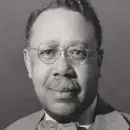
William Augustus Hinton
William Augustus Hinton (1883–1959) was a bacteriologist, pathologist, educator, and the first African American to be promoted to the rank of professor at Harvard Medical School and at Harvard University. A pioneer in the field of public health, Hinton became an internationally known expert in diagnosing and treating syphilis and developed a highly accurate and widely adopted test for the disease. His serological test for syphilis, known as the Hinton test, was used by the United States Public Health Service.
Born in Chicago, he was educated at the University of Kansas, the University of Chicago, and Harvard University (B.S., 1905; M.D., 1912). Denied a medical internship or residency in surgery due to his race, Hinton worked as a “voluntary assistant” in the Pathology Laboratory at Massachusetts General Hospital from 1913–1915. There he became an expert in syphilis, publishing his first paper with Roger I. Lee (elected to the Academy in 1923). Hinton was eventually appointed Assistant Director of the Division of Biologic Laboratories and Chief of the Wassermann Laboratory at the Massachusetts Department of Public Health, a position he held for thirty-eight years.
Hinton began teaching at Harvard Medical School in 1918 as Instructor in Preventive Medicine and Hygiene, and in 1921, his responsibilities expanded to include bacteriology and immunology. He was appointed as an Instructor in Bacteriology and Immunology in 1946, and promoted to Clinical Professor in 1949. In 1936, Hinton published the first medical textbook by a Black American, Syphilis and Its Treatment, which underscored the role of socioeconomic factors in health and called syphilis “a disease of the underprivileged.” Hinton also worked to break down barriers for women, teaching at Simmons College and establishing a laboratory technicians training school open only to women. In 1948, Hinton was elected a life member of the American Social Science Association.
In 1975, the serology lab at the Massachusetts Department of Public Health’s Laboratory Institute Building was named in his honor. The American Society for Microbiology awards the William A. Hinton Award for Advancement of a Diverse Community of Microbiologists for contributions to the research training of students of underrepresented minorities in microbiology. In 2020, Harvard Medical School renamed the Holmes Society in honor of Dr. Hinton in recognition of his pioneering work as a scientist.