List of Project Participants
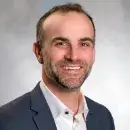
DANIEL BARRON is Director of the Pain Intervention and Digital Research Program at Spaulding Rehabilitation Hospital and Brigham and Women’s Hospital and is an Assistant Professor at Harvard Medical School. He is the author of Reading Our Minds: The Rise of Big Data Psychiatry (Columbia University Press, 2021) and has written for The Wall Street Journal, TIME, and Scientific American.
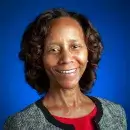
MARIAN CROAK is the Vice President of Human Centered AI and Foundational ML at Google, which she joined in 2014 after retiring from AT&T. She has received numerous awards, including the 2013 and 2014 Edison Patent Award, and was inducted into the Women in Technology International Hall of Fame in 2013. She has received over two hundred patents and is a member of the National Academy of Engineering. She was elected to the American Academy of Arts and Sciences in 2022.
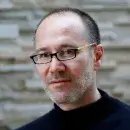
PAUL DAGUM (cochair) is an entrepreneur, physician, and computer scientist with a track record of innovation in health care, cybersecurity, and supply chains across four successful venture-backed companies as founder, CSO, CTO, and CEO. He has published more than eighty peer-reviewed articles and has been awarded more than twenty patents in computer science and medicine.

ALISON DARCY is a clinical scientist and health tech innovator passionate about making mental health support radically accessible. She founded Woebot, an AI-powered mental health companion grounded in decades of psychological science and responsible design. Woebot was the first mental health chatbot to be examined in a randomized trial. Trained at University College, Dublin and Stanford School of Medicine, Alison has always been drawn to exploring unmet needs in care and how technology may be part of the solution to help address them. Her work has led to eighteen clinical trials and widespread recognition—with Woebot featured in outlets like CBS 60 Minutes, The New York Times, and The Wall Street Journal, and with Alison named to the 2023 TIME100 AI list, which recognizes the 100 most influential people in AI. She continues to advocate for safe, engaging uses of AI in health care.

HOLLY DUBOIS is a board-certified psychiatrist serving as Chief Medical Officer for Connections Health Solutions, one of the nation’s leading providers of behavioral health crisis services, meeting the needs of over thirty thousand individuals every year. She grew and led the care delivery system for Mindstrong Health Services, a groundbreaking venture designed to engage individuals living with serious mental illness via novel smartphone technology.
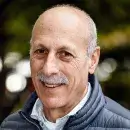
RICHARD G. FRANK, PhD, is the Margaret T. Morris Professor of Health Economics (emeritus) at Harvard Medical School. He is Senior Fellow in Economic Studies and Director of the Center on Health Policy at the Brookings Institution. He served as Assistant Secretary for Planning and Evaluation in the U.S. Department of Health and Human Services from 2014–2016.
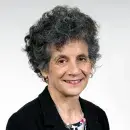
SHERRY GLIED (cochair) is Professor and former Dean of the Robert F. Wagner Graduate School of Public Service at New York University. She is an economist, and her principal areas of research are in health policy reform and mental health care policy. She is the author of Chronic Condition (Harvard University Press, 1998), coauthor (with Richard Frank) of Better But Not Well: Mental Health Policy in the United States since 1950 (Johns Hopkins University Press, 2006), and coeditor (with Peter C. Smith) of The Oxford Handbook of Health Economics (Oxford University Press, 2011). She was elected to the American Academy of Arts and Sciences in 2022.

HENRY T. (HANK) GREELY specializes in the ethical, legal, and social implications of new biomedical technologies, particularly those related to genetics, assisted reproduction, neuroscience, or stem cell research. He is a founder and past president of the International Neuroethics Society; former chair of the Ethical, Legal, and Social Issues Committee of the Earth BioGenome Project; and chair of California’s Human Stem Cell Research Advisory Committee.

ERIC HORVITZ is Microsoft’s Chief Scientific Officer, where he leads strategic initiatives at the intersection of science, technology, and society. His work emphasizes frontier advances in artificial intelligence, biosciences, and health care. He has made enduring contributions to AI theory and practice, from foundational models of cognition and bounded rationality to the development and deployment of AI systems in biomedicine, transportation, computing, and aerospace. He was elected to the American Academy of Arts and Sciences in 2011.

NICHOLAS JACOBSON is an Associate Professor in Biomedical Data Science, Psychiatry, and Computer Science at Dartmouth College, where he directs the AIM HIGH Laboratory. His research focuses on using technology, including smartphones and wearables, for the precision assessment and scalable treatment of anxiety and depression. He recently led the development and first clinical trial of Therabot, the first fully generative AI for psychotherapy.

KACIE KELLY has more than twenty years of experience leading innovation in mental health care and translating it into policy and practice. As Chief Innovation Officer at the Meadows Mental Health Policy Institute, she leads work to integrate scalable, data-driven innovation into health care, schools, justice, and community systems to detect mental health risks earlier and increase access to quality care for more youth and adults.

ARTHUR KLEINMAN is Professor of Medical Anthropology, Psychiatry and Global Health and Social Medicine at Harvard University. He is a physician and anthropologist as well as a leading figure in several fields, including medical anthropology, cultural psychiatry, global health, social medicine, and medical humanities. He is the author, coauthor, or coeditor of forty volumes, including Patients and Healers in the Context of Culture (University of California Press, 1980); The Illness Narratives (Basic Books, 1980); Rethinking Psychiatry (Free Press, 1991); World Mental Health (Oxford University Press, 1996); What Really Matters (Oxford University Press, 2007); Deep China (University of California Press, 2011); Reimagining Global Health (University of California Press, 2013); and The Soul of Care (Viking/Penguin, 2019), along with over four hundred articles. He was elected to the American Academy of Arts and Sciences in 1992.

JARON LANIER is a computer scientist, composer, artist, and author. He is a founder of the field of Virtual Reality (a term he coined), as well as adjacent disciplines including surgical simulation, and has received a lifetime achievement award from the Institute of Electrical and Electronics Engineers. His bestselling books on computer science and society have won numerous honors, including the German Peace Prize for Books. He also writes for The New Yorker and for movies and television. He is a specialist in performing on rare musical instruments of all cultures and periods. He currently serves as Prime Unifying Scientist at Microsoft.

ALAN I. LESHNER (cochair) is Chief Executive Officer, Emeritus, of the American Association for the Advancement of Science (AAAS) and former Executive Publisher of the journal Science. Before joining AAAS, he was Director of the National Institute on Drug Abuse at the National Institutes of Health. He also served as Deputy Director and Acting Director of the National Institute of Mental Health and in several roles at the National Science Foundation. He was elected to the American Academy of Arts and Sciences in 2005.

ROBERT LEVENSON works in the areas of human psychophysiology and affective neuroscience, both of which involve studying the interplay between psychological and physiological processes. Much of his work focuses on the nature of human emotion, specifically, its physiological manifestations, variations in emotion associated with age, gender, culture, and pathology, and the role emotion plays in interpersonal interactions. He was elected to the American Academy of Arts and Sciences in 2018.

LAURIE L. PATTON is a scholar of religion, a poet, and a translator who currently serves as President of the American Academy of Arts and Sciences. She previously served as the seventeenth President of Middlebury College—the first woman to do so in the school’s 224-year history. She was the Durden Professor of Religion and the Dean of Arts and Sciences at Duke University, and at Emory University was the Charles Howard Candler Professor of Religion. She was elected to the American Academy of Arts and Sciences in 2018.

PETER L. SLAVIN, President and CEO of Cedars-Sinai Medical Center and Health System, brings deep experience in academic medicine and dedication to serving patients and community. Before joining Cedars-Sinai, he served as President of Massachusetts General Hospital, which has the largest hospital-based research program in the United States. Throughout his career as a physician leader, professor, and administrator, he has led innovation in clinical care, research funding, scientific impact, workforce development, and fundraising. He was elected to the American Academy of Arts and Sciences in 2021.

SHERRY TURKLE, Abby Rockefeller Mauzé Professor of the Social Studies of Science and Technology at MIT, explores the subjective side of people’s relationships with technology, especially digital technology. Her research centers on analyzing electronic communication technologies and their impact on our emotions, creativity, and work. Profiled in The New York Times, The New Yorker, Scientific American,and Wired magazine, she has been a featured commentator on the social and psychological effects of technology for many media networks. A sociologist and clinical psychologist, her books—which include Life on the Screen (Simon and Schuster, 1997), The Second Self (MIT Press, 2005), Simulation and Its Discontents (MIT Press, 2009), Alone Together (Basic Books, 2011), and Reclaiming Conversation (Penguin, 2015)—have opened up new research spaces. She was elected to the American Academy of Arts and Sciences in 2014.