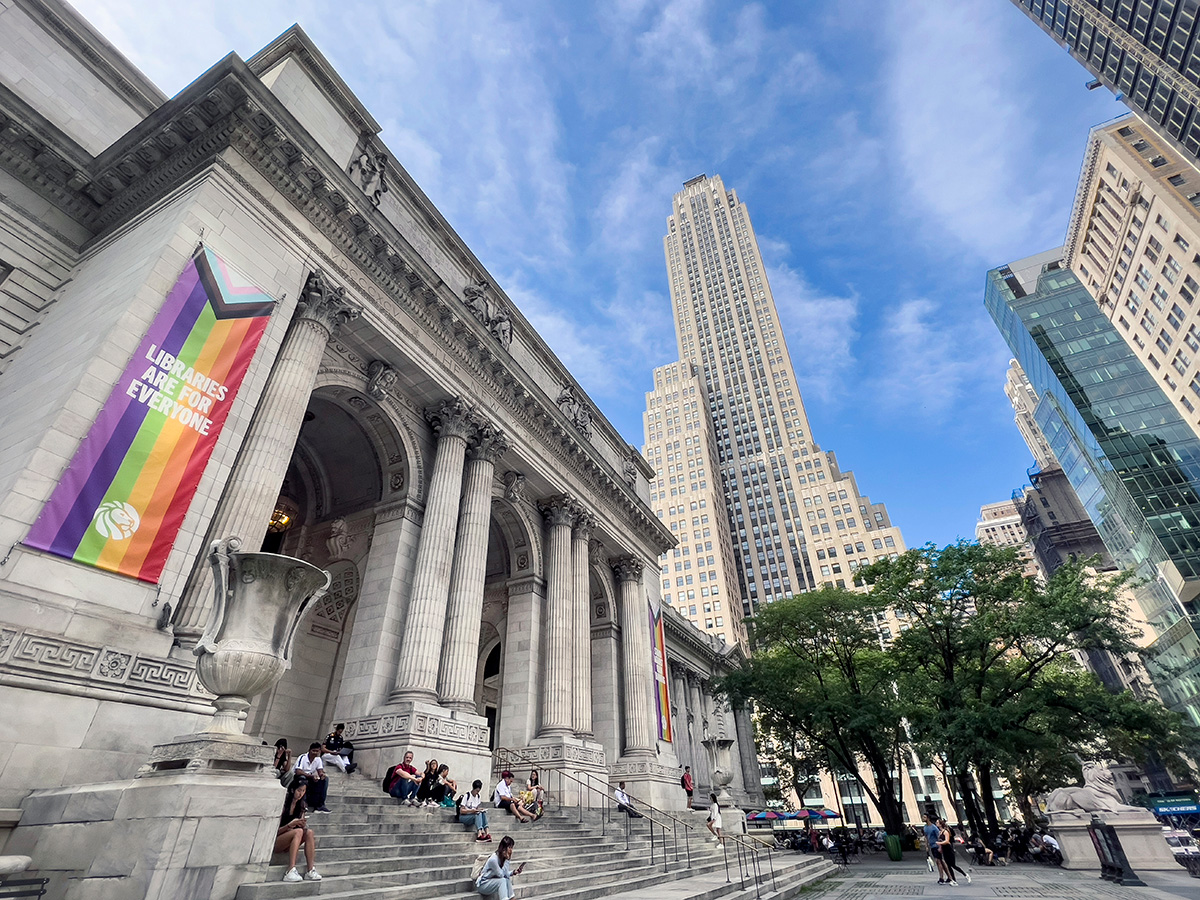
The humanities, arts, and culture are woven through virtually every Academy program, in which artists and humanists add interdisciplinary breadth to projects in science, democracy, and security. However, the Academy also undertakes projects that put humanities, arts, and culture at the forefront–tracking and reporting data on the health of the sector through the Humanities Indicators, and working with leaders in the field to articulate the needs of the sector and their importance to a vital and thriving nation.
ADVISORS
Johanna Drucker, Chair
University of California, Los Angeles
Louise Henry Bryson
Public Media Group of Southern California
Joy Connolly
American Council of Learned Societies
Oskar Eustis
The Public Theater
Rubén Gallo
Princeton University
Margaret Jacobs
University of Nebraska
Marie-Josée Kravis
Museum of Modern Art
Sara Lawrence-Lightfoot
Harvard University
Pedro Noguera
University of Southern California
Oscar Tang
New York, NY
Ayanna Thompson
Arizona State University
Sherry Turkle
Massachusetts Institute of Technology
ADVISORS’ MEETINGS
March 3, 2025
Virtual
Advisors for the Humanities, Arts, and Culture program area discussed a forthcoming exploratory meeting on “Cultural Spaces and Their Communities,” assessed other recent research on the state of the field, and articulated future priorities for the program area.
September 9, 2025
Virtual
The Humanities, Arts, and Culture Advisors discussed the Cultural Spaces meeting that was held in March, reviewed plans for the future development of the initiative (redesignated “Democracy, Arts, and Cultural Spaces”), and considered recent findings from the Humanities Indicators project.
Exploratory Meeting
Cultural Spaces and Their Communities
March 30–April 2, 2025
Chicago, IL
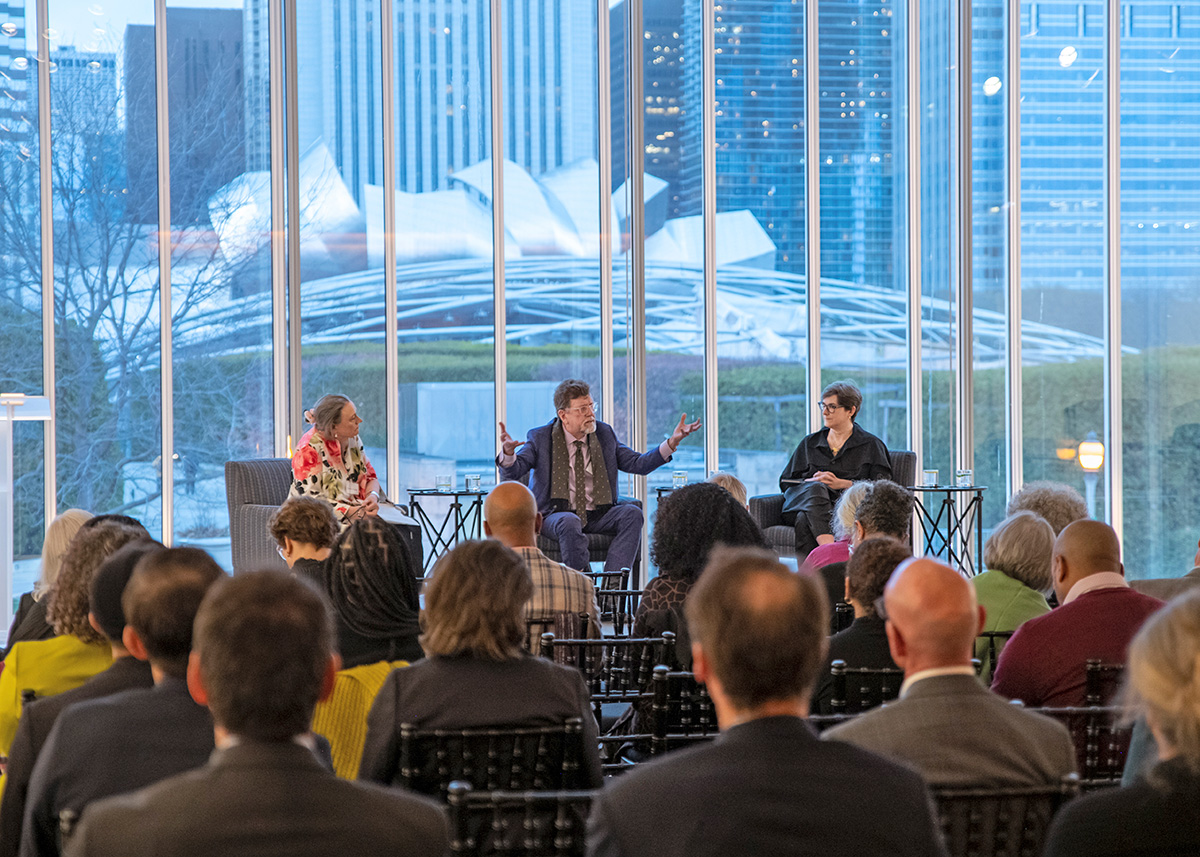
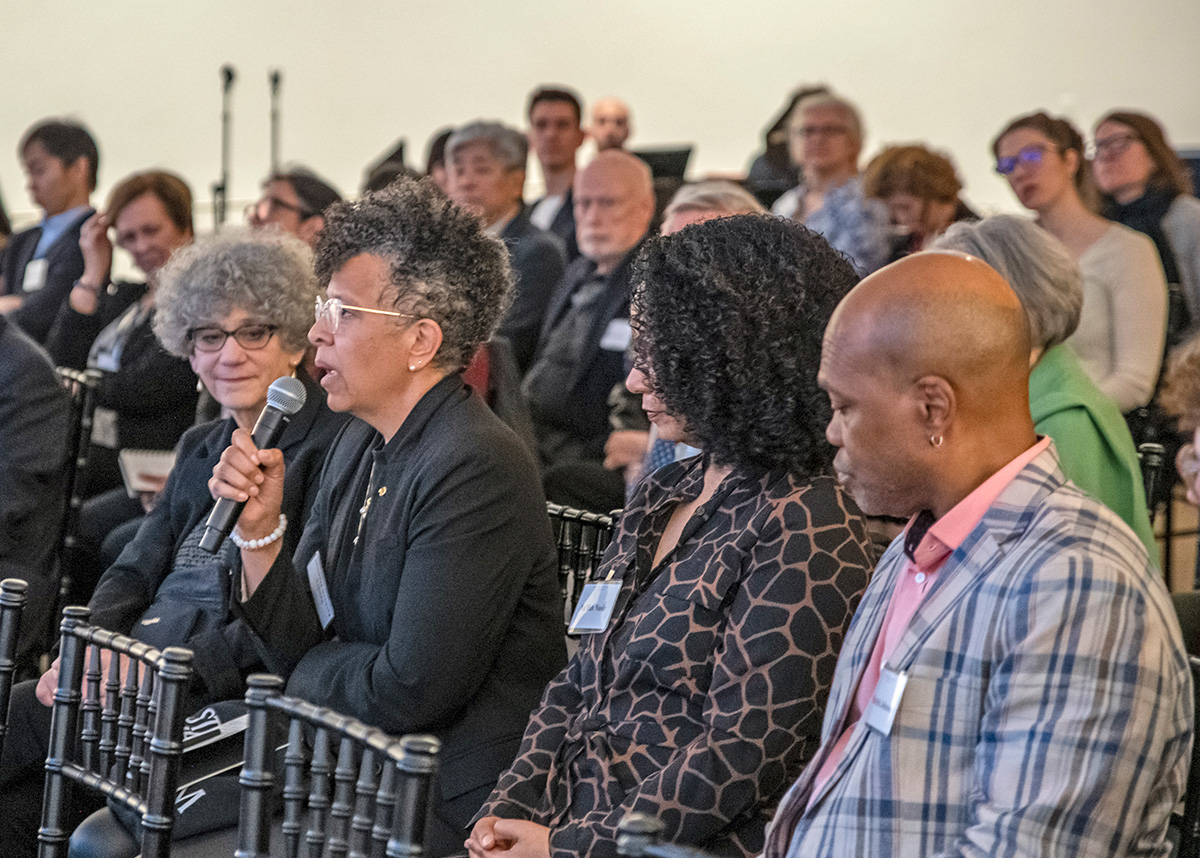
Building on the Academy’s recent Commission on the Arts, the exploratory meeting gathered leaders and funders working across cultural sectors to explore emerging challenges facing cultural organizations and how they might attract and expand their engagement with a wider and more diverse set of publics. The participants discussed the audiences cultural organizations serve and how they engage with their communities, the collective value proposition of these organizations, how they can build and extend partnerships across cultural sectors, and who will pay to support them. They also discussed how recent federal budget cuts would affect the sector and its institutions. The participants indicated that the Academy could play a vital role by continuing to gather leaders to discuss the challenges facing cultural organizations, and begin to articulate both the value of the cultural sector and best practices for public engagement and alliance building.
MEETING CHAIRS
Leah Dickerman
Museum of Modern Art
Oskar Eustis
The Public Theater
Cynthia Chavez Lamar
National Museum of the American Indian
PROJECT STAFF
Sara Mohr
Pforzheimer Foundation Fellow
Robert B. Townsend
Program Director for Humanities, Arts, and Culture
FUNDER
Marie-Josée Kravis
Project
The Humanities Indicators

The Humanities Indicators provide nonpartisan statistical information about all aspects of the humanities: from early childhood reading, through undergraduate and graduate education in the humanities, to employment and humanities experiences in daily life, such as reading and visits to museums. Now marking its fifteenth year as a publicly available website, the project tracks the condition of the humanities enterprise via analyses of data gathered by the federal government and its own original research. The project is one of the most cited activities of the Academy, and journalists, advocates, government agencies, and academic leaders regularly call on the project staff for information and their expertise.
Recent work has focused on the health of the field in academia, with significant new reports based on a survey of humanities department chairs, new updates on outcomes for and trends in students earning degrees in the humanities, and additional work exploring the status of the humanities at HBCUs. Alongside that work, the project also entered into a cooperative agreement with the National Endowment for the Humanities and the National Endowment for the Arts to develop a national inventory of nonprofit cultural organizations. (It was, unfortunately, among the casualties from the cuts in funding for federal programs, but the project continues as part of the Cultural Spaces initiative.) Meanwhile, the Humanities Indicators continue to develop additional areas of original research, with studies currently underway to explore how students choose (and often change) majors, how often the public engages with the humanities, the role the humanities play as second majors, the size of the humanities workforce, as well as additional follow-up research on the state of the humanities in the academy. The Humanities Indicators are accessible at www.amacad.org/humanities-indicators.
PROJECT DIRECTORS
Norman M. Bradburn
NORC at the University of Chicago
Robert B. Townsend
American Academy of Arts and Sciences
ADVISORS
Edward Ayers
University of Richmond
Jonathan R. Cole
Columbia University
John Dichtl
American Association for State and Local History
Michael Hout
New York University
Felice J. Levine
American Educational Research Association
James Shulman
American Council of Learned Societies
Phoebe Stein
Federation of State Humanities Councils
Judith Tanur
Stony Brook University
PROJECT STAFF
Carolyn Fuqua
Program Officer for the Humanities Indicators
Sara Mohr
Pforzheimer Foundation Fellow (2024–present)
FUNDERS
Mellon Foundation
National Endowment for the Humanities
Carl H. Pforzheimer III
National Endowment for the Arts
The Humanities Indicators was developed with generous support from the National Endowment for the Humanities, Elihu Rose and the Madison Charitable Fund, John P. Birkelund, Peck Stackpoole Foundation, Rockefeller Foundation, Sara Lee Foundation, Teagle Foundation, Walter B. Hewlett and the William R. Hewlett Trust, and William and Flora Hewlett Foundation.
Project Publications
The Academic Humanities Today: Findings from the 2024 Department Survey (American Academy of Arts and Sciences, 2025). Supplements to this report include separate profiles for each of the fourteen disciplines and a technical report that details the methodology and underlying data.
From Matriculation to Completion: How Do Humanities Majors Compare? (American Academy of Arts and Sciences, 2024)
Tracking the Health of the Humanities at HBCUs (American Academy of Arts and Sciences, 2024)
Project Meeting
Humanities Indicators Advisors’ Meeting
January 17, 2025
Virtual
The Advisors for the Humanities Indicators reviewed draft reports by project staff, discussed future research projects, and assessed the communication needs of the field.
Staff Presentations
American Historical Association
January 5, 2025
New York, NY
Humanities Indicators Codirector Robert B. Townsend presented on “The State of History Departments.”
Modern Language Association
January 9, 2025
New Orleans, LA
Robert B. Townsend presented on “Humanities Degrees for Career Success.”
Association of Catholic Colleges and Universities
February 2, 2025
Washington, D.C.
Robert B. Townsend spoke on a panel about “Is There a Future for the Humanities at Catholic Colleges & Universities?”
College Art Association
February 14, 2025
New York, NY
Robert B. Townsend presented on “The State of Art History Programs” at the CAA Business Meeting.
American Academy of Arts and Sciences
May 15, 2025
Virtual
The Humanities Indicators staff presented highlights from the recent survey and answered questions as part of an “AMA about the Academic Humanities Today.”
American Academy of Religion
June 23, 2025
Virtual
Robert B. Townsend presented on “The State of Religious Studies Programs” at the American Academy of Religion’s Annual Meeting.
Modern Language Association
June 25, 2025
Virtual
Robert B. Townsend gave a presentation on “The State of Modern Language Departments” for the MLA’s MAPS Leadership Institute.
Humanities, Arts, and Social Sciences Research Leaders Network
September 19, 2025
Washington, D.C.
Robert B. Townsend spoke about documenting the value of the humanities and using data to make the case for the field.
Project
The History of the Academy Book Project

Looking ahead to its 250th anniversary in 2030, the Academy selected historian Jacqueline Jones (University of Texas at Austin) to write a one-volume account of the Academy’s past. The anniversary history will provide a full and honest assessment of the Academy’s activities and membership since its establishment in 1780, and place the Academy within the larger history of the nation it was created to serve.
Jacqueline (Jackie) Jones’s work has been recognized with the Pulitzer Prize, the Bancroft Prize, a MacArthur Fellowship, membership in the American Academy, and most recently the presidency of the American Historical Association. Her publications include Labor of Love, Labor of Sorrow: Black Women, Work, and the Family from Slavery to the Present; Saving Savannah: The City and the Civil War; A Dreadful Deceit: The Myth of Race from the Colonial Era to Obama’s America; and No Right to an Honest Living: The Struggles of Boston’s Black Workers in the Civil War Era.
ADVISORS
Catherine Allgor
Massachusetts Historical Society
Paula J. Giddings
Smith College
David A. Hollinger
University of California, Berkeley
Sally Gregory Kohlstedt
University of Minnesota
Earl Lewis
University of Michigan
John R. McNeill
Georgetown University
David W. Oxtoby
American Academy of Arts and Sciences
David M. Rubenstein
The Carlyle Group
Ben Vinson III
Howard University
FUNDER
Jack, Joseph, and Morton Mandel Foundation