
By Molly Kent, Program Coordinator for Education, and Catherine Van Ness, Program Officer for Education
Can community colleges and employers create skills-based credentials of value?
On December 18, 2025, the Academy held a convening to explore how to advance skill development and employment outcomes for postsecondary students. Chaired by Bridget Long, Harvard University Distinguished Service Professor, this day-long meeting focused on building and validating Massachusetts community college students’ skills for careers in health care. For the first time in its history, the Academy convened leaders of local community colleges, including Bunker Hill and Quinsigamond Community Colleges, alongside researchers, education philanthropists, and representatives of Boston-area employers. The participants discussed how they can best prepare students for both work and life while providing support throughout their studies and ensuring that their credentials remain flexible and transferable.
The convening builds on the ongoing work of the Academy’s Commission on Opportunities After High School, chaired by Nancy Cantor (Hunter College), Harrison Keller (University of North Texas), and Bridget Long (Harvard Graduate School of Education). The commission is exploring all the paths available to students following high school graduation. One area of interest is the community college–to–career pathway. This line of work as well as this convening have been generously supported by Academy member Robert C. Pozen, Senior Lecturer at MIT, who provided both funding and thought leadership.
Who Are the Learners of Today?
With a focus on historically underserved students, especially those with some college credit but no formal credential, the group underscored that the new majority learner is not a “traditional” student:
- 69 percent are working while studying;
- 30 percent are first-generation students; and
- 40 percent are older than 22.
The participants highlighted the many challenges students face when transitioning from high school to higher education and the workforce, such as financial hardship, balancing school with work and family responsibilities, and navigating uncertainty in a rapidly changing labor market. They emphasized the importance of on- and off-ramps and discussed how higher education can better support students in developing durable skills, earning microcredentials, and building bridges with employers.
What Are Durable Skills?
Durable skills, previously referred to as soft skills, are transferable, lifelong skills such as communication, teamwork, resilience, and critical thinking. Unlike technical or occupation-specific skills, such as coding, operating machinery, or financial management, durable skills are broadly applicable across roles and industries.
Durable skills are often seen as intangible and evolving, making them difficult to define or measure. Higher education lacks standardized methods for assessing and validating durable skills and signaling their value in the workforce. Although employers frequently emphasize the value of durable skills, their hiring policies and practices often continue to prioritize degrees and formal credentials. These challenges have contributed to the devaluation of durable skills and underscore the need for new forms of skill development and credentialing.
The participants emphasized that technical skills are a minimum qualification for employment, but candidates who can demonstrate strong durable skills would be more desirable employees.
What Is a Microcredential?
To promote greater recognition of durable skill development in students, we need to change how both employers and the higher education sector perceive community colleges, positioning them as leaders in cultivating these essential skills. One way community colleges are innovating in this area is through microcredential programs, which allow students to earn a resume-building microcredential for a durable skill, such as teamwork or communication, by completing a few targeted courses rather than pursuing an associate or bachelor’s degree.
One example of such a program in Massachusetts is Bunker Hill Community College’s Skill Badge Program.1 Administrators worked with faculty to identify existing course sequences that build students’ competencies in specific areas, such as conflict management. They also engaged local employers to help design a workplace simulation workshop aligned with those skills. The employers attend the workshop and provide students with feedback in real time. As a result, students graduate with a microcredential that both their college and future employer recognize as an important and marketable durable skill.
Microcredentials help students articulate and demonstrate their validated skills. They provide a shared language among educators, students, and employers, and create opportunities for more specific collaboration between higher education institutions and employers. This alignment has become increasingly important in today’s rapidly evolving labor market, with uncertainty around AI and a fragile funding environment.
How Can Higher Education Bring Employers into the Conversation as an Equal Partner?
A key theme from the December convening was the value of effective collaboration between higher education institutions and employers, particularly in microcredential programs. The participants emphasized the value of gatherings like this, which bring together a diverse mix of institutions from various regions alongside employers of different industries, sizes, and levels of engagement with higher education. These convenings help leaders define how targeted programs, such as microcredentials or degrees, develop specific career skills and foster a shared language between higher education and employers. While convening higher education leaders and industry leaders can seem daunting, starting with small, regional, and industry-focused partnerships offer a lot of value compared with a one-size-fits-all national approach.
What Comes Next?
At the conclusion of the convening, participants discussed goals for future work aimed at creating more effective pathways for students after high school by fostering greater collaboration between educators and employers. One area for potential future study is using intermediaries to develop quality programs, establishing shared definitions between educators and employers, and scaling beyond successful pilot programs. The participants encouraged higher education leaders to partner with industry associations, because many small- and mid-size employers are unable to dedicate staff resources to these kinds of partnerships. They also emphasized the need to continue documenting and collecting outcomes data from microcredential programs focused on durable skills in order to better understand their impact on students’ future career prospects.
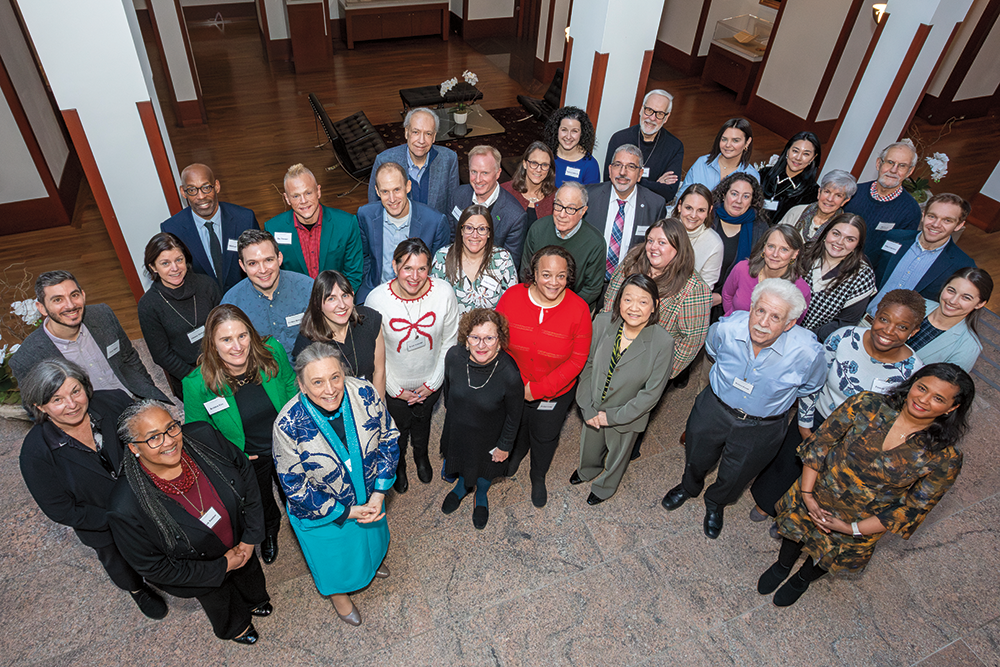
After the convening, Bridget Terry Long reflected on the discussions and materials, which led to a subsequent article with her takeaways.