Future of Security Studies: Meeting + Report

Today’s global security environment is in a deep crisis. Armed conflicts, new emerging risks, and domestic instability around the world create the most complex and wide-ranging security challenges in a generation. This work examines how the field of Security Studies can adapt and continue its historical role in supporting the reduction and management of global risks.
Security studies scholars conduct research and help policymakers address global violence and other threats to safety, including military conflicts, non-state threats, nuclear security, biohazards, and cyberattacks. The field emerged after World War II and its leading thinkers have produced framing ideas, debated policy alternatives, trained experts, and consulted with governments during heightened periods of conflict, including during the Cold War and after 9/11. Current events present complex global security risks, including:
- Nuclear arms control treaties have expired with low likelihood of imminent renewal.
- New lethal technologies, including those using artificial intelligence (AI), are being developed and deployed at a rapid pace.
- The Russia-Ukraine war has entered its fifth year and is one of the deadliest modern conflicts.
- New conflicts have erupted in Africa, Central Asia, and the Middle East.
At the same time, the field of security studies faces challenges of its own. These include:
- Reduced federal and private support for scholarship.
- A de-emphasis on policy-relevant research in some disciplines.
- Fewer institutional investments in the kind of interdisciplinary training necessary to meet today’s needs.
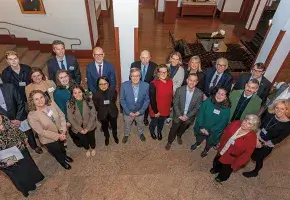
Academy work on the future of security studies draws on scholars from leading research centers, practitioners, policymakers from Republican and Democratic administrations, and philanthropic leaders. Their efforts highlight current global risks and challenges for the field. Together, they are committed to developing recommendations for the consideration of scholars, higher education leaders, policymakers, and funders.
These efforts build on the Academy's historic involvement in the field of security studies and builds broad support for concrete ways to equip scholars and policymakers with the resources required to meet the current moment. The work emerged from an exploratory meeting in December 2025.
People

Rose M. McDermott

Scott D. Sagan