On June 11, 2020, the Academy’s Commission on the Practice of Democratic Citizenship celebrated the release of its final report: Our Common Purpose: Reinventing American Democracy for the 21st Century. Nearly 1,200 people viewed the launch event, which featured Commission Chairs Danielle Allen (Harvard University), Stephen Heintz (Rockefeller Brothers Fund), and Eric Liu (Citizen University); Academy President David Oxtoby; as well as Commission members Judy Woodruff (PBS NewsHour) and David Brooks (The New York Times).
How much does the public know about science and where does it get its information? Do scientists communicate effectively with the public about their work? What role do the media and our education system play in advancing Americans’ scientific literacy? Two recent Academy publications examine these questions.
On October 11, 2014, the American Academy inducted its 234th class of Fellows and Foreign Honorary Members. The ceremony included presentations by new Fellows Ramamurti Shankar, Diana H. Wall, Sherry Turkle, Mary Kelley, and John W. Rogers, Jr.
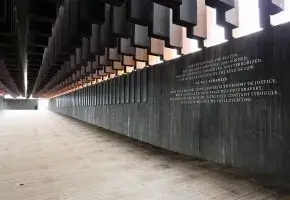
Over the last few years, organizations across the United States – corporations, universities, and nonprofits like the American Academy – have begun to reflect on their ties to slavery, Native genocide, and other troubling elements of American history. The Academy’s virtual event on “Reckoning with Organizational History” explored why historical self-examination matters and what can be gained from these studies.
Explanation for the estimates included in the state profiles, which were generated from the American Community Survey (ACS) 5-Year Public Use Microdata Sample.
Organizers of 2015 “Innovation: An American Imperative” Issue Progress Report Detailing Path Congress & Administration Must Take To Ensure U.S. Remains Global Innovation Leader
A growing numbers of parents are either delaying or selectively administering immunizations – or choosing not to vaccinate their children at all. A new Academy report makes clear that reversing this trend requires dedicated research on how vaccine decisions are made and the best ways to communicate factual information to vaccine-hesitant parents.
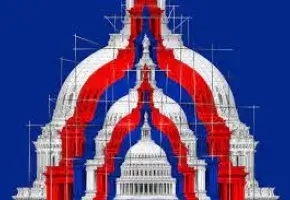
Danielle Allen, cochair of the Commission on the Practice of Democratic Citizenship, makes the case for enlarging the U.S. House of Representatives. The first recommendation of Our Common Purpose calls for enlarging the House of Representatives.
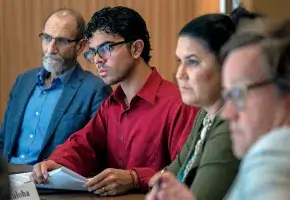
It’s 8 am on a sunny day in Miami, Florida, and the former chair of Shell is discussing mitigation with Indigenous leaders over arepas. Nearby, a reverend and youth activists chat about sea walls as they enjoy their coffee outside in the 70-degree weather. The diversity of these individuals, who are members of the Academy’s Commission on Accelerating Climate Action, speaks not only to the convening power of the Academy, but also to the growing interest in climate from sectors across America.
A new study by the Academy’s Humanities Indicators staff reveals significant changes in students’ majors from the time they begin their baccalaureate studies to when they complete a degree (if they do). The data focused on the cohort of students who began their studies in fall 2017 and their status as of June 2024.
A profound lack of awareness of the unique, sovereign, and central role that Native Americans have played in the United States persists. And there is little recognition of how the knowledge of Indigenous people could contribute to a better shared future.
Lawrence Goldstein moderated a panel discussion about scientific advances and their impact on society with J. Craig Venter, Lisa Madlensky, and John H. Evans at the Sanford Consortium for Regenerative Medicine in La Jolla, California.
Scientists and the journalists who cover their research approach their roles from very different perspectives, yet they depend on each other to keep the public informed about scientific issues. Science and the Media, a new volume from the American Academy, examines this dynamic though a series of essays by scientists, journalists, and public relations specialists.
The American Academy of Arts and Sciences has received a $750,000 grant from The William and Flora Hewlett Foundation to advance the Academy's work on statistical indicators for the humanities.