Utility navigation

  • Dædalus
  • Archives
  • Give
  • Login

Main navigation

  • Our Work
    • Explore by Topic
      • Arts & Humanities
      • Democracy & Justice
      • Education
      • Energy & Environment
      • Global Affairs
      • Science & Technology
    • View
      • Projects
      • Publications
  • Members
  • News
  • Events
  • Get Involved
  • About

Main navigation

  • Our Work
    • Explore by Topic
      • Arts & Humanities
      • Democracy & Justice
      • Education
      • Energy & Environment
      • Global Affairs
      • Science & Technology
    • View
      • Projects
      • Publications
  • Members
    • Member Directory
    • Magazine: The Bulletin
    • Local Committees
  • News
  • Events
  • Get Involved
  • About
    • Governance
      • Board of Directors
      • Council
      • Trust
      • Committees
      • President
    • Staff
    • Affiliates
    • Prizes
      • Amory
      • Distinguished Leadership
      • Don M. Randel Humanistic Studies
      • Emerson-Thoreau
      • Excellence in Public Policy
      • Founders
      • Rumford
      • Sarton History of Science
      • Sarton Poetry
      • Scholar-Patriot
      • Talcott Parsons
    • Fellowships
    • Location
    • History
    • Advisors
      • Education
      • The Humanities, Arts, and Culture
      • Science, Engineering, and Technology

Footer

  • Daedalus
  • Login
  • Archives
  • Give
  • Careers
  • Contact
  • Private Events

136 Irving Street
Cambridge, MA 02138

Social Media

  • Facebook
  • LinkedIn
  • YouTube
Search results for

“WA”

Search

  • All (22579)
  • Events (371)
  • News (1933)
  • People (17906)
  • (-) Projects (145)
  • Publications (2224)
Project

The Genetic Revolution

The Academy sponsored a conference on genetic engineering, examining both the risks and possible benefits. The resulting volume of papers concentrates on the scientific principles required to understand the issues that lie at the core of public concern and, therefore, of policy development.

Project

US-USSR Environmental Protection Institutions

Representatives of two of the world’s major industrial nations, and thus major polluters, the U.S. and the U.S.S.R., met in August 1991 at the Rockefeller Conference Center in Bellagio, Italy, to discuss ways to improve environmental protection practices in the two nations.

Project

Women and the Use of Force

The Academy organized two workshops to explore the role of women in developing and implementing national security policy.

Project

Center for Advanced Studies in Amazonian Biodiversity (PROBEM/Amazonia)

The Academy hosted an international planning meeting to develop a proposal for a new world-class research center in Brazil that would help develop the country’s research capabilities in the life sciences.

Project

Culture and the Production of Insecurity

Genocide in Rwanda, instability in the Middle East, anarchy on the Internet—insecurities abound. But do they occur "naturally," or are they, as this path-breaking volume suggests, cultural and social productions?

Project

Violent Conflict in the 21st Century

Against a background of changing international politics, the Academy convened a multidisciplinary conference to analyze the direction of international security, to explore current and foreseeable sources of conflict, to examine the instruments that might be used in these conflicts, and to discuss ways that future conflicts might be mitigated.

Project

Ethical Aspects of Experimentation on Human Subjects

With new surgical techniques, like heart transplants, becoming indispensable tools in prolonging human life, the issue of human experimentation became a matter of increasing public interest. The Academy created an interdisciplinary working group to study the ethics of human experimentation, and the working group’s papers were initially published in Dædalus in 1969.

Project

Space Exploration and Society

In 1962, the Academy received a grant from NASA to study the long-range effects of space exploration on American life. At a time when the nation was committing enormous and unprecedented financial, scientific and manpower resources to the NASA program, the Academy study was charged with investigating the potential consequences, intended and unintended, of this mobilization on various sectors of society.


Project

Human Diversity

Human diversity is an enormous cultural and biological resource and a source of social and political tension. The Academy convened a group of scholars to address the controversy over the relative roles of genetics and environment in determining human capacities and behavior.

Project

Human Values, Systems Analysis, and the Environment

The Academy gathered together a multidisciplinary group of scholars to design a study of environmental decision-making that focused on the theoretical aspects of the process and examined policy analysis and decision-making.

Project

International Centre of Insect Physiology and Ecology

The Academy was instrumental in the establishment in 1970 of the International Centre of Insect Physiology and Ecology (ICIPE) in Nairobi, Kenya. The goal of the ICIPE is to develop more effective and less dangerous pesticides through a greater understanding of insect biology.

Project

International Foundation for Science

As the economic and technological gap widened between the developed nations and the developing world, the Academy, the National Academy of Sciences, and other scientific organizations considered the feasibility of establishing an International Foundation for Science to support the research of young scientists and technical investigators in developing countries. In 1972, the IFS was established as a nongovernmental organization in Stockholm.

Project

Social Values and Technology Choice in an International Context

This Academy-organized symposium brought together more than 30 scientists, scholars and public officials, from developed and developing nations, to discuss how social values do and should influence technology choice by nations and by groups of nations.

Project

History of Women Scientists in America

The increased role of women in science in this country was the result of the convergence of two trends: the growth in higher education and expanded employment for middle-class women on the one hand, and the growth, bureaucratization and professionalization of science and technology, on the other.

Project

International Institute of Applied Systems Analysis

IIASA was formed in 1972 to provide a venue for collaboration between Western and Eastern bloc scientists on non-military matters, such as global energy needs, environmental change, and human health concerns.

Project

ARISE II—Advancing Research In Science and Engineering: The Role of Academia, Industry, and Government in the 21st Century

The ARISE II project developed actionable recommendations to sustain a competitive U.S. research enterprise. This work was designed to foster new relationships across the disciplines and between the private and public sectors.

commission on the humanities and social sciences
Project

Commission on the Humanities and Social Sciences

The Commission on the Humanities and Social Sciences claimed a space in the national dialogue for the humanities and the social sciences and recommended specific steps that government, schools and universities, cultural institutions, businesses, and philanthropies could take to support and strengthen these areas of knowledge.

nuclear fuel storage
Project

Global Nuclear Future

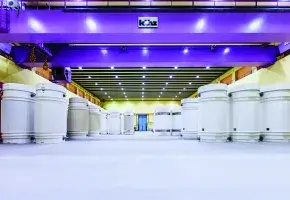
The Global Nuclear Future Initiative seeks to guide domestic and international policy-makers trying to balance the pursuit of a national nuclear energy program with the potential safety, security, and economic concerns.

Project

Protecting the Internet as a Public Commons

The constantly evolving nature of the Internet raises questions about its use and security. This project investigated how the complex social issues of identity, access, and trust will affect the future of the Internet.

Stewarding America
Project

Stewarding America

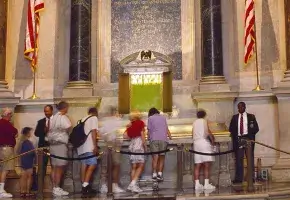
Most Americans seek a more coherent, collaborative, national conversation in which individual interests can be aligned with the greater good. This project analyzed American institutions to develop a better understanding of their role in the American democratic system and to develop proposals to increase civic participation and public confidence in American leaders and institutions.

Pagination

  • Previous page ←
  • 5 of 8
  • Next page →

136 Irving Street
Cambridge, MA 02138

617-576-5000

VEHICLE ENTRANCE

200 Beacon Street
Somerville, MA 02143

Main navigation

  • Our Work
  • Members
  • News
  • Events
  • Get Involved
  • About

Footer

  • Daedalus
  • Login
  • Archives
  • Give
  • Careers
  • Contact
  • Private Events

Social Media

  • Facebook
  • LinkedIn
  • YouTube
© 2026

American Academy of Arts & Sciences  |  Web Policy