By Dædalus Editorial
How Will We Think about the Past in the Future?
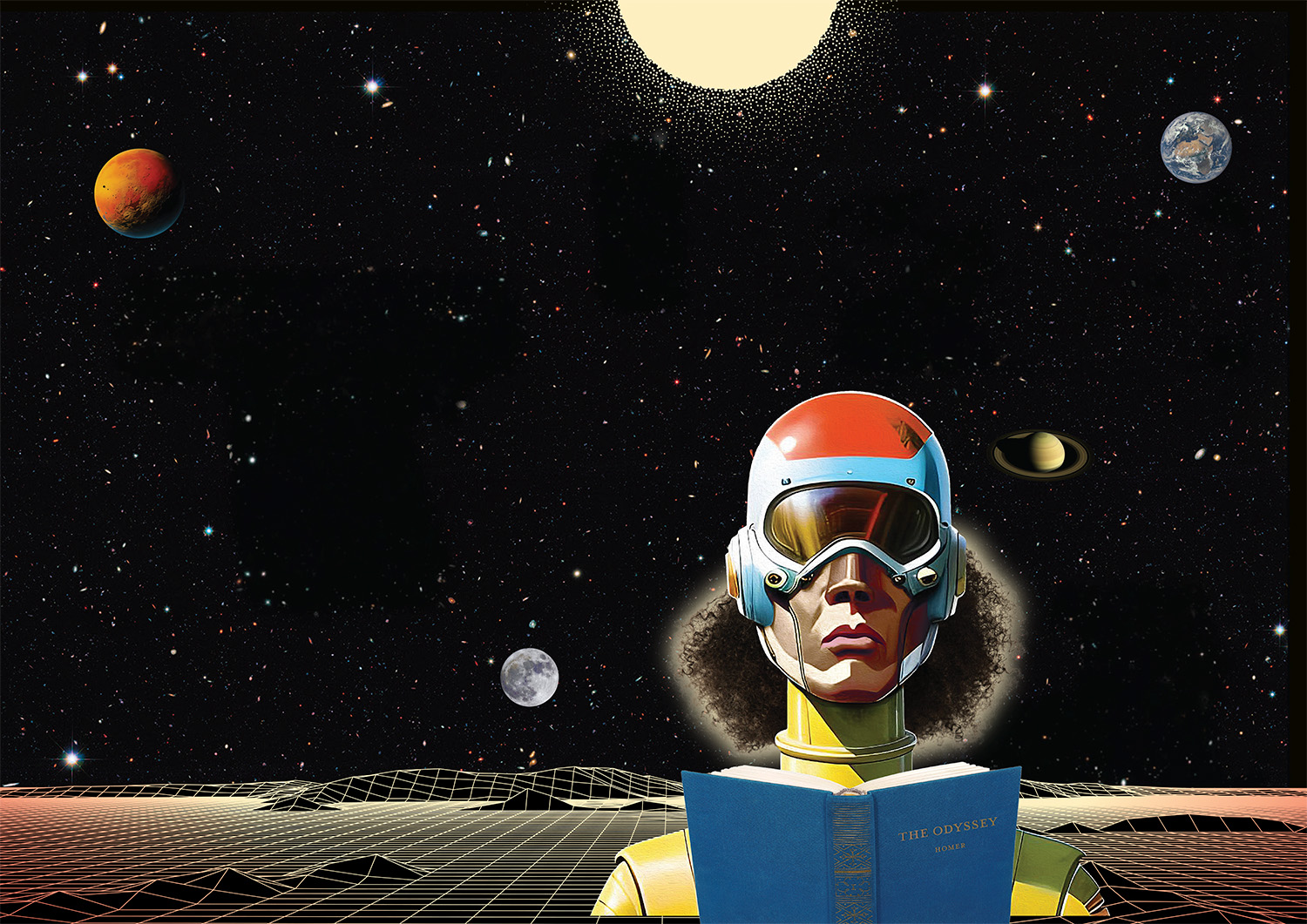
“How will we think about the past in the future?” asks the Summer 2025 issue of Dædalus, edited by Ayanna Thompson. Scholars and artists answer with poetry, drama, short fiction, scientific and humanistic thought, and visual art. Together, they speculate about which aspects of our present historical moment will compel, attract, haunt, and plague thinkers years from now.
The issue confronts the harms we inflict on each other and our planet, while imagining a bridge toward a more equitable tomorrow. From escaping regressive tax models to de-commodifying the arts to rethinking human relations after first contact with intelligent alien life, the contributors envision what is needed to conjure this future.
A unifying theme in the issue is the recognition that people need time and encouragement to think about the future—that we must face the worst outcomes to avoid them, and that a better future must first be dreamed to be realized. Through speculative thinking and the power of the arts, this collection encourages us to see ourselves outside of the constraints that persist today.
Contents of “How Will We Think about the Past in the Future?”
Introduction: How Will We Think about the Past in the Future?
Ayanna Thompson
{d|r}econstruction
Katie Burk
Indexing a Performance—: Let slip, hold sway
Natalie Diaz
Now?
Bennett Capers
Back to the Future for Taxation
Ameek Ashok Ponda
What Is to Be Done?
Oskar Eustis
Home Sweet NewHome
Matt Bell
Future Problem-Solving: Artificial Intelligence & Other Wildly Complex Issues
John Palfrey
Academic Cultures: Toward Perspective from the Future
Michael M. Crow & William B. Dabars
PEBCAK
Katie Burk
The Ongoing Biomedical Revolution Created by Rethinking How to Learn
Joshua LaBaer
Securing All the World’s Pasts for Our Common Future
Joy Connolly
Let’s Get Lost in the Cycle of Time Together
Madeline Sayet
Speaking in Future Tongues: Languaging & the Gifts of Spirit
Dan-el Padilla Peralta
The Ground
Jericho Brown
Water Runs Dry
Katie Burk
Another Other: An Unlikely Path to a Future United World—and What That Future Would Think about Us
Lindy Elkins-Tanton
Horseplay
Leah Newsom
How Pants
Anne Carson
The Dædalus volume on “How Will We Think about the Past in the Future?” is available on the Academy’s website.
How Has War Shaped American Democracy?
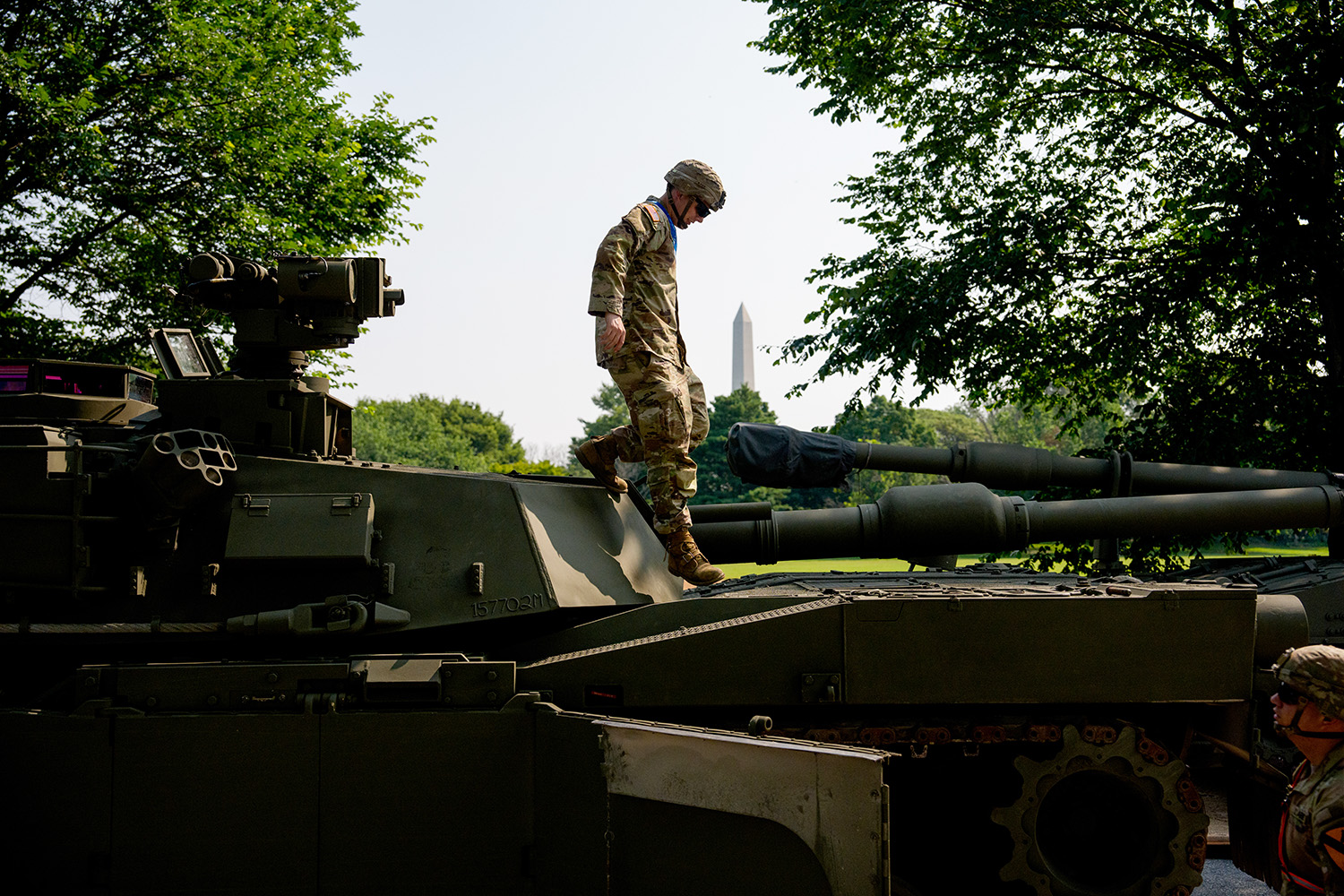
In 1795, James Madison warned that “of all the enemies of true liberty, war is, perhaps, the most to be dreaded, because it comprises and develops the germ of every other.” He cautioned that “No nation . . . can preserve its freedom in the midst of continual warfare.”
The Fall 2025 issue of Dædalus, “How Has War Shaped American Democracy?” edited by Neta C. Crawford and Matthew Evangelista, tests Madison’s argument in the context of near-permanent war waged by the United States following the 9/11 terrorist attacks.
From the loss of civil liberties to the expansion of executive powers to the hotly contested deployment of troops to U.S. cities, the authors—scholars of politics, history, law, economics, and the military—find that the war on terror has contributed to antidemocratic trends and eroded the United States’ system of checks and balances.
At the same time, they consider potential positive effects of continuous mobilization: whether military service has provided significant economic benefits to Black service members, and whether the wars in Afghanistan and Iraq contributed to a more liberal vision of equality, including the removal of barriers to women in combat roles, the repeal of Don’t Ask, Don’t Tell, and the (temporary) lifting of the ban on transgender service members.
Together, the authors identify risks for continued democratic backsliding and offer strategies for democratic resilience and advancement.
Contents of “How Has War Shaped American Democracy?”
Introduction: How Has War Shaped American Democracy?
Neta C. Crawford & Matthew Evangelista
The State, War-Making & Democratization in the United States: A Historical Overview
Robert C. Lieberman
War & the Administrative State, 1776–1900
Stephen J. Rockwell
Concentration of Power in the Executive
Harold Hongju Koh
The Ghost Budget: U.S. War Spending & Fiscal Transparency
Linda J. Bilmes
The Supreme Court & the Unaccountable Racialized Security State
Shirin Sinnar
Public Beliefs about the Role of Military Force
Sarah Maxey
Paranoid Empire: Forever Wars in Popular Culture
Penny M. Von Eschen
Long War & the Erosion of Democratic Culture
Neta C. Crawford & Catherine Lutz
War Begets War
Robert Jay Lifton
The Relationship between Military Spending & Inequality: A Review
Heidi Peltier
Politicization of the Military: Causes, Consequences & Conclusions
Heidi A. Urben
Understanding Current Threats to Democracy: The Limits of the Civil-Military Relations Paradigm
Rosa Brooks
Gender, Sexuality, Warfighting & the Making of American Citizenship Post-9/11
Katharine M. Millar
Colonialism Turned Inward: Importing U.S. Militarism into Local Police Departments
Azadeh Shahshahani & Sofía Verónica Montez
From the Battlefield to Behind Bars: Rethinking the Relationship between the Military- & Prison-Industrial Complexes
Jacob Swanson & Mary Fainsod Katzenstein
Conclusion: It Can Happen Here
Matthew Evangelista
The Dædalus volume on “How Has War Shaped American Democracy?” is available on the Academy’s website.