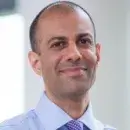
Vipin Narang
Vipin Narang is the Frank Stanton Professor of Nuclear Security and Political Science and the inaugural director of MIT SSP’s Center for Nuclear Security Policy (CNSP). He first joined the political science faculty in 2010. From March 2022 through August 2024, he served as Principal Deputy Assistant Secretary of Defense and then Acting Assistant Secretary of Defense for Space Policy, a portfolio with oversight over the U.S. Department of Defense’s strategic capabilities, including nuclear, space, missile defense, and cyber policy. For his service, he was awarded the Department of Defense Medal for Distinguished Public Service.
Narang's research interests include nuclear proliferation and strategy, South Asian security, and general security studies. His first book Nuclear Strategy in the Modern Era (2014), focused on the deterrence strategies of regional nuclear powers, won the 2015 ISA International Security Studies Section Best Book Award. His second book, Strategies of Nuclear Proliferation (2022), explores how states pursue nuclear weapons.
Narang co-led the Academy's Deterrence and New Nuclear States project with Scott Sagan. They brought together a diverse collection of rigorous and creative scholars to analyze how the nuclear landscape is changing for the worse. The work produced The Fragile Balance of Terror (Cornell University Press, 2023), edited by Narang and Sagan, featuring scholars, pundits, and policymakers writing about the spread of nuclear weapons and the challenge of nuclear deterrence.
Narang received his Ph.D. from the Department of Government, Harvard University in May 2010, where he was awarded the Edward M. Chase Prize for the best dissertation in international relations. He holds a B.S. and M.S. in chemical engineering with distinction from Stanford University and an M. Phil with Distinction in international relations from Balliol College, Oxford University, where he studied on a Marshall Scholarship. He has been a fellow at Harvard University’s Olin Institute for Strategic Studies, a predoctoral fellow at Harvard University’s Belfer Center for Science and International Affairs, and a Stanton junior faculty fellow at Stanford University’s Center for International Security and Cooperation.