Utility navigation

  • Dædalus
  • Archives
  • Give
  • Login

Main navigation

  • Our Work
    • Explore by Topic
      • Arts & Humanities
      • Democracy & Justice
      • Education
      • Energy & Environment
      • Global Affairs
      • Science & Technology
    • View
      • Projects
      • Publications
  • Members
  • News
  • Events
  • Get Involved
  • About

Main navigation

  • Our Work
    • Explore by Topic
      • Arts & Humanities
      • Democracy & Justice
      • Education
      • Energy & Environment
      • Global Affairs
      • Science & Technology
    • View
      • Projects
      • Publications
  • Members
    • Member Directory
    • Magazine: The Bulletin
    • Local Committees
  • News
  • Events
  • Get Involved
  • About
    • Governance
      • Board of Directors
      • Council
      • Trust
      • Committees
      • President
    • Staff
    • Affiliates
    • Prizes
      • Amory
      • Distinguished Leadership
      • Don M. Randel Humanistic Studies
      • Emerson-Thoreau
      • Excellence in Public Policy
      • Founders
      • Rumford
      • Sarton History of Science
      • Sarton Poetry
      • Scholar-Patriot
      • Talcott Parsons
    • Fellowships
    • Location
    • History
    • Advisors
      • Education
      • The Humanities, Arts, and Culture
      • Science, Engineering, and Technology

Footer

  • Daedalus
  • Login
  • Archives
  • Give
  • Careers
  • Contact
  • Private Events

136 Irving Street
Cambridge, MA 02138

Social Media

  • Facebook
  • LinkedIn
  • YouTube
Search results for

“Fc coins Buyfc26coins.com Fast delivery and very reliable service.83uO”

Search

  • All (2675)
  • Events (34)
  • (-) News (744)
  • People (803)
  • Projects (17)
  • Publications (1077)
Press Release
|
Apr 15, 2013

Dædalus, the Journal of the American Academy of Arts and Sciences, Examines American Democracy & the Common Good

How do we renew confidence in America’s institutions and strengthen public engagement in civic life? The Spring 2013 issue of Dædalus suggests ways in which government, corporations, nonprofits, the judiciary, and the media can inspire greater confidence in our democratic system and a renewed commitment to civil discourse.
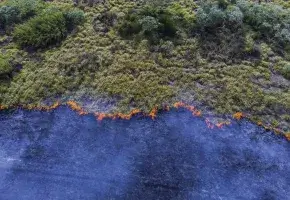
Environmental Image Bisected by Fire Line
Academy Article
|
Aug 31, 2021

On Climate Change - A Statement from the Board of the Academy

The American Academy’s Board of Directors issued a statement about climate change to stand explicitly with the scientific community and others to recognize the urgent need for a long-term commitment by every segment of our society to address this global issue.
In the News
|
Sep 21, 2016

Has the U.S. Presidency Become a Dictatorship?

Legal scholar and Daedalus contributor Eric Posner discusses separation of powers, checks and balances, and the state of the U.S. presidency with Stephen Dubner of Freakonomics.
Source
Freakonomics
In the News
|
Dec 2, 2019

America’s Languages Caucus is Born

Inspired by the Academy report on "America’s Languages," Congressmen David Price (D-NC) and Don Young (R-AK) announced the establishment of the bipartisan Congressional Caucus on America’s Languages in order to address our nation’s need for more bilingual citizens to help ensure national security, promote economic and job growth, and develop the potential of every U.S. student.
Source
Language Magazine
Bulletin
|
Feb 20, 2026

From the President

As I reflect on my first year as president of the Academy, I am struck by how our members came together in so many different ways to address such a broad range of challenges, including unprecedented threats to academic freedom, the research enterprise, and the rule of law. And while it was a year of great challenges, there were also moments of great hope. For me, top among those moments was the Induction of our 2025 class of new members here in Cambridge in October.
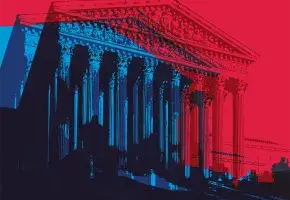
Stylized illustration of the Supreme Court building. There are three transparent images of the building on top of one another in light blue, dark blue, and dark red. The background of the illustration is a bright red.
Bulletin
|
Feb 20, 2024

New Academy Publication Makes the Case for Supreme Court Term Limits

A bipartisan Academy Commission recommended eighteen-year terms for Supreme Court justices to “help move the Court toward a less partisan future, restoring its legitimacy as an independent arbiter of justice.” The idea from Our Common Purpose is detailed further in a subsequent publication.
Press Release
|
Apr 25, 2012

Promoting strategies for U.S. energy policy: New Dædalus emphasizes local over global approaches

Three forces will fundamentally shape America’s energy future: climate change, national security, and global competition. A more effective national energy policy could better respond to these challenges by encouraging the adoption of new technologies and more realistic pricing models, according to contributors to the Spring 2012 issue of Dædalus, Journal of the American Academy.
Press Release
|
Oct 15, 2012

Understanding and Measuring Public Opinion

In news stories and political commentary, we hear daily about measures of public opinion. But why, exactly, does public opinion matter? How is it shaped, and to what extent does it influence public policy? These questions are explored in the Fall 2012 issue of Dædalus. Guest-edited by Lee Epstein, professor of law and political science at the University of Southern California, the volume features eight essays by political scientists, legal scholars, and public policy experts.
Press Release
|
Apr 24, 2017

Key Business, Science, and University Leaders Report Some Progress, But Much More Needs to be Done On Innovation

Organizers of 2015 “Innovation: An American Imperative” Issue Progress Report Detailing Path Congress & Administration Must Take To Ensure U.S. Remains Global Innovation Leader
Academy Article
|
Oct 4, 2023

An Announcement from David Oxtoby

In October 2023, Academy President David Oxtoby announced his decision to step down as president of the Academy in June 2024, after more than five years of service.
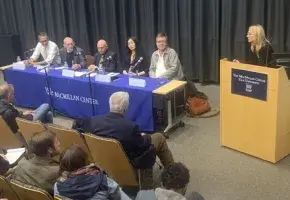
Seated from left: Samuel Kortum, Paul Kennedy, Ian Shapiro, Jing Tsu, and Arne Westad. Frances Rosenbluth moderated the discussion from the podium.
In the News
|
Nov 14, 2019

Fixing a broken global order: Is it too late?

On November 7, esteemed panelists Samuel Kortum, Paul Kennedy, Ian Shapiro, Jing Tsu, and Arne Westad were tasked with answering two monumental questions: can we fix the broken global order, and if so, how? Frances McCall Rosenbluth moderated the event, organized by the Academy's New Haven Program Committee.
Source
Yale MacMillan Center
In the News
|
Mar 22, 2019

The Humanities and the Future

Academy member Abraham Loeb connects the future of technological innovation to the lessons of the humanities, citing Academy report "The Heart of the Matter."
Source
Scientific American
Press Release
|
Sep 30, 2015

American Academy of Arts and Sciences “The Lincoln Project” Examines Changes in State Financing of Higher Education

Review of challenges faced by state governments will inform recommendations in support of public higher education.
Bulletin
|
Feb 10, 2020

The Academy & Its Future

For 240 years, the nation has looked to the American Academy of Arts and Sciences to offer wisdom and insight into the most profound issues of the time. In 1780, that was the formation of a free republic. In the 1850s, it was understanding the changing natural environment through the theory of evolution. In 1960, it was the creation and exploration of a field called arms control – in fact, the Academy coined that term. Today, it includes such questions as how we can sustain the dream of American democracy in the face of widening divides; and how as citizens of our planet we can respond to environmental change and its implications for migration, conflict, public health, and natural resources in order to provide for a more promising global future.
Bulletin
|
May 1, 2020

The Academy & Its Future

For 240 years, the nation has looked to the American Academy of Arts and Sciences to offer wisdom and insight into the most profound issues of the time. In 1780, that was the formation of a free republic. In the 1850s, it was understanding the changing natural environment through the theory of evolution. In 1960, it was the creation and exploration of a field called arms control – in fact, the Academy coined that term. Today, it includes such questions as how we can sustain the dream of American democracy in the face of widening divides; and how as citizens of our planet we can respond to environmental change and its implications for migration, conflict, public health, and natural resources in order to provide for a more promising global future.
Bulletin
|
May 3, 2021

The Academy & Its Future

A $100 Million Campaign for the American Academy of Arts & Sciences
Bulletin
|
Mar 1, 2023

Noteworthy

SELECT PRIZES AND AWARDS TO MEMBERS
Bulletin
|
May 20, 2025

The Hellman and Simons Fellowship in Science and Technology Policy

The American Academy of Arts and Sciences is pleased to announce the creation of a new endowed fund to support its premier fellowship program in science-related policy. Previously named the Hellman Fellowship in Science and Technology Policy, the rebranded program will now be known as the Hellman and Simons Fellowship in Science and Technology Policy. The new name reflects the contributions of two families, the Hellman Family on the West Coast and the Simons Family on the East Coast, with strong philanthropic ties to the Academy and longstanding commitments to the critical importance of basic and academic science research in America.
Bulletin
|
Aug 20, 2015

Causes of Campus Calm: Scaling China's Ivory Tower

Elizabeth J. Perry explains the means by which the Chinese Communist party-state maintains campus calm, despite the many unpopular and potentially unsettling higher education reforms.
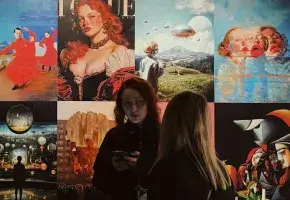
Two women talking against a collage grid of images.
Academy Article
|
Aug 18, 2025

Questions of Creativity and AI-Generated Art

The connection between humans and creativity can be altered dramatically by the advancement of technology, specifically the power of artificial intelligence to generate art. This Academy discussion explored the implications of art produced using AI as it relates to authenticity, creativity, and joy.

Pagination

  • Previous page ←
  • 27 of 38
  • Next page →

136 Irving Street
Cambridge, MA 02138

617-576-5000

VEHICLE ENTRANCE

200 Beacon Street
Somerville, MA 02143

Main navigation

  • Our Work
  • Members
  • News
  • Events
  • Get Involved
  • About

Footer

  • Daedalus
  • Login
  • Archives
  • Give
  • Careers
  • Contact
  • Private Events

Social Media

  • Facebook
  • LinkedIn
  • YouTube
© 2026

American Academy of Arts & Sciences  |  Web Policy