Science during crisis has distinctive requirements. A rich literature and extensive practical experience in preparing for crises exist, but strategic deployment of scientific expertise and application of scientific information during crisis events must be improved and enhanced.
On November 28, 2017, at the Century Association in New York City, Vartan Gregorian, Gail O. Mellow, Michael S. McPherson, and Nicholas Lemann participated in a discussion about new opportunities for U.S. undergraduate education.
Immigration is not only where the people come from, and why they come, and whether they are forced to come; it's also how and, in the long run, whether they are received.
The Academy’s New Haven Program Committee, in partnership with Yale University’s MacMillan Center, hosted a conversation on national and international policies for slowing global warming that featured William Nordhaus (Yale University), recipient of the 2018 Nobel Prize in Economic Sciences. The program included remarks from Pinelopi Goldberg (Yale University; formerly, The World Bank Group) and Scott Barrett (Columbia University) as well as introductions from Steven Wilkinson (Yale University) and David Oxtoby (American Academy of Arts & Sciences).
William Labov is regarded as the founder of variationist sociolinguistics, a discipline dedicated to understanding and researching language in relation to social factors that include region, class, and gender. Dr. Labov has worked to promote literacy for speakers of nonstandard dialects and to develop reading and teaching materials for these populations.
A new report from the Commission on the Arts - Art for Life’s Sake: The Case for Arts Education - sets forth recommendations to reverse the persistent decline in access to arts education in America. The report offers local, state, and national elected leaders recommendations in six areas, including elevating the arts, ensuring equitable access, and supporting educators.
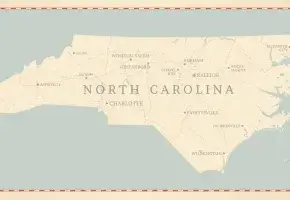
A challenge facing the United States is how to combine the good and bad of our history into shared narratives. Telling Our Nation’s Story, one of the recommendations of the Academy’s Commission on the Practice of Democratic Citizenship, calls for communities to work toward a common narrative by engaging in honest conversations about the past in order to reckon with what divides us while uncovering what unites us. Participants in this virtual program brought a regional approach to a conversation across the Research Triangle.
Allen S. Weiner, Neta C. Crawford, Jennifer Leaning, and Gabriella Blum participated in a discussion of the war on terror and whether conflicts with non-state actors can be fought in a just way.
On October 17, 2023, Dava Newman (Director of the MIT Media Lab and former NASA Deputy Administrator) spoke about the MIT Media Lab’s work and the use of vast amounts of data collected by satellites to inform and motivate the public for the fight against climate change. The program included welcoming remarks by Academy President David W. Oxtoby. An edited and condensed version of Dr. Newman’s presentation follows.
On September 17, 2015, at the Silver Center of Arts and Science at New York University, Matthew S. Santirocco moderated a panel discussion featuring Kevin Guthrie, Daphne Koller, and Nicholas Lemann.
The 2015 Induction Ceremony included presentations by five new members: Phil S. Baran, Patricia Smith Churchland, Roland G. Fryer, Jr., Sally Haslanger, and Darren Walker.
Saving democracy might require mandatory voting — and Massachusetts can lead the way. Miles Rapoport, of the Academy's Commission on the Practice of Democratic Citizenship, and Alex Keyssar make the case for universal voting.
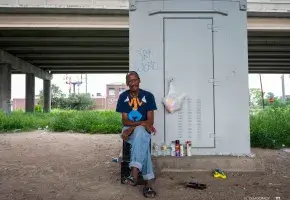
The Commission on Reimagining Our Economy is working on a photojournal with the work of four photographers capturing what it looks like to try to get by in the United States today for Americans earning around the national median income ($70,784 for a household in 2021).