Jennifer Rubin of the Washington Post presents the recommendations in “Our Common Purpose” on social media and disinformation as key to restoring American democracy.
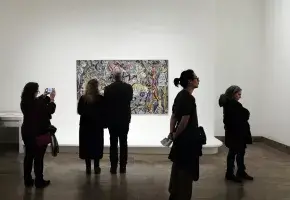
In updates released this morning, the American Academy's Humanities Indicators report that visits to historic sites, museums, and art galleries are on the rise in recent years.
In collaboration with the Ash Center at the Harvard Kennedy School, the Academy hosted a discussion on “Redistricting and Representation,” which included presentations by Gary King, Jamal Greene, and Moon Duchin. Chief Judge Patti Saris moderated the program.
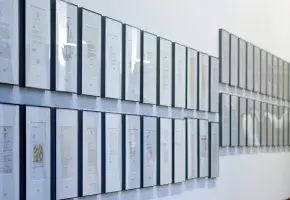
Since the Academy was established, newly elected members have written letters of acceptance, from George Washington in 1781 to the newest members elected in 2020. In May, the Academy started asking members to share how they were experiencing the pandemic. Then came the murder of George Floyd, which galvanized protests for racial justice across the country. Subsequent reflections included thoughts about pervasive injustice and what it means to face and address racism in our country.
On October 11, 2014, the American Academy inducted its 234th class of Fellows and Foreign Honorary Members. The ceremony included presentations by new Fellows Ramamurti Shankar, Diana H. Wall, Sherry Turkle, Mary Kelley, and John W. Rogers, Jr.
William Labov is regarded as the founder of variationist sociolinguistics, a discipline dedicated to understanding and researching language in relation to social factors that include region, class, and gender. Dr. Labov has worked to promote literacy for speakers of nonstandard dialects and to develop reading and teaching materials for these populations.
Geoffrey R. Stone moderated a conversation with journalist Judith Miller, Judge Richard A. Posner, and author Gabriel Schoenfeld about the balance between freedom of the press and national security. Each panelist offered his or her perspective on bridging legal and ethical issues.