On February 6, 2018, Annette Gordon-Reed and Peter S. Onuf participated in a discussion on Jefferson, race, and democracy, drawing from their recent book, “Most Blessed of the Patriarchs”: Thomas Jefferson and the Empire of the Imagination.
The Academy, in collaboration with the Center for Academic Research and Training in Anthropogeny (CARTA), hosted the Morton L. Mandel Public Lecture on “How Are Humans Different from Other Great Apes?” featuring Ajit P. Varki, Pascal Gagneux, Fred H. Gage, and Margaret J. Schoeninger.
There is no resource more central to life on Earth than water, and it is impossible to overstate its role in shaping human history. Humanity’s need for water is inextricably linked to its need for security, energy, food, and community. The Summer 2015 issue of Dædalus moves beyond the problems and failures.
The closing program of the Academy’s 2025 Induction weekend featured a presentation by new member David Dunning on the psychology of overconfidence and its influence on decision-making, followed by a conversation with Academy President Laurie L. Patton. An edited transcript of the presentation and conversation follows.
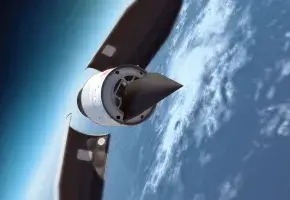
We have entered a new nuclear era. The Cold War world dominated by only two nuclear superpowers no longer exists (even if Russia and the United States still possess the lion’s share of nuclear weapons); it has grown into a multipolar nuclear environment.
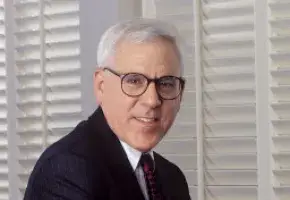
The American Academy of Arts & Sciences receives a $10 million gift from David Rubenstein. This is the largest gift in the organization's 241-year history and will support a new facility for the Academy Archives and establish the Rubenstein Fund for American Institutions.
In my previous message, I discussed how – despite the challenges of the pandemic – our community of members has remained active and engaged in the life of the Academy. During the past year, our virtual events reached more audiences in more places than ever before. Our project work continued unabated, including the release of Our Common Purpose: Reinventing American Democracy for the 21st Century and the development of new major projects on climate change and inequality. And despite great uncertainty, our members came together to produce a record-breaking fundraising year.
The Academy’s Archives preserve letters of acceptance submitted by new members. A gallery of letters from women accepted to the Academy has been prepared for Women’s History Month.
Guest essay in the New York Times by Katherine J. Cramer and Jonathan D. Cohen shares insights from the Academy's Commission on Reimagining Our Economy to help explain the disconnect between positive standard economic indicators and the negative views Americans have of the economy.
On April 1, 2019, the American Academy and the Whitney and Betty MacMillan Center for International and Area Studies at Yale presented their first joint public program, which featured a conversation between David Blight and Robert Stepto. The program, which served as the Academy’s Morton L. Mandel Public Lecture, included a welcome from Ian Shapiro. Crystal Feimster moderated the program.
A new book from the American Academy of Arts and Sciences, examines the impact of providing high-quality education to every child in the world between the ages of 6 and 16.
Jeffrey G. Lewis and Scott D. Sagan published an op-ed adapted from their Daedalus article "The Nuclear Necessity Principle: Making U.S. Targeting Policy Conform with Ethics & the Laws of War."
An article and embedded video exploring what the Commission on Reimagining Our Economy learned from listening sessions in Indian Country, which Commission recommendations would have the greatest impact on tribal nations, and the unique economic challenges and opportunities facing Indian Country.