The Academy, in collaboration with the Center for Academic Research and Training in Anthropogeny (CARTA), hosted the Morton L. Mandel Public Lecture on “How Are Humans Different from Other Great Apes?” featuring Ajit P. Varki, Pascal Gagneux, Fred H. Gage, and Margaret J. Schoeninger.
On January 29, 2026, the Academy’s San Diego Committee, in partnership with the San Diego Natural History Museum, organized a discussion on the importance of science in our everyday lives and its impact on our future. The program featured Rommie Amaro (University of California, San Diego) and J. Craig Venter (J. Craig Venter Institute) in conversation with Peter Cowhey (University of California, San Diego). Judy Gradwohl (San Diego Natural History Museum) and M. Margaret McKeown (U.S. Court of Appeals for the Ninth Circuit) provided welcome remarks. An edited transcript of the program follows.
When forced to decide between a career in biochemistry or psychology in the spring of 1950, Jerome Kagan chose the latter because of a gnawing puzzlement provoked by the observation that apparently sane people living in the same community held different beliefs about love, honesty, and whom was entitled to respect and whom to scorn.
On December 4, 2015, at the Georgetown University Law Center, the Academy hosted a panel discussion on “The Crisis in Legal Education” with Louis Michael Seidman, Robert A. Katzmann, Philip G. Schrag, Robin L. West, and Patricia D. White.
Black World War II veterans were denied the housing and education benefits of the 1944 G.I. Bill. An article in The New Republic endorses and explores legislation and a recommendation in the report from the Commission on Reimagining Our Economy, championed by Commission member Cornell Brooks, to extend those benefits to the direct descendants of those G.I.'s.
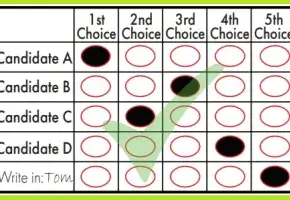
One of the recommendations for strengthening American democracy proposed in Our Common Purpose - the report of a bipartisan Academy commission - is to enact ranked-choice voting (RCV) for presidential, congressional, and state elections. This article examines legislative progress at the federal, state, and local levels concerning ranked-choice voting.
The Academy hosted a discussion about pressing issues facing the world in 2025. The event featured Kwame Anthony Appiah (New York University), Michael Froman (Council on Foreign Relations), and Adam Tooze (Columbia University) in conversation with Anne-Marie Slaughter (New America). Academy President Laurie L. Patton delivered the opening remarks. Transcript and video online.
"The Privileged Poor," authored by Tony Jack and debuted at the American Academy, documents the challenges facing low-income students and offers policy recommendations for schools.
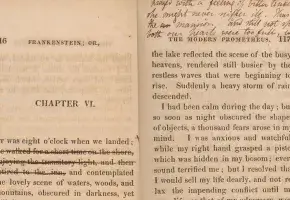
The Winter 2021 issue of Dædalus “On the Novel,” guest-edited by Michael Wood, features fourteen essays, written by scholars with a variety of approaches and interests, that offer remarkable insights into the behavior of this versatile literary form.
The framers of the U.S. Constitution intended the House of Representatives to be “the People’s House.” For decades, the House grew as the nation grew. Then, in 1929, Congress capped the size of the House at 435 seats. A new Academy report assesses the impacts and alternatives with a proposal for enlarging the House now.
While many discussions in America are now focused on accountability versus unity, a concept that belongs in conversations about how America can recover from a divisive election, devastating pandemic, and long history of racial injustice is empathy. At a virtual Stated Meeting, Sherry Turkle (MIT) and Eric Liu (Citizen University) joined Academy President David Oxtoby in a conversation about what empathy looks like in an increasingly digital world, the search for authentic connections at a time of isolation and disunion, and the role authentic connection can play in repairing our civic culture.
“The bottom line is that despite the profound global threat of pandemics, there remains no global health mechanism to force parties to act in accordance with global health interests,” write Paul Wise and Michele Barry in the Fall 2017 issue of Daedalus.
Given growing national attention to community colleges—particularly to the professional and vocational training they provide—the Humanities Indicators convened 22 experts to discuss how to measure the state of the humanities in this sector.