There are many rights that Americans living in poverty can’t access simply because they can’t afford a lawyer. This includes rights in housing, veterans’ benefits, disability access and many other areas of our civil justice system. This is called the access to justice gap, and it’s one of the most urgent — and under-discussed — civil rights issues of our time.
How do younger scholars think about new nuclear challenges? The Project on Nuclear Issues at the Center for Strategic and International Studies invited early- and mid-career experts to share their thoughts on the Academy publication The Fragile Balance of Terror.
Civic science literacy is key to our democracy, and the current science literacy of American citizens is a concern to many scientists and scientific leaders. An Academy event on “Communicating Science in an Age of Disbelief in Experts” shed light on the growing gap between the scientific community and civilians.
Immigration is not only where the people come from, and why they come, and whether they are forced to come; it's also how and, in the long run, whether they are received.
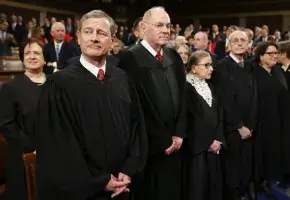
In this Washington Post column, Danielle Allen - who cochaired the Academy's Commission on the Practice of Democratic Citizenship - proposes that Supreme Court justices "take it upon themselves" to establish term limits, which is a modified approach to a recommendation in the Our Common Purpose report.
It is my pleasure to present this edition of the Annual Report of the American Academy of Arts and Sciences, the first since I officially began my term as president in January 2025. I would like to begin by expressing my sincere gratitude to the hundreds of members whom I have had the opportunity to meet and learn from this year.
While congressional leaders and policymakers explore the possible expansion of space-based military operations, a technical understanding of what is possible and at what cost remains unclear to many in the debate.
A wide-ranging survey of humanities departments shows that prior to the pandemic, departments in most humanities disciplines appeared relatively unchanged since the Great Recession, with the exception of declines in undergraduate degrees.
The American Academy of Arts & Sciences has released a publication designed to help colleges and universities address a defining academic and societal challenge: preparing young people today with the knowledge, skills, and habits to sustain a healthy constitutional democracy. Preparing Students for Civic Life: A Guide for Higher Education Leaders includes strategies and case studies.
The Fall 2020 issue of Dædalus on “Witnessing Climate Change” features sixteen personal narratives about climate-related work by professionals from multiple fields, backgrounds, and generations who feel a responsibility to share what they know and take action.
In "The Tyranny of Merit: What’s Become of the Common Good?" Michael J. Sandel argues that the divide between winners and losers has poisoned our politics and pulled us apart. The problem, he contends, is not only that we have failed to live up to the meritocratic ideals we profess, but that a meritocratic society is a flawed aspiration. It produces hubris among the successful and humiliation among those left behind. In the first virtual Stated Meeting in the history of the Academy, Michael J. Sandel joined T. J. Jackson Lears and Anna Deavere Smith in a conversation about his new book and the destructive consequences of linking socioeconomic status with personal worth.
Targeted programs and policies to support early-career investigators and high-risk, high-reward research are needed to preserve U.S. leadership in science and technology.
Academy member and Indiana University President Michael McRobbie urges institutions to expand their language offerings and enhance global awareness, citing Academy report on "America's Languages."
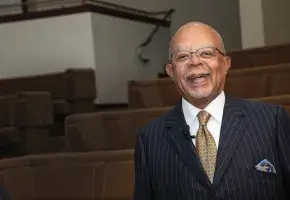
On April 1, 2022, the Academy presented Henry Louis Gates, Jr. with the Don M. Randel Award for Humanistic Studies in recognition of his groundbreaking work as a scholar and public intellectual. The program, which was the Annual David M. Rubenstein Lecture, included remarks by Academy President David Oxtoby, the presentation of the award by Chair of the Academy’s Board Nancy C. Andrews, and a conversation between Gates and David M. Rubenstein. An edited version of the presentations and conversation follows.
Building on America’s 250-year-old commitment to knowledge, the American Academy of Arts & Sciences announces the leaders in academia, the arts, industry, journalism, philanthropy, policy, research, and science elected in 2026.
The Winter 2014 issue of Dædalus suggests humanists help us better understand ourselves and the world around us. Through analysis and personal reflection, the contributors to the issue demonstrate how the humanities improve our humanity.
In a new release today, the Humanities Indicators reports on substantial declines in the number of bachelor’s degrees conferred in the field. NCA Director Trevor Parry-Giles responds.