At a time when national and international leaders were involved in a debate over restraints on chemical and biological weapons, the Academy, with the Salk Institute, organized a conference to illuminate the most important public policy issues raised by the existence of chemical and biological weapons.
This project brought together experts from education, law, statistics, economics, policy studies, and business to assess how critical thinking is taught and to propose ways to strengthen these skills.
This multi-pronged project examined shifts in the boundaries between the internal affairs of member states whose sovereignty is protected by the United Nations Charter and those matters which the U.N. and other international organizations deem to be within their cognizance.
This Academy-organized symposium brought together more than 30 scientists, scholars and public officials, from developed and developing nations, to discuss how social values do and should influence technology choice by nations and by groups of nations.
The Academy convened a series of meetings in 2000 and 2001 to reflect on the social implications of new technologies. During those sessions, participants discussed the risks and benefits of revolutionary advances not only in genetics but also in nanotechnology and robotics.
The Academy convened a group of academics and business leaders to explore the potential for and limits of an expanded role for corporations in addressing unmet social needs. The resulting study illuminated the complicated and controversial issues that arise from public-private collaboration.
Human diversity is an enormous cultural and biological resource and a source of social and political tension. The Academy convened a group of scholars to address the controversy over the relative roles of genetics and environment in determining human capacities and behavior.
As a member of the U.S. National Commission for UNESCO, the Academy formed a special committee to examine, and consider Academy action in response to, the “politicization” of UNESCO.
This project investigated the function and historical role of learned societies in advancing research and stimulating communication about scientific and scholarly ideas, not only within the intellectual community but among segments of the larger society.
This project responded to growing concern over new developments in the Soviet-American nuclear competition. The Academy convened a conference to examine the emerging belief that the present second-strike, and thus deterrent, capabilities of missile-carrying nuclear submarines could be eroded by technological advances in strategic antisubmarine warfare.
The Academy sponsored a conference on genetic engineering, examining both the risks and possible benefits. The resulting volume of papers concentrates on the scientific principles required to understand the issues that lie at the core of public concern and, therefore, of policy development.
The increased role of women in science in this country was the result of the convergence of two trends: the growth in higher education and expanded employment for middle-class women on the one hand, and the growth, bureaucratization and professionalization of science and technology, on the other.
This study examined the global security implications of expanding commercial and military uses of space, and considered international rules and principles needed to maintain a balanced use of space over the long term.
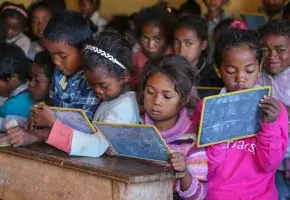
This study investigated the rationale, the means, and the consequences of providing high-quality primary and secondary education to all the world's children.
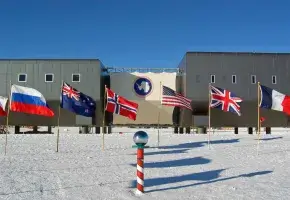
Challenges for International Scientific Partnerships aimed to articulate the benefits of international collaboration and recommend solutions to the most pressing challenges associated with the design and operation of partnerships. This initiative sought to identify policy recommendations and best practices to mitigate challenges for international science collaborations, including physical facilities, distributed networks, and peer-to-peer partnerships.
The Alternative Energy Future project examines how to facilitate the adoption of cleaner and more efficient energy technologies using knowledge from the social and behavioral sciences.
In advance of the Academy’s 250th anniversary in 2030, the Academy is developing a book illuminating the organization’s history. The publication will examine where the Academy has fallen short of its goals to advance the common good and where it has excelled, and what it has meant for the nation it was created to serve.