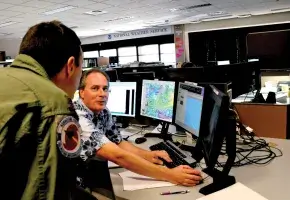
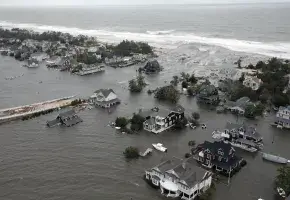
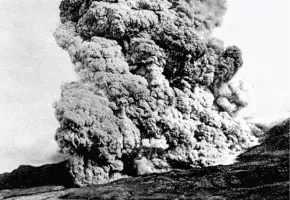
Weather and climate disasters – along with natural hazards, such as earthquakes, public health crises, and human-caused contaminant spills – threaten human lives and pose challenges to relief efforts, to the restoration of ecosystems, and to the rebuilding of communities. Science plays an important role in response and recovery and can contribute immensely to disaster prevention.
Science during crisis has distinctive requirements. A rich literature and extensive practical experience in preparing for crises exist, but strategic deployment of scientific expertise and application of scientific information during crisis events must be improved and enhanced.
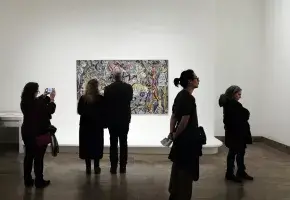
In updates released this morning, the American Academy's Humanities Indicators report that visits to historic sites, museums, and art galleries are on the rise in recent years.
In the latest publication from the Academy's Public Face of Science initiative, coauthors Rita Colwell and Gary Machlis offer insights and recommendations to increase the role of scientists in times of disaster that will result in better individual and institutional decisions.
“More people worldwide are being displaced from their homes for longer periods than ever before,” noted David Miliband, president and chief executive officer of the International Rescue Committee, at a gathering of Academy members and guests at the inaugural Jonathan F. Fanton Lecture in New York. Miliband, one of the foremost advocates for refugees and a leader in responses to global humanitarian and human rights crises, described the causes of today’s global refugee crisis and offered solutions, both simple and effective.
"Science During Crisis" coauthors Rita Colwell and Gary Machlis show how science plays a critical role in responding to crises, informing and guiding decisions governing disaster response and recovery.
Miranda Restovic and Sarah DeBacher of the Louisiana Endowment for the Humanities describes their organization’s efforts to bring rich, humanities-focused educational experiences to preschoolers, thereby expanding the traditional understanding of what a humanities organization does—and for whom.
An Archives feature published in the Winter 2022 Bulletin recounted the accidental discovery of a broadside advertising the Marquis de Lafayette’s 1824–1825 U.S. tour. Previously unknown to Academy staff, the broadside had been found hidden behind another framed engraving and was accessioned into the Academy’s collections in recognition of Lafayette’s status as a Foreign Honorary Member, elected in 1785.
While much of the discussion about the state of the humanities tends to focus on the declining number of students majoring in the humanities, the health of the field relies on a much wider array of practices. The American Academy’s Humanities Indicators project has been exploring this wider frame of humanities activity by compiling data from federal sources and conducting the first national survey about the health of the field.
A growing numbers of parents are either delaying or selectively administering immunizations – or choosing not to vaccinate their children at all. A new Academy report makes clear that reversing this trend requires dedicated research on how vaccine decisions are made and the best ways to communicate factual information to vaccine-hesitant parents.
What challenges confront twenty-first-century China, and how might their resolution influence the country’s (and indeed the world’s) trajectory? The Spring 2014 issue of Dædalus considers China’s problems as the growing pains of a still developing country, not necessarily as the death pangs of a Communist state doomed to imminent extinction.
On December 4, 2015, at the Georgetown University Law Center, the Academy hosted a panel discussion on “The Crisis in Legal Education” with Louis Michael Seidman, Robert A. Katzmann, Philip G. Schrag, Robin L. West, and Patricia D. White.