Highlights Include Readings by Academy Award-winning Actor Sally Field and Emmy Award-winning Filmmaker Ken Burns and a Performance by Internationally Renowned Jazz Musician Herbie Hancock
"Science During Crisis" coauthors Rita Colwell and Gary Machlis show how science plays a critical role in responding to crises, informing and guiding decisions governing disaster response and recovery.
Drawing largely on original research using federal data sets and the Gallup-Purdue Index survey of college alumni, the new report from the Humanities Indicators finds that college graduates with degrees from fields with below-average earnings are quite similar to graduates from other fields with respect to their perceived well-being.
The Academy hosted a meeting at the University of Chicago on the benefits and risks of nuclear, biological, and information technologies. The speakers included Robert Rosner, James M. Acton, Elisa D. Harris, and Herbert Lin.
Grants will support the Academy’s Humanities Indicators (www.HumanitiesIndicators.org), the first comprehensive collection of statistical data about the humanities in the United States.
Institutions are critical to our personal and societal well-being. They facilitate relationships; they regulate behavior. They develop and disseminate knowledge, enforce the law, keep us healthy, and uphold social and religious norms.
What challenges confront twenty-first-century China, and how might their resolution influence the country’s (and indeed the world’s) trajectory? The Spring 2014 issue of Dædalus considers China’s problems as the growing pains of a still developing country, not necessarily as the death pangs of a Communist state doomed to imminent extinction.
Economist and Academy member Daron Acemoglu received the 2024 Nobel Prize in Economics for groundbreaking work that illuminates how institutions shape economies. Acemoglu was a vital contributor to the Academy's Commission on Reimagining Our Economy, a cross-disciplinary effort to understand and improve the economy for the people who make it work.
The Academy awarded the 2020 Emerson-Thoreau Medal to Margaret Atwood for her distinguished achievement in the field of literature. The virtual award ceremony included remarks by Academy President David Oxtoby; a video message from The Honorable Chrystia Freeland, Deputy Prime Minister of Canada and Minister of Finance; and a reading of the Emerson-Thoreau Medal citation by Chair of the Academy’s Board Nancy C. Andrews. Following the presentation of the medal, Margaret Atwood delivered brief acceptance remarks and then joined author Gish Jen in a conversation.
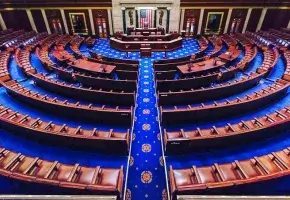
A publication, The Case for Enlarging the House of Representatives, proposes adding 150 seats to the House of Representatives, followed by regular expansion. Enlarging the House will help restore the connection between the people and “the people’s house” as envisioned by the nation’s founders.
On March 30, 2025, the Academy’s Chicago Committee hosted an event for members and guests that explored the role of cultural organizations and the communities they serve. The program featured Leah A. Dickerman (The Museum of Modern Art) and Oskar Eustis (The Public Theater) in conversation with Academy President Laurie L. Patton. An edited transcript of the program follows.
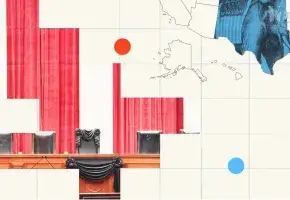
Among the 31 recommendations in the Academy's cross-partisan publication, Our Common Purpose, was a proposal to enlarge the House of Representatives to ensure better and more responsive representation for Americans across the country. The idea was explored in a "Vox, America Explained" video which featured the Academy's work.
The framers of the U.S. Constitution intended the House of Representatives to be “the People’s House.” For decades, the House grew as the nation grew. Then, in 1929, Congress capped the size of the House at 435 seats. A new Academy report assesses the impacts and alternatives with a proposal for enlarging the House now.
The visual image that most people have of the Dead Sea Scrolls is likely of one of the beautifully preserved manuscripts stored in stone jars, discovered in the hill caves of Jordan in the late 1940s. Unfortunately, only a handful of the scrolls were preserved in this way.
News about Academy events and projects, including the Commission on the Humanities and Social Sciences and the Global Nuclear Future initiative, as well as new research and publications.