Utility navigation

  • Dædalus
  • Archives
  • Give
  • Login

Main navigation

  • Our Work
    • Explore by Topic
      • Arts & Humanities
      • Democracy & Justice
      • Education
      • Energy & Environment
      • Global Affairs
      • Science & Technology
    • View
      • Projects
      • Publications
  • Members
  • News
  • Events
  • Get Involved
  • About

Main navigation

  • Our Work
    • Explore by Topic
      • Arts & Humanities
      • Democracy & Justice
      • Education
      • Energy & Environment
      • Global Affairs
      • Science & Technology
    • View
      • Projects
      • Publications
  • Members
    • Member Directory
    • Magazine: The Bulletin
    • Local Committees
  • News
  • Events
  • Get Involved
  • About
    • Governance
      • Board of Directors
      • Council
      • Trust
      • Committees
      • President
    • Staff
    • Affiliates
    • Prizes
      • Amory
      • Distinguished Leadership
      • Don M. Randel Humanistic Studies
      • Emerson-Thoreau
      • Excellence in Public Policy
      • Founders
      • Rumford
      • Sarton History of Science
      • Sarton Poetry
      • Scholar-Patriot
      • Talcott Parsons
    • Fellowships
    • Location
    • History
    • Advisors
      • Education
      • The Humanities, Arts, and Culture
      • Science, Engineering, and Technology

Footer

  • Daedalus
  • Login
  • Archives
  • Give
  • Careers
  • Contact
  • Private Events

136 Irving Street
Cambridge, MA 02138

Social Media

  • Facebook
  • LinkedIn
  • YouTube
Search results for

“WA 0859 3970 0884 RAB Pembuatan Pintu Ruko Terbaru Terpercaya Banyudono Boyolali”

Search

  • All (1790)
  • Events (21)
  • (-) News (383)
  • People (544)
  • Projects (15)
  • Publications (827)
Bulletin
|
Aug 22, 2016

Managing the Benefits and Risks of Nuclear, Biological, and Information Technologies

The Academy hosted a meeting at the University of Chicago on the benefits and risks of nuclear, biological, and information technologies. The speakers included Robert Rosner, James M. Acton, Elisa D. Harris, and Herbert Lin.
Bulletin
|
Jan 1, 2012

Two Systems in the Mind

In the News
|
Jul 16, 2017

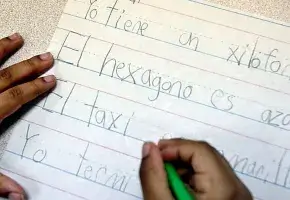
Reverse the decline in language education

While the world’s economy is increasingly global, fewer American students are studying how to speak a language other than English. That’s a backward slide that hurts the nation’s ability to compete economically and diminishes the overall quality of a typical American education. Citing Academy report on "America's Languages," the editorial board of the News & Observer makes the case for improving foreign language instruction.
Source
The News & Observer
Press Release
|
Apr 22, 2015

American Academy of Arts & Sciences Elects National and International Scholars, Artists, Philanthropists, and Business and Civic Leaders

The 2015 class includes Pulitzer Prize-winner Holland Cotter, singer-songwriter Judy Collins, Nike co-founder Philip Knight, Nobel Prize-winner Brian Kobilka, Tony Award-winner Audra McDonald, astrophysicist Neil deGrasse Tyson, and novelist Tom Wolfe.
Bulletin
|
Feb 10, 2020

Humanities Indicators Project Explores the Public Humanities

While much of the discussion about the state of the humanities tends to focus on the declining number of students majoring in the humanities, the health of the field relies on a much wider array of practices. The American Academy’s Humanities Indicators project has been exploring this wider frame of humanities activity by compiling data from federal sources and conducting the first national survey about the health of the field.
Academy Article
|
Apr 13, 2021

Two Essays, One International Nuclear Future

A new publication from the American Academy of Arts & Sciences and the Russian Academy of Sciences is released. Its purpose is to inform policymakers who will shape the relative safety or danger of the future international nuclear environment.
Press Release
|
Mar 2, 2012

Major foundations provide $1 million to support American Academy’s Global Nuclear Future Initiative

Three of the country’s leading philanthropic organizations are supporting the American Academy of Arts & Sciences in its goal to ensure safety and security amid the anticipated expansion of nuclear energy around the world.
In the News
|
Nov 14, 2023

How Do Humanities Majors Fare in the Work Force?

Audrey Williams June explores key findings from a recent Humanities Indicators report, which shows that college graduates who major in humanities outearn people with no degree and earn similar median salaries as those who major in behavioral or social sciences, arts, or education.
Source
The Chronicle of Higher Education
Data Forum
|
Mar 3, 2015

Danger Signs for the Academic Job Market in Humanities?

In an effort to place the job advertisements in the broader context of the humanities field, staff members at the Humanities Indicators gathered up the numbers reported by the larger societies back to 2001.
Bulletin
|
Aug 20, 2015

Causes of Campus Calm: Scaling China's Ivory Tower

Elizabeth J. Perry explains the means by which the Chinese Communist party-state maintains campus calm, despite the many unpopular and potentially unsettling higher education reforms.
Bulletin
|
Dec 6, 2021

Science, Engineering & Technology

The Academy’s record of distinction in Science, Engineering, and Technology dates to its founding mission “to cultivate every art and science which may tend to advance the interest, honor, dignity, and happiness of a free, independent, and virtuous people.” Rather than generate new scientific research, the role of the Academy has been uniquely interdisciplinary, bridging the social sciences and arts with the physical sciences to support a national understanding, belief, and trust in science and discovery. Perhaps no better example of this can be found than in the mid-1800s when the Academy hosted hotly contested debates about a new scientific theory: the theory of evolution.
Bulletin
|
Feb 10, 2020

A Celebration of the Arts and Humanities

From visual arts to jazz, theater to poetry, the opening program of the Academy’s 2019 Induction weekend celebrated the arts and humanities. The event included a video featuring artist Mark Bradford; a performance by composer, pianist, and singer/songwriter Patricia Barber; remarks about the power and importance of the performing arts from theater director and scholar Harry J. Elam, Jr.; a reading by playwright Donald Margulies from his play Sight Unseen; and remarks and readings by poet, writer, and foundation leader Elizabeth Alexander.
Bulletin
|
May 1, 2020

The Global Refugee Crisis: What’s Next and What Can Be Done?

“More people worldwide are being displaced from their homes for longer periods than ever before,” noted David Miliband, president and chief executive officer of the International Rescue Committee, at a gathering of Academy members and guests at the inaugural Jonathan F. Fanton Lecture in New York. Miliband, one of the foremost advocates for refugees and a leader in responses to global humanitarian and human rights crises, described the causes of today’s global refugee crisis and offered solutions, both simple and effective.
Bulletin
|
Jul 31, 2024

Honoring Kwame Anthony Appiah

On April 18, 2024, Kwame Anthony Appiah received the Academy’s Don M. Randel Award for Humanistic Studies. Established in 1975 as the Award for Humanistic Studies and renamed in 2017 in honor of musicologist Don M. Randel, the award recognizes outstanding contributions to humanistic scholarship. The award ceremony included opening remarks from Academy President David W. Oxtoby, a reading of the prize citation by Henry Louis Gates, Jr., acceptance remarks from Professor Appiah, and a conversation between Professor Appiah and journalist Margaret Sullivan. An edited transcript of the program follows.
A man in a hard hat standing on parched earth is monitoring drought conditions.
Academy Article
|
Feb 16, 2026

Climate Change and Global Conflict: Insights from a Discussion

As climate-driven extreme weather events continue to impact communities around the globe, researchers and policymakers are growing more interested in understanding connections between climate change and conflict. An interdisciplinary Academy discussion on global conflict and climate resulted in points of agreement, areas of caution, and suggested topics for future exploration. 
Bulletin
|
Mar 24, 2016

Humanities Indicators Tracking the Field

Over the past year, the Humanities Indicators of the American Academy (http://humanitiesindicators.org) have been offering evidence for many of the urgent questions facing the humanities field.
Bulletin
|
Jun 1, 2016

From the President

Bulletin
|
Dec 9, 2020

Academy Publications

Academy Publications
Academy Article
|
Jul 15, 2019

New Evidence on Waning American Reading Habits

The American Academy's Humanities Indicators project provides new indicators on Americans' dwindling engagement with books, the types of texts they are reading, changing attitudes about censorship, and student reading proficiency.
Bulletin
|
Apr 1, 2014

SILA – The Competing Interests Shaping the Future of our Planet

Members of the Catalyst Collaborative@MIT performed a staged reading of Chantal Bilodeau’s play SILA. The reading was followed by a panel discussion with Naomi Oreskes, Robert L. Jaffe, and playwright Chantal Bilodeau about the competing interests shaping the future of our planet.

Pagination

  • Previous page ←
  • 10 of 20
  • Next page →

136 Irving Street
Cambridge, MA 02138

617-576-5000

VEHICLE ENTRANCE

200 Beacon Street
Somerville, MA 02143

Main navigation

  • Our Work
  • Members
  • News
  • Events
  • Get Involved
  • About

Footer

  • Daedalus
  • Login
  • Archives
  • Give
  • Careers
  • Contact
  • Private Events

Social Media

  • Facebook
  • LinkedIn
  • YouTube
© 2026

American Academy of Arts & Sciences  |  Web Policy