Utility navigation

  • Dædalus
  • Archives
  • Give
  • Login

Main navigation

  • Our Work
    • Explore by Topic
      • Arts & Humanities
      • Democracy & Justice
      • Education
      • Energy & Environment
      • Global Affairs
      • Science & Technology
    • View
      • Projects
      • Publications
  • Members
  • News
  • Events
  • Get Involved
  • About

Main navigation

  • Our Work
    • Explore by Topic
      • Arts & Humanities
      • Democracy & Justice
      • Education
      • Energy & Environment
      • Global Affairs
      • Science & Technology
    • View
      • Projects
      • Publications
  • Members
    • Member Directory
    • Magazine: The Bulletin
    • Local Committees
  • News
  • Events
  • Get Involved
  • About
    • Governance
      • Board of Directors
      • Council
      • Trust
      • Committees
      • President
    • Staff
    • Affiliates
    • Prizes
      • Amory
      • Distinguished Leadership
      • Don M. Randel Humanistic Studies
      • Emerson-Thoreau
      • Excellence in Public Policy
      • Founders
      • Rumford
      • Sarton History of Science
      • Sarton Poetry
      • Scholar-Patriot
      • Talcott Parsons
    • Fellowships
    • Location
    • History
    • Advisors
      • Education
      • The Humanities, Arts, and Culture
      • Science, Engineering, and Technology

Footer

  • Daedalus
  • Login
  • Archives
  • Give
  • Careers
  • Contact
  • Private Events

136 Irving Street
Cambridge, MA 02138

Social Media

  • Facebook
  • LinkedIn
  • YouTube
Search results for

“WA”

Search

  • All (22580)
  • Events (371)
  • (-) News (1934)
  • People (17906)
  • Projects (145)
  • Publications (2224)
Bulletin
|
Feb 10, 2022

Online

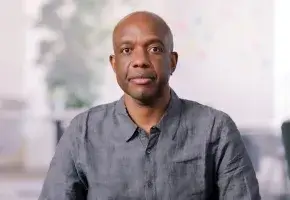
Terence Blanchard, a member of the Academy and of the Commission on the Arts, is a jazz trumpeter, bandleader, composer, and educator. His contribution to Mixtape – an online gallery of poems, stories, song, videos, and visual art – is an illustrated and illuminating video in which he shares the journey from his musical childhood to becoming the first Black composer presented on the Metropolitan Opera stage.
In the News
|
Mar 5, 2022

Are Video Games Like Novels?

Video games as interactive storytelling? Maybe not at first glance, but as Eric Hayot explains in his Daedalus essay, the interplay between game and narrative is real.
Source
JSTOR Daily
In the News
|
Feb 11, 2022

Fact-Based Courts, but What Facts?

U.S. courts operate as “informationally disabled” institutions that may lack (or intentionally exclude) important facts when making complex legal decisions. In his Dædalus essay, Frederick Schauer discusses why courts may not be suited to the task of “adequate factual determination.”
Source
JSTOR Daily
Poet dg nanouk okpik
Press Release
|
Apr 7, 2022

dg nanouk okpik Receives Poetry Prize

The American Academy of Arts & Sciences is awarding the May Sarton Award for Poetry to dg nanouk okpik in recognition of work that demonstrates both distinguished achievement and exceptional promise.
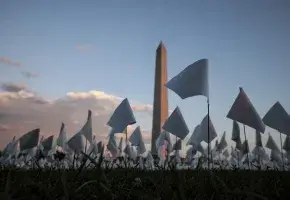
The “In America: Remember” public art installation in Washington, D.C., commemorated Americans who have died due to Covid-19. The installation, a concept by artist Suzanne Brennan Firstenberg, featured more than 650,000 small plastic flags planted in 20 acres of the National Mall.
In the News
|
Mar 25, 2022

How Artists Can Lead a Pandemic Recovery

Artists can help us emerge and heal from the global pandemic — but first we have to create more systems that support them and their work. Laura Zabel, member of the American Academy’s Commission on the Arts, explains how.
Source
Bloomberg CityLab
In the News
|
Apr 19, 2022

How to solve AI’s inequality problem

New digital technologies are exacerbating inequality. Citing authors and essays from the Academy’s latest issue of Dædalus on AI & Society, David Rotman examines how scientists creating AI can make better choices.
Source
MIT Technology Review
Press Release
|
Apr 28, 2022

American Academy of Arts & Sciences Announces New Members Elected in 2022

The Academy announces the election of 260 new members in 2022, which continues a tradition of recognizing accomplishments and leadership in academia, the arts, industry, public policy, and research.
In the News
|
Apr 29, 2022

Humanities Graduate Education Is Shrinking

A new report from the Humanities Indicators project finds that master’s degrees in humanities fields peaked in 2012 and Ph.Ds. three years later. There are no signs of a bounce back.
Source
Inside Higher Ed
Academy Article
|
May 11, 2022

A Convening on the Power of Civic Infrastructure: A Community Solution with National Potential

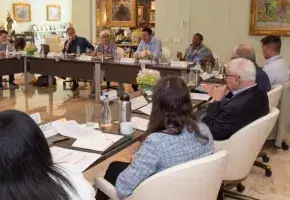
The Annenberg Foundation Trust at Sunnylands partnered with the American Academy of Arts & Sciences in May 2022 to host Strengthening American Democracy through Civic Investment, a historic effort to bring attention to the chronic underinvestment in the civic health of our nation’s communities and to mobilize resources to support the development of local civic infrastructure.
Press Release
|
May 16, 2022

The Humanities Retain a Substantial Role in the Nation’s High Schools

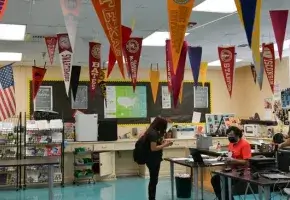
High school students continue to engage with the humanities (English, languages, and history) at a high rate, albeit with evidence of some troubling racial disparities, according to new findings from the American Academy of Arts & Sciences’ Humanities Indicators.
Rodin Eckenroth via Getty Images
In the News
|
May 18, 2022

High school students’ interest in humanities outpaces other subjects

Despite declining postsecondary interest, engagement is growing in K-12, according to analysis by the American Academy of Arts & Sciences’ Humanities Indicators project.
Source
K-12 Dive
In the News
|
May 15, 2022

Remaining monolingual is a surefire way for America to fall behind

The U.S. must make competence in foreign languages an urgent economic, national security, and educational priority. Glenn Altschuler and David Wippman argue for increased language instruction, citing the Academy report on America’s Languages.
Source
The Hill
In the News
|
May 23, 2022

Connecting Communities: Libraries as Invisible Infrastructure

Public libraries and their grounded, portable and invisible civic infrastructure give us another, better way to relate to ourselves and to each other — not only as consumers, but as citizens.
Source
NLC - National League of Cities
BULLETIN ISSUE

Spring 2022 Bulletin

Bulletin
|
Jun 3, 2022

Ways to Engage with the Academy

There are several ways members may be involved in the life and work of the Academy.
Bulletin
|
Jun 3, 2022

From the President

One of the most important and defining features of the Academy’s modern era is the journal Dædalus. In its first issue as a quarterly publication in Winter 1958, Editor Gerald Holton stated that the journal would be “a medium through which leading scholars in all fields can address one another.” Each issue would focus on a single theme or subject, encompassing over the long run the full range of scholarly interests: the humanities, the sciences, the social sciences, and public affairs. The rationale for Dædalus was to fill a void created by the success of specialization that made communication between members of different disciplines and fields increasingly difficult.
Bulletin
|
Jun 3, 2022

A Conversation with James Manyika on “AI & Society”

The Spring 2022 issue of Dædalus on “AI & Society,” guest edited by Academy member James Manyika, explores the many facets of AI: its technology, its potential futures, its effects on labor and the economy, its relationship with inequalities, its role in law and governance, its challenges to national security, and what it says about us as humans. What follows are a few additional remarks and insight from the volume’s guest editor on the collection.
forest floor fire image from iStock  ​
Bulletin
|
Jun 3, 2022

Communication to Spur Climate Action: A New Commission Gathers Information

On June 21, 2018, meteorologist Jeff Berardelli printed an image representing global temperature change onto a tie and wore it on a CBS broadcast. Other meteorologists followed his lead, and on the first day of summer every year since, broadcasters have used these ties and similar pins and necklaces to spark conversations about climate, policy solutions, and local environmental changes.
Bulletin
|
Jun 3, 2022

Strengthening International Cooperative Reponses to Pandemics

Wars and conflicts in the twenty-first century are putting tremendous strain on the strategies traditionally used by humanitarian responders to help those in need, particularly strategies that deliver effective health responses. Recent civil wars not only account for a larger proportion of ongoing conflicts, but they have become more protracted with more actors with fragmented affiliations. Some of the world’s deadliest places are not formally war zones but areas of extreme political and criminal violence, such as in Venezuela, Mexico, Guatemala, and El Salvador. Providing humanitarian aid amid urban warfare calls for strategies that are different from the ones used in rural settings, where humanitarians have commonly operated in the past. Ruthless deliberate attacks on hospitals, schools, and civilians, as well as sexual and gender-based violence, form part of many of these twenty-first-century conflicts. Humanitarian health workers and health facilities are at growing risk of attack as the normative and legal framework that has traditionally regulated war has become less protective. Geopolitical rivalry and perceptions of a weakening commitment to humanitarian norms are further undermining traditional humanitarian approaches. At the same time, the risk of infectious diseases of pandemic potential intersects with conflict-related health and humanitarian needs, presenting additional challenges for humanitarians.

Bulletin
|
Jun 3, 2022

The Commission on Reimagining Our Economy

Economic uncertainty is a disruptive force in American life. Too many families are unable to achieve the life they want despite their best efforts, too many communities have not benefited fully from national economic growth, and too many Americans believe the economy does not work for people like them. In a 2021 Pew Research Center survey, 66 percent of Americans felt that the nation’s economy needs major reforms, while just 6 percent felt it should remain unchanged. Coupled with the current challenges facing American democracy, these trends contribute to the growing distrust of political and economic institutions. While it often seems that the nation cannot agree on much, there is widespread agreement that changes are needed to bolster opportunity and to allow more Americans to share in the nation’s prosperity.

Pagination

  • Previous page ←
  • 76 of 97
  • Next page →

136 Irving Street
Cambridge, MA 02138

617-576-5000

VEHICLE ENTRANCE

200 Beacon Street
Somerville, MA 02143

Main navigation

  • Our Work
  • Members
  • News
  • Events
  • Get Involved
  • About

Footer

  • Daedalus
  • Login
  • Archives
  • Give
  • Careers
  • Contact
  • Private Events

Social Media

  • Facebook
  • LinkedIn
  • YouTube
© 2026

American Academy of Arts & Sciences  |  Web Policy