The 2015 Induction Ceremony included presentations by five new members: Phil S. Baran, Patricia Smith Churchland, Roland G. Fryer, Jr., Sally Haslanger, and Darren Walker.
On February 6, 2018, Annette Gordon-Reed and Peter S. Onuf participated in a discussion on Jefferson, race, and democracy, drawing from their recent book, “Most Blessed of the Patriarchs”: Thomas Jefferson and the Empire of the Imagination.
Limiting the effects of climate change will require a substantial transformation of the energy infrastructure. The Winter 2013 issue of Dædalus explores an equally important but less appreciated requirement for reducing global greenhouse gas emissions: the societal transition that must accompany these technological changes.
John G. Levi discusses access to justice, and how many low-income Americans have significant difficulty navigating our country’s legal system on their own.
Artists can help us emerge and heal from the global pandemic — but first we have to create more systems that support them and their work. Laura Zabel, member of the American Academy’s Commission on the Arts, explains how.
Miranda Restovic and Sarah DeBacher of the Louisiana Endowment for the Humanities describes their organization’s efforts to bring rich, humanities-focused educational experiences to preschoolers, thereby expanding the traditional understanding of what a humanities organization does—and for whom.
In today’s high-tech and hyperconnected world, threats from insiders go far beyond leakers and lone-wolf shooters. How can we better protect against the enemy within, no matter what it is that needs to be protected?
May R. Berenbaum presented at the fall Stated Meeting of the Midwest Center of the American Academy. The talk was a condensed and popularized version of her paper titled "Animal-Plant Warfare: Molecular Basis for Cytochrome P450-Mediated Natural Adaptation."
Projects in Science, Engineering, and Technology seek to strengthen the capacity of science and engineering to improve the human condition. This goal has never been more important. Global challenges increasingly require collaboration across disciplinary, professional, and national boundaries, while advances in information processing and transmission raise issues for both the management of scientific and technical information and for the ability of individuals and institutions to assimilate and act on new discoveries.
Looking forward to the Academy report on the future of undergraduate education, Jeffrey Selingo outlines three basic recommendations to improve undergraduate education in the United States.
Russia's military -- among the world's largest and with nuclear weapons and stockpiles that remain a global concern -- suffers from severe desertion problems, a lack of qualified officers, a breakdown in the conscription system, rampant corruption, and a deficit of training and effectiveness, according to the contributors to a new publication "The Russian Military: Power and Policy."
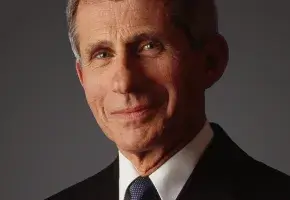
Renowned immunologist and former Director of the National Institute of Allergy and Infectious Diseases (NIAID), Dr. Anthony S. Fauci, MD, is receiving the Award for Excellence in Public Policy and Public Affairs from the American Academy of Arts and Sciences in recognition of his work on behalf of the common good.
The Academy organized a workshop in Washington, D.C. that gathered investigators from the government, academic, and industry sectors to discuss novel approaches to understanding and overcoming the social and behavioral barriers to the adoption of new energy technologies.