The American Academy of Arts and Sciences was founded by visionaries who foresaw that the nascent republic would benefit from the expertise of learned citizens to guide its development, health, and integrity through whatever challenges may arise.
Danielle Allen responds to new national test results from the National Assessment of Educational Progress (NAEP) which revealed a further decline in students’ knowledge in U.S. history and civics.
NASA astronaut Jessica Meir made history in October 2019 when she participated in the first all-female spacewalk. After 205 days in the isolation of space, she returned to a planet experiencing its own form of isolation: the global COVID-19 pandemic. As an astronaut and a marine biologist, Dr. Meir’s research into the impact of extreme environments has brought her to the depths of the Antarctic and the heights of space. At a virtual program, hosted by the Academy’s San Diego Program Committee, Dr. Meir described her research and her experiences in space and participated in a conversation with Brian Keating (University of California San Diego) about the perspectives that her work provides about our world.
U.S. courts operate as “informationally disabled” institutions that may lack (or intentionally exclude) important facts when making complex legal decisions. In his Dædalus essay, Frederick Schauer discusses why courts may not be suited to the task of “adequate factual determination.”
Video games as interactive storytelling? Maybe not at first glance, but as Eric Hayot explains in his Daedalus essay, the interplay between game and narrative is real.
Judith Resnik, Jonathan Lippman, Carol S. Steiker, Susan S. Silbey, Jamal Greene, and Linda Greenhouse participated in a conversation on the function of courts in the United States.
Appearing on The Ezra Klein Show, Danielle Allen argues that co-participation and co-ownership of public spaces and public life are vital components of our constitutional democracy.
A Law360 article about the publication "The Case for Supreme Court Term Limits" issued by the Academy's bipartisan working group quotes Professor Akhil Reed Amar and Professor Charles Fried who are members of the working group and the Academy.
The newest issue of the Academy journal is dedicated to “The Humanities in American Life: Transforming the Relationship with the Public.” The issue is guest edited by Carin Berkowitz, Norman Bradburn & Robert B. Townsend. All the essays are online.
The Academy’s 2017th Stated Meeting on February 11, 2015, featured members of the Catalyst Collaborative@MIT performing a staged reading of Mr g, a novel by Alan Lightman. Mr g is the story of creation as narrated by God (Mr g). In it, Mr g’s uncle Deva and aunt Penelope give him advice as he sets about creating the universe; he also spars with a Satan-like character about various ethical and philosophical issues raised by his creation, especially when intelligent life emerges.
Civil wars can give rise to major threats to international stability, including transnational terrorism, pandemics, mass migration and refugee flows, and regional instability. Particularly serious concerns include the ways that civil conflict can contribute to the emergence of infectious diseases, undermine efforts to respond to pandemics – such as through vaccine distribution – and generate transnational terrorism with a global reach.
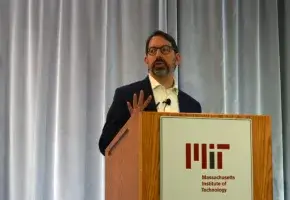
Daylong symposium at MIT showcases innovative ways of sharing facts and building trust in research results, featuring the Public Face of Science project.
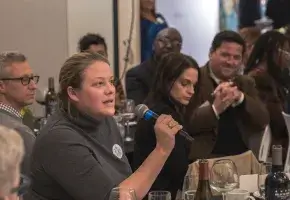
On May 18, 2017, the American Academy, in partnership with the Carnegie Institution for Science, hosted a meeting at the Carnegie Institution in Washington, D.C., on “Communicating Science in an Age of Disbelief in Experts.”
Kathryn Palmer examines key findings from the latest Humanities Indicators report, which shows that humanities majors outearn people with no degree, as faculty across the nation make the case for continued funding of the humanities.
On October 18, the Our Common Purpose team returned to Lexington, Kentucky for a full day of events to shine a light on the contributions made by Kentucky residents to the Our Common Purpose report and engage with local leaders on strategies for implementing its recommendations.
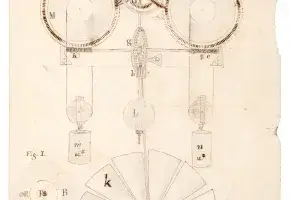
Connecticut goldsmith Benjamin Hanks owned a foundry that manufactured cannons, church bells, tower clocks, and various tools. At the request of Academy Fellow Ezra Stiles, Hanks sent the Academy his design for a clock that would never need to be wound manually.