Utility navigation

  • Dædalus
  • Archives
  • Give
  • Login

Main navigation

  • Our Work
    • Explore by Topic
      • Arts & Humanities
      • Democracy & Justice
      • Education
      • Energy & Environment
      • Global Affairs
      • Science & Technology
    • View
      • Projects
      • Publications
  • Members
  • News
  • Events
  • Get Involved
  • About

Main navigation

  • Our Work
    • Explore by Topic
      • Arts & Humanities
      • Democracy & Justice
      • Education
      • Energy & Environment
      • Global Affairs
      • Science & Technology
    • View
      • Projects
      • Publications
  • Members
    • Member Directory
    • Magazine: The Bulletin
    • Local Committees
  • News
  • Events
  • Get Involved
  • About
    • Governance
      • Board of Directors
      • Council
      • Trust
      • Committees
      • President
    • Staff
    • Affiliates
    • Prizes
      • Amory
      • Distinguished Leadership
      • Don M. Randel Humanistic Studies
      • Emerson-Thoreau
      • Excellence in Public Policy
      • Founders
      • Rumford
      • Sarton History of Science
      • Sarton Poetry
      • Scholar-Patriot
      • Talcott Parsons
    • Fellowships
    • Location
    • History
    • Advisors
      • Education
      • The Humanities, Arts, and Culture
      • Science, Engineering, and Technology

Footer

  • Daedalus
  • Login
  • Archives
  • Give
  • Careers
  • Contact
  • Private Events

136 Irving Street
Cambridge, MA 02138

Social Media

  • Facebook
  • LinkedIn
  • YouTube
Search results for

“WA 0812 2782 5310 Tempat Pasang Jendela Aluminium Kaca Mati Srandakan Bantul”

Search

  • All (4640)
  • Events (45)
  • (-) News (800)
  • People (2281)
  • Projects (49)
  • Publications (1465)
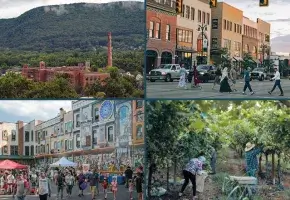
Four scenes from American life.
Bulletin
|
Jul 28, 2025

Community Partnership Visas: How Immigration Can Boost Local Economies

Across the United States, communities are struggling to reach their economic potential. Big cities and small towns are experiencing population loss and other troubling trends, highlighting an urgent need for revitalization. Reversing these patterns is essential to ensure the entire country benefits from technological and economic progress.
Bulletin
|
Mar 1, 2013

Financial Literacy and the Educated American

Bulletin
|
May 3, 2021

From the President

As the Academy emerges from this difficult year, we have good news to share as well. Despite the challenges we have faced, our Academy community has remained active and vibrant.
In the News
|
Nov 16, 2020

Opinion: There is no more important step in Biden’s first 100 days than this

Stephen Heintz, cochair of the Academy’s Commission on the Practice of Democratic Citizenship, says Biden’s single most important step in his first 100 days is to establish a White House Office for Democracy.
Source
CNN Opinion
Bulletin
|
Aug 22, 2016

Oral Narratives and the Disappearing Past

"Twenty years ago I set out with a Chinese friend and research partner, Gao Xiaoxian, to seek from elderly women in northwest Chinese villages their memories of socialist collectivization in the 1950s. We wanted to hear from them before advancing age and death silenced their stories."
Bulletin
|
Jul 1, 2012

The Getty Center: Research, Conservation, and Collections

Bulletin
|
Apr 24, 2026

The Future of Security Studies: Toward a Resilient and Robust Field

The field of security studies has long been defined by great power politics, interstate conflict, and traditional military threats. However, shifts in the global balance of power, the rising influence of non-state actors, and the increasing urgency of nontraditional threats—such as climate change, infectious disease, biological weapons, and the risks associated with artificial intelligence—are challenging key assumptions in the field. In addition, security studies institutions are facing major funding cuts as U.S. government support for academic research and foundation support for security studies decline.
Bulletin
|
Aug 7, 2019

Dædalus Explores Processes of Inequality

Rising inequality is one of our most pressing social concerns. And it is not simply that some are advantaged while others are not, but that structures of inequality are self-reinforcing and cumulative; they become durable. The societal arrangements that in the past have produced more equal economic outcomes and social opportunities – such as expanded mass education, access to social citizenship and its benefits, and wealth redistribution – have often been attenuated and supplanted by processes that are instead inequality-inducing.
Bulletin
|
Aug 7, 2019

Morton L. Mandel Public Lecture: A Conversation about Frederick Douglass

On April 1, 2019, the American Academy and the Whitney and Betty MacMillan Center for International and Area Studies at Yale presented their first joint public program, which featured a conversation between David Blight and Robert Stepto. The program, which served as the Academy’s Morton L. Mandel Public Lecture, included a welcome from Ian Shapiro. Crystal Feimster moderated the program.
Bulletin
|
Aug 22, 2017

Green Infrastructure through the Revival of Ancient Wisdom

This essay argues that the gray infrastructures made of steel and concrete, which we built to connect our physical world, are shallow or even fake constructs that are destroying the real and deep connections between human beings and nature, and among various natural processes and flows.
Bulletin
|
Jan 1, 2001

Academy Update: New Officers

Press Release
|
Feb 28, 2017

United States Needs to Significantly Increase Access to Language Learning to Remain Competitive

First national study of language learning in 30 years was requested from the American Academy of Arts and Sciences by a bipartisan group of members of U.S. Senate & House of Representatives
Bulletin
|
Aug 1, 2014

The Universe Is Stranger Than We Thought

At a meeting sponsored by the American Academy, the Royal Society, and the Carnegie Institution for Science, Wendy Freedman (Crawford H. Greenewalt Chair and Director of Carnegie Observatories at the Carnegie Institution for Science) and Martin Rees (Fellow of Trinity College; Emeritus Professor of Cosmology and Astrophysics at the University of Cambridge; Astronomer Royal; and Visiting Professor at Imperial College London and at Leicester University) discussed what we know and do not know about the universe.
Bulletin
|
Feb 27, 2017

Appreciating Biological Variation

"Much of the biological variability I encountered in my childhood stays vividly with me now and very much forms part of my ongoing research drive."
Bulletin
|
May 20, 2019

An International Anti-Corruption Court

The American Academy of Arts & Sciences hosted a distinguished group of judges, attorneys, human rights specialists, and academics to discuss whether an International Anti-Corruption Court (IACC) would contribute to global peace and security and, if so, how it might be established.
Bulletin
|
Aug 20, 2015

A Conversation on Restoring the Foundation: The Important Role of Central and Southern Plains Institutions in Driving National Change

The Academy convened a workshop in Chicago to discuss how a regional working group of state, local, and university leaders from the plains states could help implement the recommendations from the Academy’s recent report.
Bulletin
|
Aug 7, 2019

The Rumford Prize: Acceptance Remarks by Edward Boyden

On April 11, 2019, the American Academy of Arts and Sciences presented the Rumford Prize to six scientists for the invention and refinement of optogenetics. The awardees are Ernst Bamberg, Professor and Director of the Department of Biophysical Chemistry at Max-Planck Institute of Biophysics; Edward Boyden, Y. Eva Tan Professor of Neurotechnology, Associate Professor of Biological Engineering and Brain and Cognitive Sciences at MIT’s Media Lab and McGovern Institute for Brain Research, and Co-Director of the MIT Center for Neurobiological Engineering; Peter Hegemann, Professor and Head of the Department for Biophysics at Humboldt University of Berlin; Gero Miesenböck, Waynflete Professor of Physiology and Director of the Center for Neural Circuits and Behavior at the University of Oxford; Georg Nagel, Professor at the University of Wuerzburg (Bavaria); and Karl Deisseroth, D. H. Chen Professor of Bioengineering and of Psychiatry and Behavioral Sciences at Stanford University. Lucia Rothman-Denes, A. J. Carlson Professor of Molecular Genetics and Cell Biology at the University of Chicago, introduced the prize recipients and presented the award. Edward Boyden accepted the award on behalf of all the prize recipients. An edited version of his acceptance remarks appears below.
Bulletin
|
Feb 20, 2026

AI and Mental Health Care: What We Know, What We Don’t, and What Comes Next

Artificial intelligence is becoming increasingly present in mental health care.
Bulletin
|
Mar 24, 2016

The Evolving Role of Technology in Higher Education

On September 17, 2015, at the Silver Center of Arts and Science at New York University, Matthew S. Santirocco moderated a panel discussion featuring Kevin Guthrie, Daphne Koller, and Nicholas Lemann.
Bulletin
|
Aug 22, 2016

Public Research Universities: Serving the Public Interest in Michigan

Mark S. Schlissel, Mary Sue Coleman, Patrick Doyle, M. Roy Wilson, and Lou Anna K. Simon participated in a discussion at the University of Michigan about public research universities and their role in serving the public interest in Michigan.

Pagination

  • Previous page ←
  • 39 of 40
  • Next page →

136 Irving Street
Cambridge, MA 02138

617-576-5000

VEHICLE ENTRANCE

200 Beacon Street
Somerville, MA 02143

Main navigation

  • Our Work
  • Members
  • News
  • Events
  • Get Involved
  • About

Footer

  • Daedalus
  • Login
  • Archives
  • Give
  • Careers
  • Contact
  • Private Events

Social Media

  • Facebook
  • LinkedIn
  • YouTube
© 2026

American Academy of Arts & Sciences  |  Web Policy