A protracted debate within the Academy over Darwin’s Origin of Species began with a paper on Japanese flora presented by Asa Gray in 1858, leading to an exchange between Louis Agassiz and William Barton Rogers...
America is the most punitive nation in the world: we incarcerate the largest number of individuals and at the highest rate. American criminal justice policies of such punitive excess and unequal protection under the law have been shaped by and sustain racial inequality and exclusion and add to the harsh conditions of American poverty.
The 237th class of members includes philanthropist and singer-songwriter John Legend, award-winning actress Carol Burnett, chairman of the board of Xerox Corporation Ursula Burns, mathematician Maryam Mirzakhani, immunologist James P. Allison, and writer Chimamanda Ngozi Adichie.
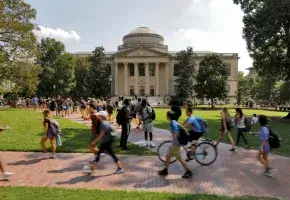
Those of us who teach undergraduates are familiar with the trend revealed in these data. Baccalaureate graduates typically have earned more course credits in the humanities (about 17% as defined here) than in STEM fields (about 13%). STEM majors earn fewer credits in the humanities than do students majoring in other areas; and students majoring in the humanities, business, social sciences, and education apparently earn no more than a required minimum of their credits in STEM courses.
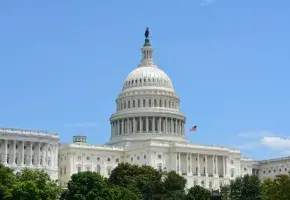
The crafters of the Constitution expected the size of the House to grow as the U.S. population increased. Citing the American Academy report on “The Case for Expanding the House of Representatives,” Kevin Kosar calls for Capitol Hill to consider the proposition.
A new study from the American Academy's Humanities Indicators project reveals trends among U.S. residents, and the impact of respondents’ political leanings, socioeconomic status, gender, and race.
Guest essay in the New York Times by Katherine J. Cramer and Jonathan D. Cohen shares insights from the Academy's Commission on Reimagining Our Economy to help explain the disconnect between positive standard economic indicators and the negative views Americans have of the economy.
The place of the military in the public consciousness has changed dramatically over time. In a Gallup poll from 2011 that measured the public’s confidence in sixteen major institutions, the military ranked higher than any other institution, with 78 percent of respondents stating their respect for and confidence in the armed forces. On December 7, 2011 – the seventieth anniversary of the attack on Pearl Harbor – the Academy convened a panel of scholars at Stanford University to discuss the military and international relations.
"I remember Steven Marcus as a wonderful talker: superb conversationalist, superb public speaker. In both roles, he often articulated unexpected truths. He could talk about anything, and he knew about everything, as a result of his constant, omnivorous, intense reading."
Sandy Baum and Michael McPherson, members of the Academy's Commission on the Future of Undergraduate Education, write that the recent college admissions scandal represents a small fraction of college admissions and should not distract from persistent inequalities in higher education access.
On December 4, 2015, at the Georgetown University Law Center, the Academy hosted a panel discussion on “The Crisis in Legal Education” with Louis Michael Seidman, Robert A. Katzmann, Philip G. Schrag, Robin L. West, and Patricia D. White.