Meeting the Challenges of the New Nuclear Age
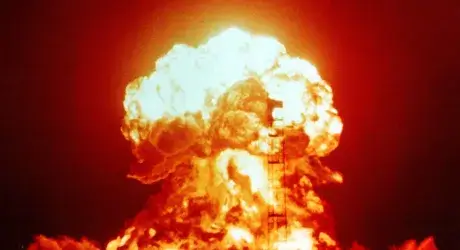
Meeting the Challenges of the New Nuclear Age examined possible escalation pathways that could lead to the use of nuclear weapons. Through dialogue and consultations with various domestic and international nuclear consistencies, it sought to articulate recommendations for de-escalating possible nuclear crises.
Meeting the Challenges of a New Nuclear Age
Meeting the Challenges of the New Nuclear Age sought to articulate a new framework for governing relations among the nine existing nuclear weapons states. The work began with the recognition that the foundations and principles that came to define the nuclear order after World War II and throughout the Cold War had eroded dramatically, bringing the world closer to a possible use of nuclear weapons in the near future. Several factors are responsible for this dangerous situation:
- The rise of new nuclear weapons states, the weakening of multilateral institutions, the development of non-nuclear strategic weapons, and the awakening of an era of great power competition are certainly the most important.
- New security challenges like the ones posed by non-state actors demand innovative solutions.
- The consensus around the norms and values that have traditionally underpinned relations among nuclear weapons states and between nuclear weapons states and the rest of the international community continues to deteriorate.
These multifaceted challenges demand a multilateral and interdisciplinary approach that takes into account technological developments in the nuclear field and related areas such as in the cyber, artificial intelligence, and space domains, together with the changing geopolitical landscape.
To highlight the increasing risks of nuclear use in the twenty-first century and to propose steps for reducing that likelihood, cochairs Christopher Chyba and Robert Legvold guest edited the Spring 2020 issue of Dædalus, Meeting the Challenges of a New Nuclear Age. The volume features fourteen essays authored by a diverse group of security scholars, physicists, statesmen, and political scientists, writing sharing about the dangerous multipolar nuclear order that emerged from the end of the Cold War.
The overall initiative and the Dædalus volume were intended to capture the essential features of the nuclear world we have entered, and to stimulate among policy-makers and the engaged public a recognition of the challenges that it poses.
Scott Sagan and Vipin Narang, cochaired the subsequent phase of work, to investigate deterrence and defense implications facing small nuclear force-countries and potential proliferators, with an emphasis on potentially-destabilizing regional and sub-regional nuclear dynamics.
People

Christopher F. Chyba

Robert Legvold
Thomas J. Christensen
Lynn Eden
Steven E. Miller
Janne E. Nolan
Scott D. Sagan
Jon Brook Wolfsthal
James M. Acton
Mark S Bell
Linton Brooks
M. Taylor Fravel
Šumit Kumar Ganguly
Francis J. Gavin
Michael Krepon
Hans Kristensen
Jessica Tuchman Mathews
Nicholas L. Miller
Steven E. Miller
Vipin Narang
Janne E. Nolan
Olga Oliker
George Perkovich
Steven Pifer
William Potter
Mira Rapp-Hooper
Scott D. Sagan
Michael Swaine
Nina Tannenwald
Jane Vaynman
Keren Yarhi-Milo
Mitch Poulin

Events
Project Activities
The initiative explored core challenges posed by the new nuclear age by convening a series of consultations with nuclear experts, policymakers, and scholars in Chicago, New York City, Cambridge, MA, and Washington, D.C. An inter-generational working group has met to engage in dialogue, creative thinking, and theoretical innovation.
Project contributors have also conducted consultations with U.S. State Department and Department of Defense officials to better understand the main concerns and priorities of the U.S. nuclear policymakers. The project published an issue of Dædalus, as well as the third in a series of research papers investigating the relationship between the nuclear order and the international system.