Utility navigation

  • Dædalus
  • Archives
  • Give
  • Login

Main navigation

  • Our Work
    • Explore by Topic
      • Arts & Humanities
      • Democracy & Justice
      • Education
      • Energy & Environment
      • Global Affairs
      • Science & Technology
    • View
      • Projects
      • Publications
  • Members
  • News
  • Events
  • Get Involved
  • About

Main navigation

  • Our Work
    • Explore by Topic
      • Arts & Humanities
      • Democracy & Justice
      • Education
      • Energy & Environment
      • Global Affairs
      • Science & Technology
    • View
      • Projects
      • Publications
  • Members
    • Member Directory
    • Magazine: The Bulletin
    • Local Committees
  • News
  • Events
  • Get Involved
  • About
    • Governance
      • Board of Directors
      • Council
      • Trust
      • Committees
      • President
    • Staff
    • Affiliates
    • Prizes
      • Amory
      • Distinguished Leadership
      • Don M. Randel Humanistic Studies
      • Emerson-Thoreau
      • Excellence in Public Policy
      • Founders
      • Rumford
      • Sarton History of Science
      • Sarton Poetry
      • Scholar-Patriot
      • Talcott Parsons
    • Fellowships
    • Location
    • History
    • Advisors
      • Education
      • The Humanities, Arts, and Culture
      • Science, Engineering, and Technology

Footer

  • Daedalus
  • Login
  • Archives
  • Give
  • Careers
  • Contact
  • Private Events

136 Irving Street
Cambridge, MA 02138

Social Media

  • Facebook
  • LinkedIn
  • YouTube
Search results for

“Fc coins Buyfc26coins.com Fast delivery and very reliable service.83uO”

Search

  • All (2675)
  • Events (34)
  • (-) News (744)
  • People (803)
  • Projects (17)
  • Publications (1077)
Bulletin
|
Jan 1, 2001

Census 2000 and the Fuzzy Boundary Separating Politics and Science

The decennial census is the longest continuous scientific project in American history. It is also the largest applied social science project undertaken in this country.
Bulletin
|
Jul 1, 2012

Dealing with North Korea’s Nuclear Program

On April 12, 2012, North Korea unsuccessfully launched a long-range missile that was intended to carry an Earth observation satellite into space. North Korea fired the long-range test rocket in defiance of UN Security Council resolutions and an agreement with the United States. On the eve of the launch, the Academy convened leading North Korea experts to discuss the broader geopolitical and nonproliferation implications of North Korea’s nuclear program.
Bulletin
|
May 1, 2020

From the Archives

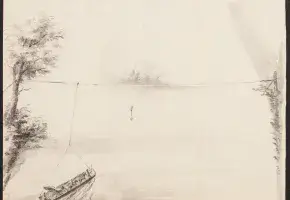
In September 1786, John Gardiner (1737–1793) of Boston sent Academy President James Bowdoin a drawing and description of a ferry in Bethlehem, Pennsylvania, designed by Nicholas Garrison, a member of the Moravian Brethren. The ferry used a rope or cable and the river’s current to move the boat back and forth, and the design could be upscaled for larger crossings through a series of blocks and pulleys.
Bulletin
|
Aug 1, 2014

Al-Qaeda and the Bomb: How Institutions Protect Against the Threat of Nuclear Terrorism

On May 15, 2014, at the Academy’s 2008th Stated Meeting, five experts discussed how institutions protect against the threat of nuclear terrorism.
In the News
|
Jun 28, 2016

The No-Jobs Myth

Tenured faculty must get vocally involved at every level of governance in the ways that our institutions hire, compensate and retain educators, argues Carolyn Betensky.
Source
Inside Higher Education
Bulletin
|
Jul 26, 2021

Empathy and Our Future

While many discussions in America are now focused on accountability versus unity, a concept that belongs in conversations about how America can recover from a divisive election, devastating pandemic, and long history of racial injustice is empathy. At a virtual Stated Meeting, Sherry Turkle (MIT) and Eric Liu (Citizen University) joined Academy President David Oxtoby in a conversation about what empathy looks like in an increasingly digital world, the search for authentic connections at a time of isolation and disunion, and the role authentic connection can play in repairing our civic culture.
Bulletin
|
Apr 1, 2014

SILA – The Competing Interests Shaping the Future of our Planet

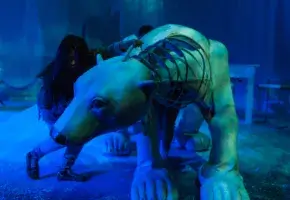
Members of the Catalyst Collaborative@MIT performed a staged reading of Chantal Bilodeau’s play SILA. The reading was followed by a panel discussion with Naomi Oreskes, Robert L. Jaffe, and playwright Chantal Bilodeau about the competing interests shaping the future of our planet.
Bulletin
|
Aug 22, 2016

Oral Narratives and the Disappearing Past

"Twenty years ago I set out with a Chinese friend and research partner, Gao Xiaoxian, to seek from elderly women in northwest Chinese villages their memories of socialist collectivization in the 1950s. We wanted to hear from them before advancing age and death silenced their stories."
Data Forum
|
Feb 20, 2019

From Higher Education to Preschool: On a Mission to Shrink the Humanities Opportunity Gap

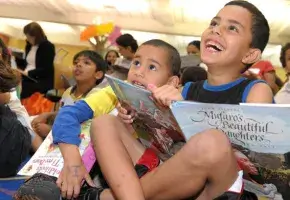
Miranda Restovic and Sarah DeBacher of the Louisiana Endowment for the Humanities describes their organization’s efforts to bring rich, humanities-focused educational experiences to preschoolers, thereby expanding the traditional understanding of what a humanities organization does—and for whom.
Bulletin
|
Mar 7, 2018

Redistricting and Representation

In collaboration with the Ash Center at the Harvard Kennedy School, the Academy hosted a discussion on “Redistricting and Representation,” which included presentations by Gary King, Jamal Greene, and Moon Duchin. Chief Judge Patti Saris moderated the program.
Bulletin
|
Aug 15, 2013

The Heart of the Matter: The Humanities and Social Sciences for a vibrant, competitive, and secure nation

An evening program at the Congressional Visitors Center in Washington, D.C., featured Commission Cochairs John W. Rowe and Richard H. Brodhead; Commission members David Brooks, Karl W. Eikenberry, Pauline Yu, and John Lithgow; Senators Lamar Alexander and Mark Warner; and Congressmen Tom Petri and David Price.
Bulletin
|
Feb 27, 2017

Educating Students Who Have Different Kinds of Minds

Temple Grandin discussed the education of students who have different kinds of minds, as well as her own upbringing and work experience as a woman with autism.
Bulletin
|
Mar 1, 2001

Theater and Society: The Poison Tree

Academy members and guests attended a matinee performance of Robert Glaudini's The Poison Tree, in its world premiere at the Mark Taper Forum. After the show, they adjourned to the Dorothy Chandler Pavilion for dinner and the Stated Meeting, presided over by Western Center Cochair Jack W. Peltason.
Bulletin
|
Jun 1, 2016

The Crisis in Legal Education

On December 4, 2015, at the Georgetown University Law Center, the Academy hosted a panel discussion on “The Crisis in Legal Education” with Louis Michael Seidman, Robert A. Katzmann, Philip G. Schrag, Robin L. West, and Patricia D. White.
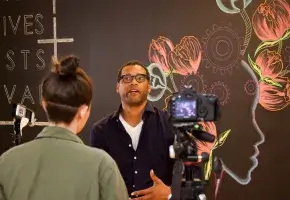
Participants in the 2017 Chicago Archives + Artists Festival
Data Forum
|
Feb 20, 2019

Why NIHO Deserves a Place in Every Local Historian’s Toolbox

As both a scholar and former administrator, Hope Shannon has been immersed in the world of local history organizations, and speaks in her essay to the ways in which such groups can use NIHO to leverage their limited resources.
Press Release
|
Nov 8, 2021

What Becomes of Humanities Majors after College? A New Indicators Report Offers Clues

The latest report from the Humanities Indicators finds that humanities majors are similar to graduates from almost every other field with respect to perceived well-being— despite tending to earn less and experience higher levels of unemployment.
Bulletin
|
May 20, 2019

Building, Exploring, and Using the Tree of Life

On March 6, 2019, Douglas E. Soltis and Pamela S. Soltis spoke at the Academy about a project that harnesses algorithm development, computer power, and DNA sequencing to create a comprehensive visual Tree of Life. The program, which served as the 2079th Stated Meeting of the Academy, included a welcome from President David W. Oxtoby and an introduction from Scott Vernon Edwards.
Bulletin
|
Feb 20, 2026

2025 Induction Ceremony

On October 11, 2025, the Academy inducted more than two hundred newly elected members during its annual Induction Ceremony. The program included brief remarks from five new members, each representing one of the Academy’s membership classes. Their talks addressed topics such as the transformative power of science, building trust in expertise in the age of biology, leading for breakthroughs, creating books that act as mirrors rather than windows, and the evolving impact of Title IX. The class speakers were Gregory H. Robinson (Class I: Mathematical and Physical Sciences), Ashish K. Jha (Class II: Biological Sciences), Brian Uzzi (Class III: Social and Behavioral Sciences), Jacqueline Woodson (Class IV: Humanities and Arts), and Christine Brennan (Class V: Leadership, Policy, and Communications). Edited versions of their remarks follow.
Bulletin
|
Aug 20, 2015

Philologia Rediviva?

Sheldon Pollock explores the fate of philology amid far-reaching social and technological developments.
Bulletin
|
May 14, 2024

Anti-Globalism’s Past and Present

On March 20, 2024, the Academy’s University of Chicago Program Committee hosted an evening with historian Tara Zahra. Informed by her archival research and the themes in her most recent book, Against the World: Anti-Globalism and Mass Politics Between the World Wars, Professor Zahra discussed how the forces of early-twentieth-century global instability—the Spanish flu, the Great Depression, ethnonationalism, the development of both democracies and dictatorships—can help us better understand our own contemporary political moment. Following her presentation, she joined Academy President David W. Oxtoby in a conversation about the past, present, and future of our interconnected, yet increasingly divided, world. John Mark Hansen, a member of the Academy’s Board of Directors, opened the program. The event was organized as a Jonathan F. Fanton Lecture, in honor of the past president of the Academy whose career has been dedicated to solving global issues. Jonathan F. Fanton and his wife Cynthia were in attendance. An edited version of Professor Zahra’s remarks and her conversation with President Oxtoby follows.

Pagination

  • Previous page ←
  • 7 of 38
  • Next page →

136 Irving Street
Cambridge, MA 02138

617-576-5000

VEHICLE ENTRANCE

200 Beacon Street
Somerville, MA 02143

Main navigation

  • Our Work
  • Members
  • News
  • Events
  • Get Involved
  • About

Footer

  • Daedalus
  • Login
  • Archives
  • Give
  • Careers
  • Contact
  • Private Events

Social Media

  • Facebook
  • LinkedIn
  • YouTube
© 2026

American Academy of Arts & Sciences  |  Web Policy