In 1984, as China was reviving its long-neglected education system, a small delegation from the American Academy visited the Chinese Academy of Social Sciences to help develop programs that will allow Chinese scholars to learn about developments in Western social science and humanistic disciplines and allow U.S. scholars to learn about scholarly and societal developments in China.
This project investigated the function and historical role of learned societies in advancing research and stimulating communication about scientific and scholarly ideas, not only within the intellectual community but among segments of the larger society.
Located around the globe but operated by American parent institutions, interdisciplinary American Overseas Advanced Research Centers provide essential support to American humanistic and social science scholars working in foreign countries.
This commission is dedicated to ensuring all students, especially historically underserved students, can thrive and find rewarding jobs in an ever-changing global economy, empowering them to actively engage in society.
This study compared France and the United States’ immigration policies, race relations, and political institutions. It looked at how both countries educate and house immigrants and analyzed the political and legal implications of integration, marginalization, and discrimination in each country.
Twenty two biological and social scientists from academic, research, governmental, and international institutions gathered for a symposium to discuss how the academic community might help mitigate the ravages of hunger and malnutrition worldwide.
This study examined the political and technical aspects of missile defenses, as well as the implications of the Intermediate-Range Nuclear Forces Agreement and the U.S. Strategic Defense Initiative.
The increased role of women in science in this country was the result of the convergence of two trends: the growth in higher education and expanded employment for middle-class women on the one hand, and the growth, bureaucratization and professionalization of science and technology, on the other.
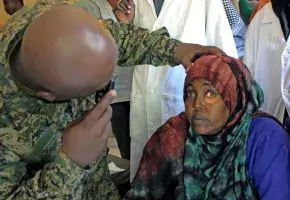
The Academy is bringing together political scientists, legal and security experts, health professionals, and humanitarians to rethink the provision of essential health services in areas of violent conflict.
The Academy convened a series of meetings in 2000 and 2001 to reflect on the social implications of new technologies. During those sessions, participants discussed the risks and benefits of revolutionary advances not only in genetics but also in nanotechnology and robotics.
The Academy appointed a study group to examine the issues raised when American universities consider education, research, or service agreements with institutions in countries possibly involved in serious violations of human rights in general and, more specifically, of academic freedom.
In the early 1990s, the Academy held a four-day conference to address America's crisis in health care spending and the idea of equitable and adequate health care for all. The edited report was distributed to health care leaders around the country.
Between the first meeting for this project and the 1992 publication of the book, the Soviet Union collapsed. This created profound implications for the way Americans and the West thought about security policy. The earlier meetings brought together Soviet and U.S. scholars and security policy specialists to discuss changes in the Soviet Union, and the later session also invited specialists in Eastern European affairs.
The Academy convened a group of academics and business leaders to explore the potential for and limits of an expanded role for corporations in addressing unmet social needs. The resulting study illuminated the complicated and controversial issues that arise from public-private collaboration.
By convening scholars, practitioners, and policy-makers with representatives of the courts, legal aid providers, and foundations, the project seeks to understand and assess the challenge of providing legal services for low-income Americans.
This London symposium examined the nature and implications of participation by Western European countries in the Strategic Defense Initiative being undertaken by the United States.
The Commission on the Arts is a multi-year project with distinguished cochairs, more than $1 million of support from foundations and individuals, and a commitment to exploring the role of the arts in American life, with an emphasis on arts education and infrastructure.
In 1990, the Academy co-sponsored an interdisciplinary symposium focused on trends in current scholarship on homelessness. The resulting publication critically examined the shortcomings of the research into the causes of homelessness and addressed barriers to remedying this social problem.
Published as a double issue of the Academy’s journal, Dædalus, this study is a comprehensive survey of the problems and the status of Blacks in American society, a topic of great urgency at the time. The resulting volume has been considered seminal in explaining the complexities and implications of racial problems in the United States in the 1960s.